Rose scented trees? Genetic modification could create safe chemical factories

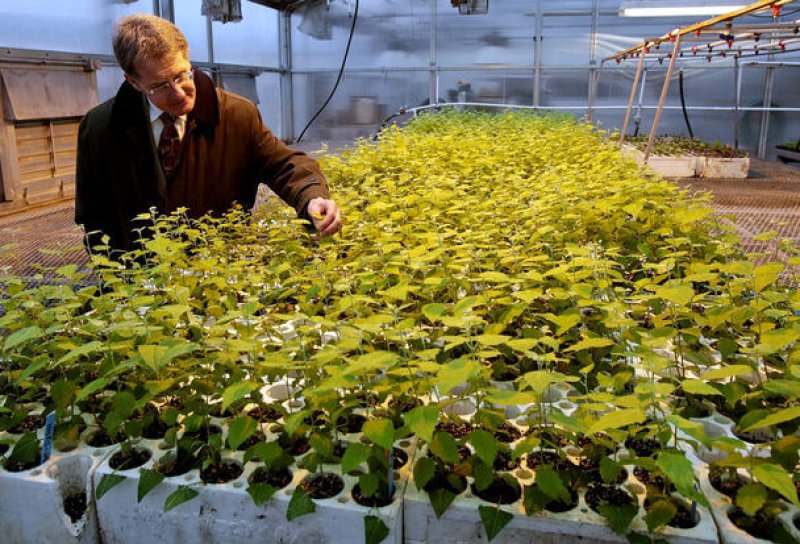
WSU biochemist Norman Lewis inspects cuttings from genetically engineered poplars in a Western Washington greenhouse (CREDIT: Greg Gilbert / The Seattle Times).

Sniff the air around Norman Lewis’ experimental poplars at Washington State University, and you won’t pick up the scent of roses.

But inside the saplings’ leaves and stems, cells are hard at work producing the chemical called 2-phenylethanol — which by any other name would smell as sweet.

Sweeter still is the fact that perfume and cosmetics companies will pay as much as $30 an ounce for the compound that gives roses their characteristic aroma

Born out of the frustrating quest to wring biofuels from woody plants, the WSU project takes a different tack. Instead of grinding up trees to produce commercial quantities of so-called cellulosic ethanol, their goal is to turn poplars into living factories that churn out modest levels of chemicals with premium price tags.

The ideal operation would combine the two ideas, extracting valuable chemicals from engineered plants and using the waste for biofuel. But that’s a long way off, Lewis said.

Read the full, original article: Rose scent in poplar trees? WSU turns to genetic engineering

Additional Resources:

{{ reviewsTotal }}{{ options.labels.singularReviewCountLabel }}
{{ reviewsTotal }}{{ options.labels.pluralReviewCountLabel }}
{{ options.labels.newReviewButton }}
{{ userData.canReview.message }}

Related Articles

Infographic: Global regulatory and health research agencies on whether glyphosate causes cancer

Infographic: Global regulatory and health research agencies on whether glyphosate causes cancer

Does glyphosate—the world's most heavily-used herbicide—pose serious harm to humans? Is it carcinogenic? Those issues are of both legal and ...

Most Popular

Screenshot-2026-05-04-at-12.54.32-PM
How Utah became the country’s supplement capital  — and a haven for unregulated, ineffective and fake products
Screenshot-2026-03-13-at-12.14.04-PM
The FDA wants to make many popular prescription drugs OTC—a great idea. Here’s why it’s unlikely to happen
Screenshot-2026-04-20-at-2.26.27-PM
Viewpoint — Food-fear world: The latest activist scientists campaign: Cancer-causing additives
Screenshot-PM-24
Viewpoint: The herbicide glyphosate isn’t perfect. Banning it would be far worse.
images
The never-ending GMO debate: Pros and cons
Screenshot-2026-05-01-at-11.56.24-AM
‘Science moves forward when people are willing to think differently’: Memories of DNA maverick Craig Venter
ChatGPT-Image-May-1-2026-02_20_13-PM
How RFK, Jr.’s false vaccine claims are holding up $600 million to fight diseases in poor countries
Screenshot-2026-04-03-at-11.15.51-AM
Paraben panic: How a flawed study, media hype, and chemophobia convinced the public of the danger of one of the safest classes of preservatives
Screenshot-2026-04-30-at-2.19.37-PM
5 myths about summer dehydration that could damage your health — or even kill you
Screenshot-2026-04-12-135256
Bixonimania: The fake disease scam that AI swallowed whole
glp menu logo outlined

Get news on human & agricultural genetics and biotechnology delivered to your inbox.