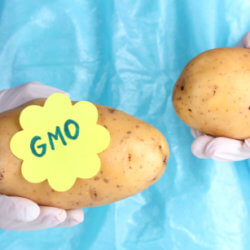
Liberal thought leaders should be as harsh on extreme anti-GMO activists as on climate change denialists

When Neil deGrasse Tyson speaks, people listen. “Practically every food you buy in a store for consumption by humans is genetically modified food,” he told a French interviewer. It was an impromptu, oversimplified response on a complex, hot-button subject, but Tyson’s stance was clear to all: GMOs are nothing to be afraid of.

At Vox, Ezra Klein seized on Tyson’s statements as further proof of a key difference between agenda-setting liberals and conservatives on science. Sure, the liberal base of the Democratic party is anti-GMO, Klein acknowledges. But this hasn’t mutated into the liberal equivalent of conservative climate denial, because the Democratic establishment–particularly its powerbrokers—-haven’t embraced the anti-GMO views of its base, he argued. Klein cited the recent work of Grist reporter Nathanael Johnson and his conclusion that GMOs are, as Tyson said, not only safe, but nothing to be afraid of.

Grist could have kept playing up GMO fears and misinforming its readers, which is what it did with its GMO coverage right up until it commissioned Johnson to undertake his deep dive into the complex research findings on crop biotechnology. But I’ll be more impressed with Grist when it treats influential purveyors of GMO myths and misinformation as disdainfully (or at least critically) as it treats those who promote climate change denial.

It’s not as if Grist (or Mother Jones, Alternet, Daily Kos et al) are lacking in material to poke fun at or debunk. They just have to look at what progressive thought leaders, food advocacy NGOs, and outspoken consumer interest and environmental groups say on the subject.

Read the full, original article: Why it matters what liberal validators say on GMOs

Related Articles

Infographic: Global regulatory and health research agencies on whether glyphosate causes cancer

Infographic: Global regulatory and health research agencies on whether glyphosate causes cancer

Does glyphosate—the world's most heavily-used herbicide—pose serious harm to humans? Is it carcinogenic? Those issues are of both legal and ...

Most Popular

ChatGPT-Image-Mar-10-2026-01_39_01-PM
Viewpoint—“Miracle molecule” debunked: Why acemannan supplements don’t work
Screenshot-2026-09-17-at-1.07.08-PM
'We are dangerously addicted to antidepressants': Should we heed RFK Jr.’s sobering warning?
Screenshot-2026-09-03-at-10.51.20-AM
Viewpoint: Why do online health lies outlive the evidence that debunks them? Read "Everyone Else Is Lying to You"
ChatGPT-Image-Sep-2-2026-02_03_32-PM
How much of a problem is AI’s water use?
Screenshot-2026-09-23-at-3.15.09-PM
Anti-GMO activists in Pakistan rev up their campaign of dire warnings
Screenshot-2026-09-22-at-11.40.28-AM
After Idaho criminalized abortion providers in 2022, one-third of obstetricians fled. Health care advocates are making rural health the case for repealing the ban
ChatGPT-Image-Sep-23-2026-01_52_03-PM
Viewpoint: 4 very real AI doomsday scenarios
Screenshot-2026-09-10-at-12.20.19-PM
'Jet fuel didn't melt the steel': 9/11 conspiracy theories debunked
Screenshot-2026-09-23-at-11.55.01-AM
How can we know if social media bans actually help teens?
ChatGPT-Image-Aug-26-2026-12_46_16-PM
Viewpoint: The fake controversy over whether combining childhood vaccines is dangerous— a debate science resolved 25 years ago
glp menu logo outlined

Get news on human & agricultural genetics and biotechnology delivered to your inbox.