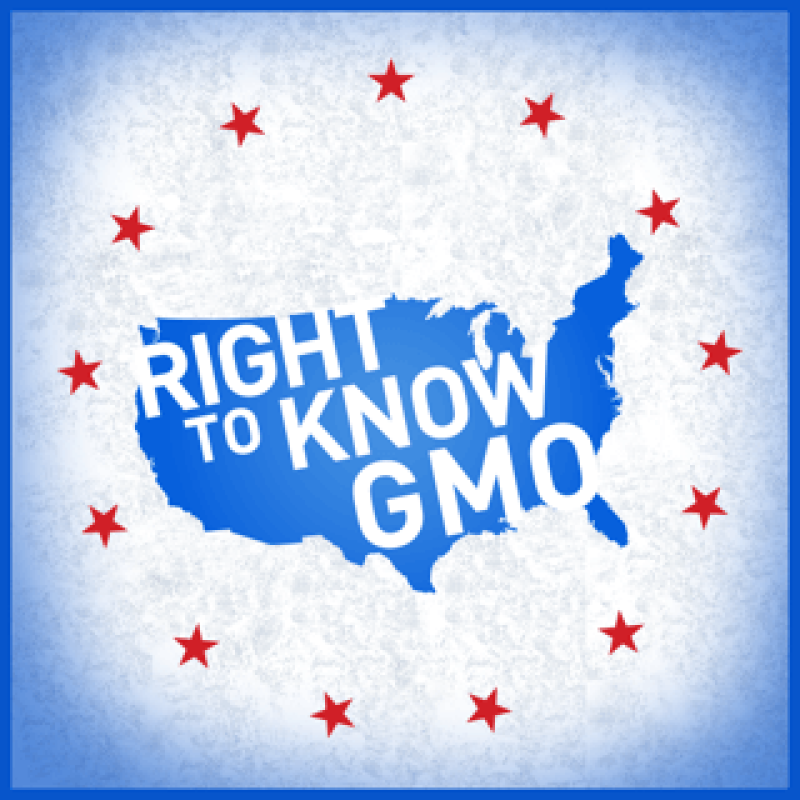
I live in Boulder, Colo., where voters recently rejected the GMO labeling measure—proposition 105—by 54 percent to 45 percent.
Which way did I vote? I didn’t. I’m not a U.S. citizen. And with no right to vote on anything, I’ve been pretty lazy these last few years on all things political. But something about this result did capture my attention because if you’d expect any city to vote for GMO labeling it would be Boulder. Full of leftie, aging hippies, Wholefoods markets, and marijuana dispensaries, Boulder is a liberal bastion —maybe the most liberal in the country and just the type place you’d think would vote overwhelmingly for such a measure.
Although I’d given the issue little thought, I found the GMO label supporters’ “right to know” slogan intuitively appealing. Of course I want to know what is in my food, I already scour labels for MSG, which gives me migraines. To me it just makes sense. But maybe Boulder’s community, 34.8 percent of whom have advanced degrees (according to a 2011 Demographic Profile by Boulder Economic Council), know something that I don’t.
Maybe it is the cost—an argument I had heard bantered around on the radio and in the local papers; something about labeling costing the average family in the U.S. $500 a year. Couldn’t be, I thought to myself: I mean the labels are on there already, and it’s only a case of a bit more printing ink.
How much can a GMO label cost? Seriously.
So I started my own little informal investigation. First stop: a 14-page study, published by the Portland-based consulting firm ECONorthwest, which was commissioned by Consumers Union, the national organization that publishes Consumer Reports. Consumers Union is well known for aggressively supporting labeling and claiming that GMO foods are potentially harmful, although every major science organization in the world says differently. This study says the median cost to consumers would only be $2.30 per year. In an interview with the Oregonian, Jean Halloran, director of food policy initiatives at Consumers Union, said:
That’s less than a penny a day for each consumer. A tiny fraction of the cost estimates put out by industry and certainly a very small price to pay for consumers’ right to know if their food has been genetically engineered.
There, I was right. But, the opposition to labeling says the report overlooks crucial factors in calculating the costs of labeling.
So, wait a minute, the cost of the labeling is not just the cost of the printing ink, paper and glue. Is it more than that? To learn more I then reviewed a white paper published by the Washington State Academy of Sciences, an independent organization affiliated with the US government’s National Academy of Sciences, published in 2013: Washington State Initiative 522 (I-522): Labeling of Foods Containing Genetically Modified Ingredients.
The scientists conclude that mandatory labeling would impose a multitude of higher costs on food companies and farmers, both directly and indirectly. Direct costs would include segregation of GMO and non-GMO products at each stage of production and transportation, certification and testing and compliance costs. Indirect costs would include managing GM and non-GMO crops to mitigate cross-pollination and increased resistance in non-targeted insects and weeds in the product supply chain. Totaling up all these costs, of which the actual labeling is only a small contribution, the paper states that the annual costs to the food industry of labeling would range from $150 million to $920 million—a cost which would obviously raise food prices.
But the white paper doesn’t stop there. The scientists point out that some studies have suggested that mandatory labeling would deem some GMO-products unsavory to the customer and they’d lose out in a competitive market. If that is the case, farmers and food companies would most likely substitute ingredients in their products with higher-priced non-GM products. This would increase food prices even further, thanks to the substitution costs and the higher ingredient costs.
While the Washington State study doesn’t include “substation costs” in calculating the costs to the food industry, a 2014 study by independent researchers at Cornell University does do so. This study assesses what the added costs for New York food consumers if mandatory GMO labeling would be passed in the state.
The researchers determined that the 40 percent of mandated-labeled foods transcribes into 21,000 – 25,000 separate labeled items, or 50-58 percent of items available in supermarkets. The labeling costs involve labeling itself, the annual costs of warehousing more items as well as the charges leveled for stocking ‘new’ items by supermarkets. Based purely on those costs alone, the researchers estimate that annual costs for a “family of four range from $64-68, with a midpoint of $66.”
That doesn’t seem quite in the $500 range, but then the researchers go on to analyze the more complex scenario: what happens when food companies decide to replace the GM ingredients with non-GM ingredients. Non-GM ingredients are more costly, and now the GM and non-GM products must be kept separate in the supply chain. The researchers summarize the results of their calculations as follows:
- The estimated costs now, again for a family of four, range from a low of $44 to a high of $412, with a midpoint of $228.
- The costs for using organic ingredients are respectively $360 to $1,552 with the midpoint at $956.
- Additional costs to the State include the potential loss of net farmer income from producing GM corn and soybeans, which while very real for State farmers is minor compared to direct consumer costs.
- There are additionally regulatory costs which are borne by the State. Adding one dollar per capita for all those costs brings the maximum range of cost, for the four-person household, to $48 to $1,556 with a midpoint of $800.
Ironically, because of legal issues a sizable portion of the costs of labeling would fall on food producers who do not want GM ingredients in their foods. The debate over this issue and this study ignores other costs that could add hundreds of dollars or more to each person’s yearly food bill: the potential for tort litigation if products are found to exceed whatever threshold is legally established for trace existence of GM ingredients. Any food that does not have a GM label but is found to have a trace amount above the arbitrary cutoff point set in legislation will undoubtedly be hit by a law suit. That could result in hundreds of millions or even billions of dollars in legal defense costs or adverse judgements.

So I am getting it. Mandatory food labeling would cost the farmer, the food companies, the state and myself more money, each year, per food item. But is that such a bad thing? I’d theoretically be paying for freedom, the freedom to choose what I ate, the ‘right to know’ what is in my food—that phrase is still so appealing.
Personally, I have nothing against GMO foods: more than one hundred major scientific societies have come out and said they are safe, I believe they are safe and I don’t see how else we can protect the world’s burgeoning population from food shortages in the decades ahead. I also can see the problems that labeling might pose the GMO food revolution. If many shoppers avoid GMO foods then over time they’ll disappear, and the forward trajectory of GMO technology could be seriously hampered.
But these dire predictions wouldn’t necessarily mean that I am opposed to mandatory labeling of GMO foods. I bristle when I hear arguments that if we label GMO foods, customers will change their behavior and not buy them, so don’t label the foods. Such arguments are patronizing and undermining of customer intelligence, assuming that policymakers know what is best for us and we are not clever enough to work out the consequences for ourselves.
So am I now saying that, given the chance to vote, I would have voted for mandatory labeling of GMO foods? No, I am not. Because when my choices affect the freedom of others I have to consider them in a wider context. I like the idea of the ‘right to know,’ I really do. But having read these studies, and other articles in my investigation, I realize that my ‘right to know’ might affect someone else’s ‘right to choose’, or even worse their ‘right to eat.’
Look at the current situation: a menu of options exists for any of us when we make a food choice. We can choose between conventional unlabeled goods, organic foods and voluntarily labeled GMO-free foods. So, if we are prepared to pay a little more, we can choose GMO-free foods by choosing organic or GMO-free foods. Another consumer can choose cheaper options by choosing unlabeled, non-organic foods. But slap on mandatory labels and those cheaper options disappear. Even worse, if the same scenarios play out in the U.S. that have unfolded in Europe where labeling is mandatory, some products would disappear altogether—mostly the cheaper ones.
Close to home, plenty of families in America would suffer from soaring food costs because they won’t have the choice of cheaper, but still safe and healthy, food. Further afield developing nations wouldn’t be able to sell their crops to the U.S. if they were grown using GMO technology.
So in investigating for this piece, I exercised my ‘right to know’ by analyzing publically available documents. I believe that the ‘right to know’ as it refers to the mandatory GMO labeling of food is not something that I want on my conscience.
Jane Palmer is Gene-ius editor for the Genetic Literacy Project and a freelance science writer and radio journalist based near Boulder, Colorado. Follow Jane Palmer on @JanePalmerComms.
Additional Resources:
- Could Congress finally end the GMO labeling war? Genetic Literacy Project
- GLP’s Jon Entine talks to Ray Bowman on fallout from Oregon, Colorado GMO label votes, Food and Farm
- Colorado liberal cognescenti reject anti-GMO extremism, Discover