Dangers of exaggerating premature scientific findings

In 2011, Petroc Sumner of Cardiff University and his colleagues published a brain imaging study with a provocative result: Healthy men who have low levels of a certain chemical in a specific area of their brains tend to get high scores on tests of impulsivity.

When the paper came out, thousands of people across England were rioting because a policeman had shot a young black man. “We never saw the connection, but of course the press immediately saw the connection,” Sumner recalls. Brain chemical lack ‘spurs rioting’, blared one headline.Rioters have ‘lower levels’ of brain chemical that keeps impulsive behaviour under control, said another.

“At the time, like most scientists, we kind of instinctively blamed the journalists for this,” Sumner says. His team called out these (shameful, really) exaggerations in The Guardian, and started engaging in debates about science and the media. “We quickly began to realize that everyone was arguing on the basis of anecdote and personal experience, but not evidence. So we decided to back off, stop arguing, and start collecting data.”

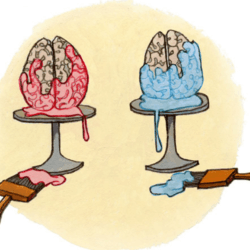
And the data, published today in BMJ, surprised Sumner. His team found that more than one-third of academic press releases contain exaggerated claims. What’s more, when a study is accompanied by an exaggerated press release, it’s more likely to be hyped in the press.

Read full, original article: The Power of a Press Release

Related Articles

Infographic: Global regulatory and health research agencies on whether glyphosate causes cancer

Infographic: Global regulatory and health research agencies on whether glyphosate causes cancer

Does glyphosate—the world's most heavily-used herbicide—pose serious harm to humans? Is it carcinogenic? Those issues are of both legal and ...

Most Popular

ChatGPT-Image-Mar-10-2026-01_39_01-PM
Viewpoint—“Miracle molecule” debunked: Why acemannan supplements don’t work
Wave Crest Over Red Cross
Viewpoint: Here are the election-inspired Trump administration healthcare policy reversals expected in the coming months
Democratic Donkey Plowing at Sunset
Viewpoint: Democratic tsunami: As the red tide recedes, here are the most likely shifts in food and agricultural policy
p22_spraying_2
How climate change is driving increased pesticide usage
Blue Checklist in Centered Hand
Viewpoint: From Medicaid cuts to MAHA-backed anti-vaccine and chemical hysteria, voters reject Republicans’ science-skeptical agenda
Aerial Sprayer Over Gradient Fields
Farming, food, and chemicals: Post-midterms, the MAHA alliance between Democrats and MAGA Republicans is bruised but not cowed. What comes next?
Microscopic IVF Egg Injection
With technical barriers to human embryo editing falling, ethical concerns escalate
Bayer Crop Circle in Golden Wheat
Making fertilizer from thin air: Bayer’s gene-editing innovation could dramatically cut chemical fertilizer use in growing food
Crumbling MAHA Stage Portrait
Cataloging the RFK Jr.-MAHA crushing midterm collapse
glp menu logo outlined

Get news on human & agricultural genetics and biotechnology delivered to your inbox.