Uganda’s GMO products ready for release in 2016 with no law yet in place

In this quest for improved varieties with the capacity to give high yields and other desired attributes such as drought tolerance and disease resistance, one of the technologies which has come into use is modern biotechnology, and Ugandan scientists have not been left out.

Currently, the scientists are developing genetically modified (GM) products at confined field trials. They are testing bananas for resistance to banana bacterial wilt (BBW), black sigatoka, nematodes as well as biofortifying banana with micro-nutrients with iron and Vitamin A.

Other crops under tests include cassava against cassava mosaic virus and cassava brown streak, maize for tolerance in drought conditions, rice varieties that grow in nitorgen-deprived soils, sweet potato against the potato feathery mottle virus, and cotton against bollworm.

However, it is a requirement that for GM products to be rolled out to farmers, there must be an existing biotechnology and biosafety law.

Still at the Bill stage, the law to enforce biotechnology and biosafety is before parliament for debate and is proving to be very controversial with many legislators, mostly arguing against it with hardly any evidence to support their views.

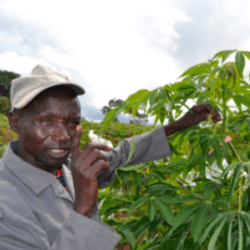
However, scientists who have been conducting research say with or without the law in place, in next two to three years, their products will be ready for release to farmers.

Dr Yona Baguma, deputy director general, Naro, said that by 2016, crops like the transgenic insect-resistant maize and BBW-resistant banana will be ready for release. In 2017, the list will be Bt-maize, stacked with resistance to stem borer and drought tolerance, Vitamin A- and iron-enrichened banana, virus-resistant cassava and nitrogen-efficient rice.

{{ reviewsTotal }}{{ options.labels.singularReviewCountLabel }}
{{ reviewsTotal }}{{ options.labels.pluralReviewCountLabel }}
{{ options.labels.newReviewButton }}
{{ userData.canReview.message }}

Related Articles

Infographic: Global regulatory and health research agencies on whether glyphosate causes cancer

Infographic: Global regulatory and health research agencies on whether glyphosate causes cancer

Does glyphosate—the world's most heavily-used herbicide—pose serious harm to humans? Is it carcinogenic? Those issues are of both legal and ...

Most Popular

ChatGPT-Image-Apr-20-2026-11_17_18-AM-2
10,000 scientists gone: Trump’s cuts create an unprecedented brain drain
ChatGPT-Image-Apr-23-2026-09_20_20-PM
Kennedy’s CDC blocks publication of study that shows vaccines reduce hospitalizations by 50%, then misrepresents why
ChatGPT-Image-Apr-22-2026-04_31_20-PM
‘Irresponsible decision’? On mandatory military flu shots, Hegseth chooses ‘freedom’ over health
ChatGPT-Image-Apr-20-2026-12_28_36-PM
Vaccine skepticism is a growing global problem
Screenshot-2026-04-22-at-4.10.32-PM
Viewpoint — ‘Completely unethical’: RFK, Jr.’s medical ignorance deprives melanoma cancer-sufferers of a life-saving therapy
Screenshot-2026-04-13-at-3.54.04-PM
AI disinformation stress test: Challenges and response strategies
ChatGPT-Image-Apr-17-2026-03_30_52-PM
Food labels, decoded: What they really mean
ChatGPT-Image-Mar-11-2026-11_58_46-AM
The Trump administration has run out more than 4,000 National Institutes of Health employees. Here are the consequences
images
The never-ending GMO debate: Pros and cons
ChatGPT-Image-Mar-2-2026-03_22_54-PM
Why ‘support supplements’ for GLP-1 users are mostly a waste of money
Screenshot-2026-04-15-at-1.22.58-PM
Anti-biotechnology activists smear hybrid wheat breakthrough that could surge yields in poorer countries
glp menu logo outlined

Get news on human & agricultural genetics and biotechnology delivered to your inbox.