Is there a scientific basis to the paleo diet?

The problem with modern diets is that they rely too heavily on modern, processed foods. If only we emulated the eating habits of our paleolithic predecessors, we’d be healthier and less obese. That’s the premise of popular “paleo” diets.

“We are Stone Agers living in the Space Age,” writes Loren Cordain in his book “The Paleo Diet: Lose Weight and Get Healthy by Eating the Foods You Were Designed to Eat.”

Why should we eat like our ancestors did during the Paleolithic period, which ended about 12,000 years ago? Because our genes have changed very little in the 300 or so generations since then, Cordain told me, and they’re adapted to a world where food was hunted, fished or gathered from the natural environment. Our bodies didn’t evolve to run on the refined foods found on grocery shelves today, he says.

But nor did we evolve to be healthy, says Daniel Lieberman, a professor of human evolutionary biology at Harvard University and author of “The Story of the Human Body: Evolution, Health, and Disease.”

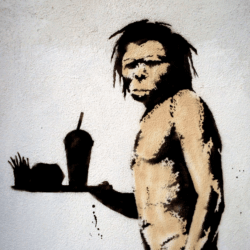
Jessica Larson, a nutritionist and registered dietitian at the Center for Nutrition Policy and Promotion at the USDA, cautions, “At this time, there is not enough research on the paleo diet and its potential impact on health over time.”

Read full, original story: The paleo diet: Should you eat like a caveman?

Related Articles

Infographic: Global regulatory and health research agencies on whether glyphosate causes cancer

Infographic: Global regulatory and health research agencies on whether glyphosate causes cancer

Does glyphosate—the world's most heavily-used herbicide—pose serious harm to humans? Is it carcinogenic? Those issues are of both legal and ...

Most Popular

ChatGPT-Image-Sep-23-2026-02_36_39-PM
Viewpoint: After firing the entire National Science Board, Trump reshapes funding initiatives. Here’s the good and the bad.
ChatGPT-Image-Mar-10-2026-01_39_01-PM
Viewpoint—“Miracle molecule” debunked: Why acemannan supplements don’t work
sorghum farmers in kenya FARMERS TREND
Here are all the ways CRISPR gene editing is transforming Africa’s staple crops—and there’s a lot more innovation to come
ChatGPT-Image-Sep-10-2026-10_36_07-AM
Viewpoint: Even lousy scientific articles can shield authors when they hype dubious health claims and products
ChatGPT-Image-Sep-30-2026-01_38_36-PM
Viewpoint: Died “with measles” vs. died “from measles”: RFK, Jr.’s dangerously subversive word games
ChatGPT-Image-Sep-30-2026-01_25_34-PM
Blood tests for Alzheimer’s? The latest grifter, social media scam.
ChatGPT-Image-Sep-30-2026-01_11_07-PM
How U.S. teamed with Russia to block global human AI weapons oversight
Screenshot-2026-10-01-at-11.21.27-AM
Vaccine hesitancy, like malaria, surges globally, topping 35% in some countries
Screenshot 2025-10-15 at 1.00
What you probably don’t know: For most fast-food fans, bioengineering isn’t a choice — it’s the norm
ChatGPT-Image-Sep-21-2026-03_15_09-PM
Viewpoint: Chipotle-inspired lesson: 10,000 sick customers suggest that processed foods can be safer than fresh ones
glp menu logo outlined

Get news on human & agricultural genetics and biotechnology delivered to your inbox.