Scientific American: Why trumped up glyphosate controversy obscures benefits of GM technology

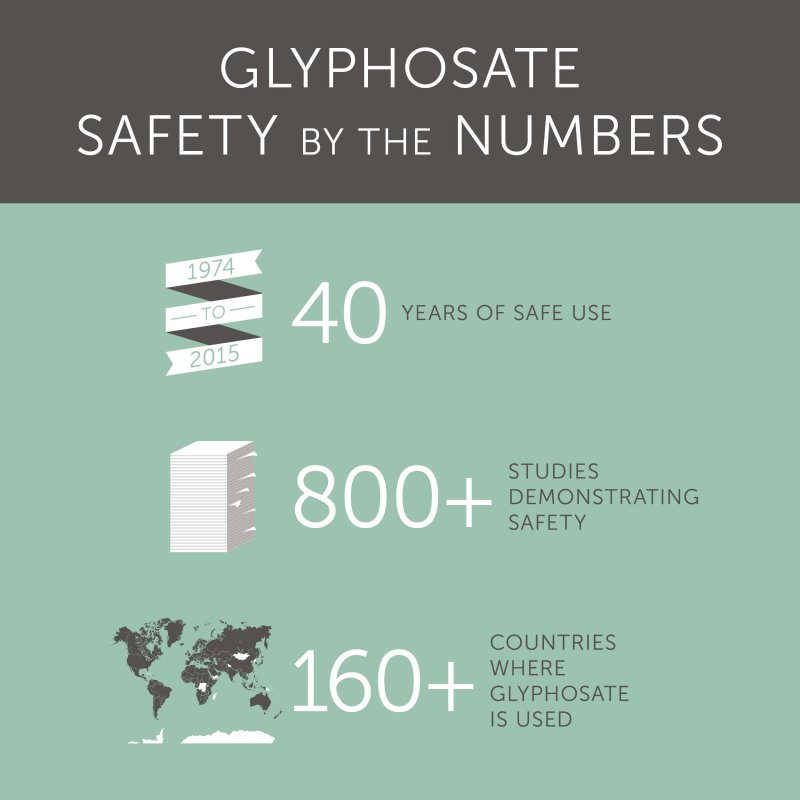
glyphosate by the numbers

It’s been awhile since I’ve written on GMOs, but it may be time to start again. Recently, a huge amount of attention was given to an IARC report suggesting that glyphosate (brand name: Roundup), one of the most common pesticides, may cause cancer.

Hypothetically, let’s pretend we could say for certain that glyphosate causes cancer.

a) Would this be sufficient reason to stop using glyphosate?

b) Would this imply that GMO’s are a bad idea?

The answer to both of these questions is no.

If you have an airbag in your car, there’s a risk that it will kill you, but I don’t think anyone would argue that stripping the airbag out of your car is a good idea.

So the question is should not be, “Does glyphosate cause cancer?” but rather, “Is glyphosate worse than the alternative?”


Glyphosate is not GMO

Pretend the most ardent critics are right, and Roundup is the evil spawn of big business and the devil. What does that tell us about GMOs? Well, nothing really.

As I’ve argued over and over, genetic engineering, like any technology, can be used for good or bad purposes. Some uses are almost sure to be bad in the long term, but that does not mean the technology is a bad thing.

Some critics argue that there are better alternatives to GMO technology, so it’s not worth pursuing. But imagine I came to you in 1945 and suggested that rocketry wasn’t worth pursuing. “Rockets aren’t very accurate,” I’d say, “and they’re only used to launch explosive payloads to hurt people anyway.” If people had stopped pursuing the technology then, we wouldn’t have satellites, interplanetary travel or GPS.

Read full, original article: GMOs are Still the Best Bet for Feeding the World

Related Articles

Infographic: Global regulatory and health research agencies on whether glyphosate causes cancer

Infographic: Global regulatory and health research agencies on whether glyphosate causes cancer

Does glyphosate—the world's most heavily-used herbicide—pose serious harm to humans? Is it carcinogenic? Those issues are of both legal and ...

Most Popular

ChatGPT-Image-Mar-10-2026-01_39_01-PM
Viewpoint—“Miracle molecule” debunked: Why acemannan supplements don’t work
Screenshot-2026-10-02-at-9.11.36-AM
The genetics of personality
Radioactive-Americana-Collage-2
The kooky logic behind the raft of spurious cancer claims from Harvard’s T.H. Chan School of Public Health
Screenshot-2026-09-28-at-11.26.17-AM
Viewpoint: Wellness movement activists reposition nicotine from a killer addictive drug into a cure-all for brain ills
strand of dna genetics
No, GMO foods do not “damage genes, natural disposition and hormones, or decrease physical health and intelligence”
Supreme-Court-Amid-Climate-Crisis
Should fossil fuel companies be shielded from lawsuits over climate change damage? The Supreme Court takes up the question
Screenshot-2026-10-06-at-2.36.47-PM
Is organic farming really more sustainable? 100 recent studies say ‘no’
Screenshot 2025-09-17 at 12.41
Jump-starting global warming: Rising temperatures are driving up emissions from wildfires, fermenting wetlands, and melting permafrost
Screenshot-2026-10-02-at-8.56.38-AM
Trump finalizes Medicare drug price cuts, drawing Big Pharma’s fury and a legal challenge
Screenshot-2026-10-02-at-11.12.24-AM
‘Why do we keep falling for this stuff?’ America’s love affair with snake oil salesmen and scams
Kind-People-Kind-Futures-Hands
Patches for sleep, weight, NAD+, energy, focus, periods. No evidence to support the latest social media wellness scams
glp menu logo outlined

Get news on human & agricultural genetics and biotechnology delivered to your inbox.