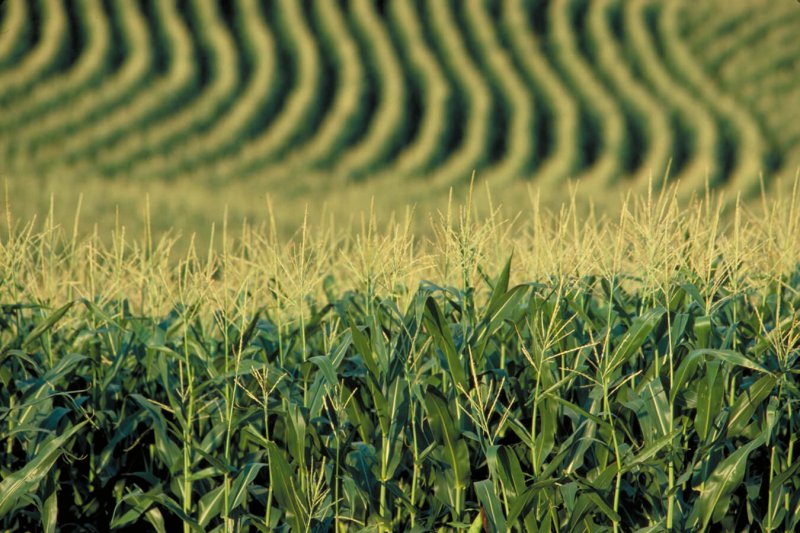

For the Union of Concerned Scientists, Ricardo Salvador writes, in part:
Nowhere is the power and prowess of agricultural science so evident as in the Midwestern Corn Belt. Since the 19th century, when people of European descent settled the area that is now the Corn Belt (currently extending from western Ohio to eastern Nebraska), yields of the crop have more than quintupled per unit of land, and increased by more than eight times per unit of labor.
But:
We have produced enough corn. In itself, the crop is noble, the crop is historical; it is economically significant and life-giving, but it is also at the core of the most significant issues we must resolve in agriculture as well as as a society. These problems, it turns out, are the problems of industrialization: labor exploitation, economic inequality, extraction, pollution, overconsumption and the inertia that flows from needing to preserve and protect investment in infrastructure.
On the other hand, Washington Post’s Tamar Haspel had this to say about the importance of corn and feeding the world:
There’s a strong case that field corn, used as a grain, is the single most important food crop on the planet. That case is based on what I’ll contend is the most underappreciated metric in agriculture.
That metric is — drumroll, please — calories per acre.
Calories matter because every last one of us needs about 1 million of them each year. In the calorie department, corn is king. Corn averages roughly 15 million calories per acre. If you had taken our 2014 corn harvest of 14.2 billion bushels and used it to feed people, it would have met 17 percent of the entire world’s caloric needs.
Additionally, “corn has a particular kind of metabolism shared only with 5 percent of flowering plants,” Ricardo Salvador, a prominent voice in the movement for sustainable food and a plant scientist with a specialty in corn, told me. He explained that those plants (called C4, for a four-carbon molecule that’s part of the photosynthesis process) have special cells that make them up to three times as productive as the unfortunate 95 percent.
For more on their opinions: (The GLP aggregated and excerpted this blog/article to reflect the diversity of news, opinion and analysis. Read full, original posts below)



Ricardo Salvador: We’ve Got More Than Enough Corn
Tamar Haspel: In defense of corn, the world’s most important food crop