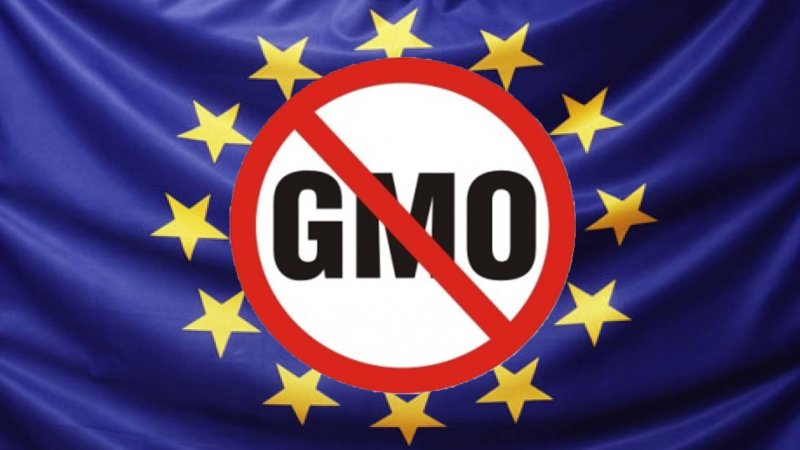
Bayer board member says GMOs have ‘lost the debate in Europe’

maxresdefault

The GLP aggregated and excerpted this blog/article to reflect the diversity of news, opinion and analysis.

Bayer board member Kemal Malik has painted a gloomy picture about the state of play in Europe for genetically modified (GM) cropping and the technology’s future. . . .

In a wide-ranging interview last week, he said Europe’s consumer rejection of GM crops and foods was an emotional reaction . . .

. . . .

“I think we’ve lost the debate on GM crops in Europe,” he said. “I don’t think there’s enough political will to challenge the debate.

“I don’t think the industry did the greatest job to be honest of taking the public and law makers with them in Europe.

“As an industry we were so convinced of the technology we thought it was obvious that it should be accepted by society (but) it hasn’t been and I don’t see that changing any time soon in Europe.”

. . . .

He said he spoke about the associated challenges with GM crops and scientific acceptance to politicians at the EU parliament in Brussels last month. . . .

Mr Malik said European legislation and treaties applied the precautionary principle that meant any harm should be avoided but an “innovation principle” was also needed to ensure Europe remained globally competitive.

. . . .

Mr Malik said the company didn’t expect laws and regulations to be made by industry or scientists and they should be made by politicians . . . But he said politicians should also listen to the scientific viewpoint but this had not occurred enough in the GM debate, which was partly industry’s fault.

“I think it is too easy for us as an industry to blame NGOs or whatever,” he said. “We didn’t engage enough at explaining this . . .and we’ve lost the debate.”

Read full, original post: Bayer sees gloomy GM picture in Europe

Related Articles

Infographic: Global regulatory and health research agencies on whether glyphosate causes cancer

Infographic: Global regulatory and health research agencies on whether glyphosate causes cancer

Does glyphosate—the world's most heavily-used herbicide—pose serious harm to humans? Is it carcinogenic? Those issues are of both legal and ...

Most Popular

ChatGPT-Image-Mar-10-2026-01_39_01-PM
Viewpoint—“Miracle molecule” debunked: Why acemannan supplements don’t work
ChatGPT-Image-Sep-30-2026-01_11_07-PM
How U.S. teamed with Russia to block global human AI weapons oversight
ChatGPT-Image-Sep-21-2026-03_15_09-PM
Viewpoint: Chipotle-inspired lesson: 10,000 sick customers suggest that processed foods can be safer than fresh ones
ChatGPT-Image-Sep-29-2026-12_16_42-PM
Social media influencers are driving food misinformation across Europe
Screenshot-2026-09-29-at-11.06.43-AM
Astrology, homeopathy, vaccine rejectionism, creationism: Why pseudoscience thrives as science advances
generated-1790707585414
Facts & Fallacies podcast: America's health care system is broken. A doctor explains how to fix it
Screenshot-2026-09-28-at-1.16.38-PM
Defying public perceptions, U.S. cancer deaths plunged 35% since 1991
ChatGPT-Image-Sep-23-2026-02_36_39-PM
Viewpoint: After firing the entire National Science Board, Trump reshapes funding initiatives. Here’s the good and the bad.
ChatGPT-Image-Jun-18-2026-04_15_29-PM
Viewpoint: Kennedy’s ‘bad science’: MAGA embrace bolsters HHS secretary’s influence and popularity
Screenshot-2026-09-17-at-1.07.08-PM
'We are dangerously addicted to antidepressants': Should we heed RFK Jr.’s sobering warning?
glp menu logo outlined

Get news on human & agricultural genetics and biotechnology delivered to your inbox.