78% of Canadians think tomatoes modified with catfish gene would taste fishy

Screen Shot at AM

A new report commissioned by Health Canada finds Canadians are critical yet overwhelmingly confused about food that has been genetically engineered, but they want mandatory labels to help inform their grocery choices.

The report finds consumers have “strong feelings” about being able to identify genetically modified products when they’re shopping, and 78 per cent are calling for clear labelling on packages.

. . . .

Given the choice, 62 per cent would buy a non-GM food over a GM product out of fears of health hazards or impacts on the environment.

[Only 26% of respondents indicated they would be comfortable eating foods that have been genetically modified, and just 22% support the development and sale of GM foods in Canada.]

But the research… also reveals that consumers have little understanding about the science of what many dubbed “Frankenfood.” Often, it’s confused with goods that have had additives like preservatives or hormone injections.

“Lack of awareness and understanding affects their confidence in the food supply and raises their level of concern,” the report says.

Some of the words commonly used by participants included “fake,” “mutations,” “man-made” or “mass produced.”
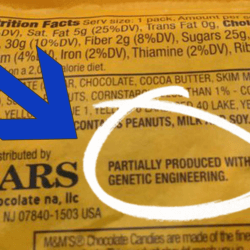
 

According to Health Canada’s website, all GM foods are “rigorously assessed” for safety prior to being allowed on the market. But labelling is now voluntary.

. . . .

NDP MP Pierre-Luc Dusseault says Canadians have every right to know what they’re eating, and he has tabled a private member’s bill to require mandatory labels.

. . . .

But negative views revealed in the research highlight a “difficult challenge” for Health Canada ahead.

Anti-GM advocates have successfully filled the “information void,” the report reads.

The GLP aggregated and excerpted this blog/article to reflect the diversity of news, opinion and analysis. Read full, original post: Canadians anxious but ill-informed about genetically engineered food


Related Articles

Infographic: Global regulatory and health research agencies on whether glyphosate causes cancer

Infographic: Global regulatory and health research agencies on whether glyphosate causes cancer

Does glyphosate—the world's most heavily-used herbicide—pose serious harm to humans? Is it carcinogenic? Those issues are of both legal and ...

Most Popular

ChatGPT-Image-Mar-10-2026-01_39_01-PM
Viewpoint—“Miracle molecule” debunked: Why acemannan supplements don’t work
ChatGPT-Image-Sep-23-2026-02_36_39-PM
Viewpoint: After firing the entire National Science Board, Trump reshapes funding initiatives. Here’s the good and the bad.
ChatGPT-Image-Sep-10-2026-10_36_07-AM
Viewpoint: Even lousy scientific articles can shield authors when they hype dubious health claims and products
generated-1790707585414
Facts & Fallacies podcast: America's health care system is broken. A doctor explains how to fix it
ChatGPT-Image-Sep-21-2026-03_15_09-PM
Viewpoint: Chipotle-inspired lesson: 10,000 sick customers suggest that processed foods can be safer than fresh ones
ChatGPT-Image-Sep-21-2026-11_54_00-AM
Viewpoint: Activist environmental NGOs are turning from public funding to activist billionaires to support their campaigns. It won’t end well.
Screenshot 2026-08-12 at 1.22
Activists vs. Scientists: Could “Butterfly Effect” fears derail gene-drive research targeting the flesh-eating screwworm?
Screenshot-2026-09-16-at-10.27.33-AM
Viewpoint: SCOTUS poised to address First Amendment tension between mandatory vaccines, children’s health and religious freedom 
sorghum farmers in kenya FARMERS TREND
Here are all the ways CRISPR gene editing is transforming Africa’s staple crops—and there’s a lot more innovation to come
ChatGPT-Image-Sep-22-2026-11_17_31-AM
The exploding controversy over AI’s built-in survival drive
glp menu logo outlined

Get news on human & agricultural genetics and biotechnology delivered to your inbox.