Proposed release of bacteria infected mosquitoes not as controversial as GM mosquitoes

mosquito

Every Wednesday and Friday, members of the Clovis Mosquito Abatement team pick up a box from the post office, shipped to them from a lab in Kentucky. Inside that box are 20 tubes, each containing 1,000 male mosquitoes infected with a bacterium called Wolbachia that will render the eggs of any female they mate with infertile.

Project manager Steve Mulligan says it took a little explaining to persuade residents of a neighborhood in Clovis, Calif., to allow them to dump 40,000 mosquitoes in their front yards every week.

“It is unusual,” says Mulligan. “The idea of releasing mosquitoes to control mosquitoes, that is thinking a little outside of the box.”

But in the age of Zika virus…people are open to new ideas to eliminate a species of mosquito that is responsible for millions of human deaths around the world.

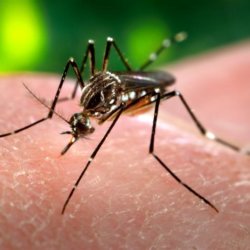
While the residents of Clovis have been open to the audacious experiment…other proposals have stoked far more controversy. A company called Oxitec engineered a mosquito in a laboratory to produce similar infertility effects to the Wolbachia infection method. But because this approach involves genetic modification as opposed to bacterial infection, Florida Keys residents formed a resistance movement to the GM mosquito…

The GLP aggregated and excerpted this blog/article to reflect the diversity of news, opinion, and analysis. Read full, original post: Can Genetically Modified Mosquitoes Save The World From Zika?


Related Articles

Infographic: Global regulatory and health research agencies on whether glyphosate causes cancer

Infographic: Global regulatory and health research agencies on whether glyphosate causes cancer

Does glyphosate—the world's most heavily-used herbicide—pose serious harm to humans? Is it carcinogenic? Those issues are of both legal and ...

Most Popular

Screenshot-2026-11-05-at-1.20.54-PM
$7.35 billion PFAS settlement: 3M to pay people who blame health problems on ‘forever chemicals’ phased out of firefighting foam for more than 20 years
ChatGPT-Image-Mar-10-2026-01_39_01-PM
Viewpoint—“Miracle molecule” debunked: Why acemannan supplements don’t work
Crumbling MAHA Stage Portrait
Cataloging the RFK Jr.-MAHA crushing midterm collapse
Blue Checklist in Centered Hand
Viewpoint: From Medicaid cuts to MAHA-backed anti-vaccine and chemical hysteria, voters reject Republicans’ science-skeptical agenda
Democratic Donkey Plowing at Sunset
Viewpoint: Democratic tsunami: As the red tide recedes, here are the most likely shifts in food and agricultural policy
Wave Crest Over Red Cross
Viewpoint: Here are the election-inspired Trump administration healthcare policy reversals expected in the coming months
Aerial Sprayer Over Gradient Fields
Farming, food, and chemicals: Post-midterms, the MAHA alliance between Democrats and MAGA Republicans is bruised but not cowed. What comes next?
Microscopic IVF Egg Injection
With technical barriers to human embryo editing falling, ethical concerns escalate
p22_spraying_2
How climate change is driving increased pesticide usage
Hipster eugenics: better babies for billionaires
Viewpoint: “Positive eugenics”: Reviving a movement reviled and condemned for a century
Reaching Through the Woven Sky
Challenging genetic modification rejectionists: Our evolving food system has relied on science for thousands of years
Bayer Crop Circle in Golden Wheat
Making fertilizer from thin air: Bayer’s gene-editing innovation could dramatically cut chemical fertilizer use in growing food
Picture1
Viewpoint: How badly is the U.S. food-safety net fraying? FDA’s bungled handling of the tainted lettuce crisis deepens concerns over cuts to disease tracking and response
glp menu logo outlined

Get news on human & agricultural genetics and biotechnology delivered to your inbox.