GMO labeling law makes ‘Biggest Science Setbacks of 2016’ list

Screen Shot at PM
Photo by Steve Rhodes/Flickr

Scientific progress doesn’t always move in a straight line. In fact, as we’ve seen this year, sometimes things just turn around and move backwards. …

…These were the worst setbacks to science in 2016.

. . . .

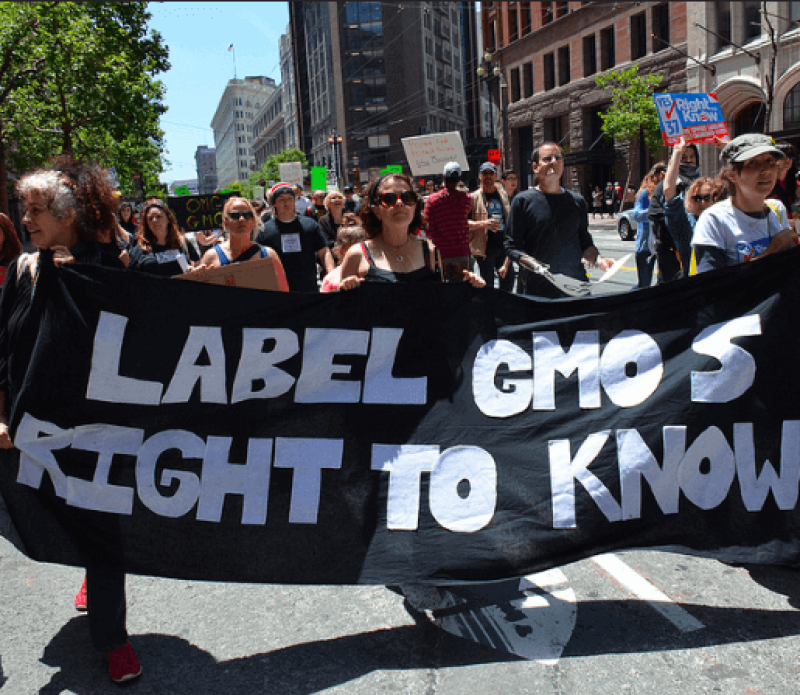
In July, President Obama signed a GMO labeling law that much of the anti-GMO movement regarded as a sham. The law, which will require labeling on all food packages indicating whether they contains GMO ingredients, is indeed a watered-down version of legislation lawmakers sought to pass in Vermont. …

But even if the law is toothless, the fact that it exists is still a victory for the anti-GMO movement, and hence for yet another public backlash against science. After all, most scientists agree that GMOs, which are in upwards of 75 percent of our food, are safe to consume.

A recent Pew Research survey found that a fifth of those under 30 feel not only that non-modified foods are better, but that GM-varieties might lead to health problems, a claim which is not supported by science. Unfortunately, the anti-GMO frenzy has also blinded activists to the potential benefits of GMOs. Take the environmental group Greenpeace, which has worked vigorously to block GMOs designed to reduce vitamin A deficiency in economically impoverished nations.

The GLP aggregated and excerpted this blog/article to reflect the diversity of news, opinion and analysis. Read full, original post: The Biggest Science Setbacks of 2016

Related Articles

Infographic: Global regulatory and health research agencies on whether glyphosate causes cancer

Infographic: Global regulatory and health research agencies on whether glyphosate causes cancer

Does glyphosate—the world's most heavily-used herbicide—pose serious harm to humans? Is it carcinogenic? Those issues are of both legal and ...

Most Popular

ChatGPT-Image-Mar-10-2026-01_39_01-PM
Viewpoint—“Miracle molecule” debunked: Why acemannan supplements don’t work
Screenshot-2026-10-06-at-2.36.47-PM
Is organic farming really more sustainable? 100 recent studies say ‘no’
Radioactive-Americana-Collage-2
The kooky logic behind the raft of spurious cancer claims from Harvard’s T.H. Chan School of Public Health
Screenshot-2026-09-22-at-10.54.12-AM
‘They misunderstand science’: Research attempting to tie autism to changes in the gut microbiome comes under fire
Supreme-Court-Amid-Climate-Crisis
Should fossil fuel companies be shielded from lawsuits over climate change damage? The Supreme Court takes up the question
Screenshot 2025-09-17 at 12.41
Jump-starting global warming: Rising temperatures are driving up emissions from wildfires, fermenting wetlands, and melting permafrost
Screenshot-2026-09-28-at-11.26.17-AM
Viewpoint: Wellness movement activists reposition nicotine from a killer addictive drug into a cure-all for brain ills
Childrens-Health-Defense-Press-Briefing
Court links patient’s death to anti-vaccine doctor promoted by Kennedy’s Children’s Health Defense
Screenshot-2026-09-22-at-12.26.15-PM
‘Forever chemical’ concerns: Separating hysteria from reasonable concern in the debate over PFAS danger
Kind-People-Kind-Futures-Hands
Patches for sleep, weight, NAD+, energy, focus, periods. No evidence to support the latest social media wellness scams
Screenshot-2026-10-02-at-9.11.36-AM
The genetics of personality
ChatGPT-Image-Sep-21-2026-11_21_39-AM
Viewpoint: Food cults: Online ‘nutrition communities’ can pose unique dangers
strand of dna genetics
No, GMO foods do not “damage genes, natural disposition and hormones, or decrease physical health and intelligence”
glp menu logo outlined

Get news on human & agricultural genetics and biotechnology delivered to your inbox.