GMOs, nanotechnology losing ground in India because scientists not engaging public

EP SCI COUNTER
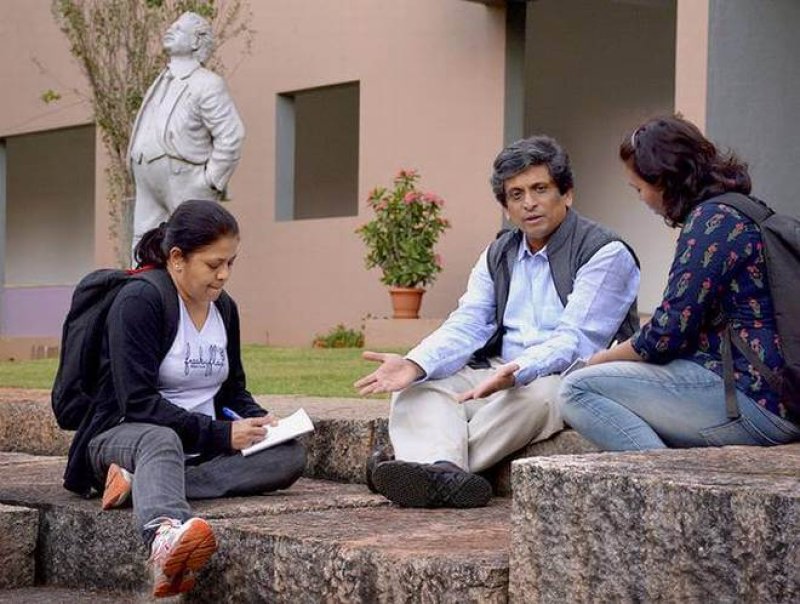
Making it accessible Dr Somak Raychaudhury, Director of IUCAA briefing journalists about LIGO's detection of gravitational waves

Most reputed universities abroad have dos and don’ts for researchers on interacting with journalists when their papers are published. But many Indian scientists whose research and/or salaries are paid for with taxpayers’ money do not consider it their responsibility to communicate the results of their work either directly or through the media.

While good science journalists are adept at conveying even complex topics in an accessible manner without compromising on scientific accuracy, in the hands of non-specialists, the information many times gets obscured or is even conveyed patently wrong…

It must be remembered that the media alone is not responsible for hyping up science.

There is huge price to pay when scientists remain in a cocoon. The most dramatic example of the negative fallout of scientists shirking their responsibility of communicating with the public is the misconceived notions among people about the safety of genetically modified organisms. And climate change best exemplifies the “negative consequences of poor communication between scientists and the public”. It is to prevent nanotechnology from going the GM way that a few years back the Royal Society successfully engaged scientists to explain the basics, the advantages and disadvantages of nanotechnology with the public early on…

The GLP aggregated and excerpted this blog/article to reflect the diversity of news, opinion, and analysis. Read full, original post: ‘There is a huge price to pay when scientists remain in a cocoon’


{{ reviewsTotal }}{{ options.labels.singularReviewCountLabel }}
{{ reviewsTotal }}{{ options.labels.pluralReviewCountLabel }}
{{ options.labels.newReviewButton }}
{{ userData.canReview.message }}

Related Articles

Infographic: Global regulatory and health research agencies on whether glyphosate causes cancer

Infographic: Global regulatory and health research agencies on whether glyphosate causes cancer

Does glyphosate—the world's most heavily-used herbicide—pose serious harm to humans? Is it carcinogenic? Those issues are of both legal and ...

Most Popular

ChatGPT-Image-Apr-20-2026-11_17_18-AM-2
10,000 scientists gone: Trump’s cuts create an unprecedented brain drain
ChatGPT-Image-Apr-23-2026-09_20_20-PM
Kennedy’s CDC blocks publication of study that shows vaccines reduce hospitalizations by 50%, then misrepresents why
ChatGPT-Image-Apr-22-2026-04_31_20-PM
‘Irresponsible decision’? On mandatory military flu shots, Hegseth chooses ‘freedom’ over health
ChatGPT-Image-Apr-20-2026-12_28_36-PM
Vaccine skepticism is a growing global problem
Screenshot-2026-04-13-at-3.54.04-PM
AI disinformation stress test: Challenges and response strategies
Screenshot-2026-04-22-at-4.10.32-PM
Viewpoint — ‘Completely unethical’: RFK, Jr.’s medical ignorance deprives melanoma cancer-sufferers of a life-saving therapy
ChatGPT-Image-Mar-11-2026-11_58_46-AM
The Trump administration has run out more than 4,000 National Institutes of Health employees. Here are the consequences
images
The never-ending GMO debate: Pros and cons
ChatGPT-Image-Apr-17-2026-03_30_52-PM
Food labels, decoded: What they really mean
ChatGPT-Image-Mar-2-2026-03_22_54-PM
Why ‘support supplements’ for GLP-1 users are mostly a waste of money
Screenshot-2026-04-15-at-1.22.58-PM
Anti-biotechnology activists smear hybrid wheat breakthrough that could surge yields in poorer countries
glp menu logo outlined

Get news on human & agricultural genetics and biotechnology delivered to your inbox.