Switchgrass biofuel? New gene that makes plant sterile could ease contamination concerns

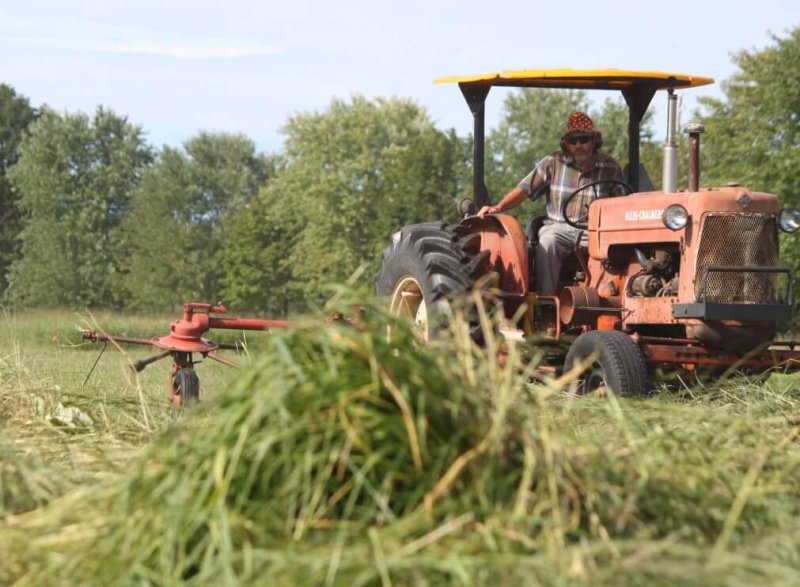
Switchgrass Harvest at Meach Cove Farm e

Switchgrass has been lauded as a promising source of biofuel…. Genetically modifying switchgrass could boost crop yields and its commercial viability.

But to close in on realizing that potential requires one small tweak: a genetic sterility switch that prevents the modified grass from contaminating the genes of nearby unmodified grasses. Dazhong “Dave” Zhao, a UWM associate professor of biological sciences, hopes to build that switch.

Zhao and postdoctoral researcher Jian Huang are tackling the main obstacle keeping genetically modified switchgrass off the commercial market. It’s the possibility that lab-engineered genes could escape human control by mixing with genes of wild-growing grasses, which might interrupt natural processes in unpredictable ways.

Under current federal regulations, only genetically modified grasses that are absolutely sterile in the lab can enter field trials.

Zhao hopes to create sterile switchgrass by introducing a fusion gene into its reproductive cells, using a harmless bacterium as a delivery vehicle. The fusion gene merges the Solo Dancers, or SDS, gene – an essential player in the reproduction of many plant species – with a toxic gene called Barnase.

“By combining the SDS and Barnase genes, we have created a new gene with very specific toxicity: It kills only the tissue that makes a plant’s version of eggs and sperm,” Zhao says.

The GLP aggregated and excerpted this blog/article to reflect the diversity of news, opinion, and analysis. Read full, original post: A Switch for Switchgrass

{{ reviewsTotal }}{{ options.labels.singularReviewCountLabel }}
{{ reviewsTotal }}{{ options.labels.pluralReviewCountLabel }}
{{ options.labels.newReviewButton }}
{{ userData.canReview.message }}

Related Articles

Infographic: Global regulatory and health research agencies on whether glyphosate causes cancer

Infographic: Global regulatory and health research agencies on whether glyphosate causes cancer

Does glyphosate—the world's most heavily-used herbicide—pose serious harm to humans? Is it carcinogenic? Those issues are of both legal and ...

Most Popular

ChatGPT-Image-Mar-10-2026-01_39_01-PM
Viewpoint—“Miracle molecule” debunked: Why acemannan supplements don’t work
ChatGPT-Image-Jun-15-2026-01_04_14-PM
Viewpoint: How politicized science became a political religion 
DtAieAIkCZy-uchn-oqg
Viewpoint: In the science misinformed grifter game plan, the organic-food-is-healthier myth might be the worst.
ChatGPT-Image-Jun-15-2026-03_00_23-PM
World’s first AI-designed vaccine explained
ChatGPT-Image-Jun-25-2026-12_23_17-PM
No, Bill Gates did not secretly engineer ticks to promote veganism
eu-farming-policy
EU bureaucrats are finally catching up to the gene editing revolution in food and agriculture
d a ca e c c beb x
Facts & Fallacies podcast: The 'woke' crusade against anthropology? Dr. Elizabeth Weiss

Screenshot-2026-07-07-at-10.48.33-AM
700-person study reaffirms that getting a flu and Covid shot on the same day is safe
ChatGPT-Image-Jul-7-2026-03_07_17-PM
Kennedy blocks preventive health care panel that reviews treatments for HIV, diabetes, and cancer from meeting — for fourth time
Screenshot-2026-07-06-at-11.30.08-AM
AI is making even its founders uneasy: ‘We find evidence of introspection, joy, satisfaction, fear, grief and unease.’
GMOprotest
Viewpoint: CRISPR-hating activists air their grievances about gene editing farming innovation
Picture1
Viewpoint: The Lackland flu outbreak is fading but Hegseth’s military anti-vaccine fiasco is not
chjpdmf zs sci pbwfnzxmvd vic l zs ymdiylta l zsmtu nty otkwmtetaw hz uta a dzjyy euanbn
Technical milestone or designer baby obsession: Latest gene-editing advance reignites a familiar ethical debate
glp menu logo outlined

Get news on human & agricultural genetics and biotechnology delivered to your inbox.