French farmers: 3 years too short to develop viable replacement for glyphosate herbicide

Screen Shot at PM

President Emmanuel Macron’s promise to rid France of controversial weedkiller glyphosate within three years has left some farmers in the European Union’s largest grain producing country on edge.

After intense debate, the EU this week cleared U.S.-developed glyphosate for another five years despite concerns that the most widely used pesticide in the world can cause cancer.

EU rules allow France to unilaterally ban the substance, however, an approach Macron has decided to take. He has given farmers and researchers three years to come up with an alternative.

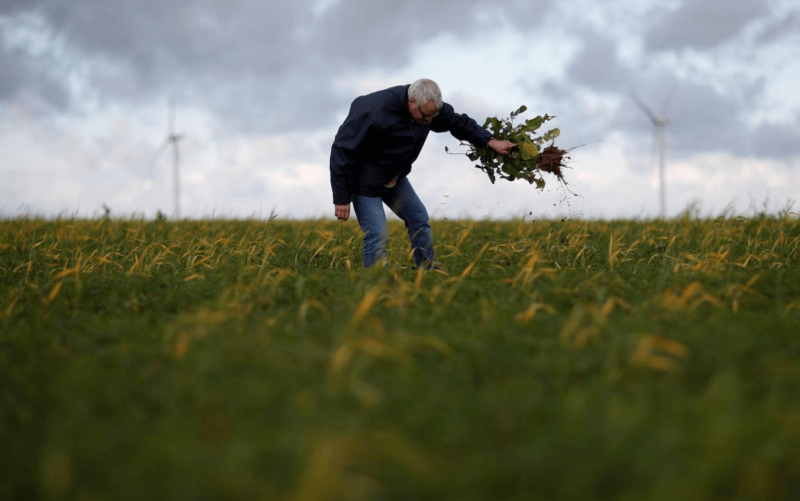
“Three years is too short,” said Herve Fouassier, 45, who runs a 200-hectare farm in Loiret, south of Paris.

Like French farm unions, Fouassier does not believe a solution can be found in time.

“We are ready to hear the wishes of society which wants less use of crop protection products, but give us a little time to adapt,” he said, standing in a mustard field treated with glyphosate.

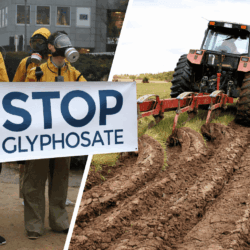
French crop growers said this week even five years is insufficient time because there is currently no alternative economically and environmentally viable alternative to the weedkiller.

Glyphosate’s worldwide success is linked to its low cost; farmers can kill weeds by spraying the chemical on their fields instead of plowing the soil several times to remove weeds.

Read full, original post: Three years too short to replace glyphosate, French farmers say

{{ reviewsTotal }}{{ options.labels.singularReviewCountLabel }}
{{ reviewsTotal }}{{ options.labels.pluralReviewCountLabel }}
{{ options.labels.newReviewButton }}
{{ userData.canReview.message }}

Related Articles

Infographic: Global regulatory and health research agencies on whether glyphosate causes cancer

Infographic: Global regulatory and health research agencies on whether glyphosate causes cancer

Does glyphosate—the world's most heavily-used herbicide—pose serious harm to humans? Is it carcinogenic? Those issues are of both legal and ...

Most Popular

Screenshot 2026-05-06 at 2.56
Singularity crisis ahead? Can super babies save us from rogue AI geniuses?
Screenshot-2026-03-13-at-12.14.04-PM
The FDA wants to make many popular prescription drugs OTC—a great idea. Here’s why it’s unlikely to happen
Screenshot-2026-05-01-at-1.29.41-PM
Viewpoint: What happens when whole grains meet modern food manufacturing? Labels don’t tell the whole story.
Screenshot-2026-04-20-at-2.26.27-PM
Viewpoint — Food-fear world: The latest activist scientists campaign: Cancer-causing additives
Screenshot-2026-05-01-at-11.56.24-AM
‘Science moves forward when people are willing to think differently’: Memories of DNA maverick Craig Venter
images
The never-ending GMO debate: Pros and cons
Screenshot-PM-24
Viewpoint: The herbicide glyphosate isn’t perfect. Banning it would be far worse.
Screenshot-2026-04-03-at-11.15.51-AM
Paraben panic: How a flawed study, media hype, and chemophobia convinced the public of the danger of one of the safest classes of preservatives
Screenshot-2026-05-06-at-2.07.43-PM
Manufacturing a conspiracy: The timeline of how  the White House embraced the fringe claim that scientists are being mysteriously murdered
Screenshot-2026-04-12-135256
Bixonimania: The fake disease scam that AI swallowed whole
Screenshot-2026-04-30-at-2.19.37-PM
5 myths about summer dehydration that could damage your health — or even kill you
glp menu logo outlined

Get news on human & agricultural genetics and biotechnology delivered to your inbox.