Evolution’s way: Odd survival strategies in the face of scarce resources and predators

survive

Nature has a lot to teach us. As part of our special package, we explored how animals, plants, and bacteria use different resilience strategies when faced with scarce resources, predators, and other challenges.

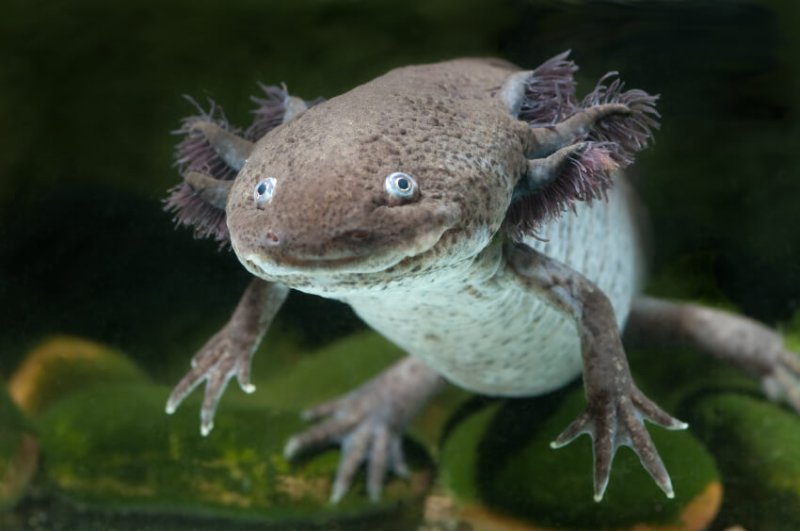
[T]he axolotl—a large salamander also called the Mexican walking fish because it looks like a 20-centimeter eel with stumpy legs—can replace an entire missing limb or even its tail, which means regrowing the spinal cord, backbone, and muscles. About 30 research teams are probing how these salamanders do it. In the axolotl, they’ve found, various tissues work together to detect limb loss and coordinate regrowth.

Imagine a raging infection in the lungs of a hospitalized cancer patient. When a powerful antibiotic floods the patient’s system, the bacterium responsible seems to be doomed. But it can deploy a resilience strategy honed over billions of years: borrowing a gene from another cell that enables the pathogen to survive.

About 450 species [of fish] switch sexes over their lifetimes to maximize their number of offspring. The fish do so by undergoing hormonal changes that transform their organs from those of one sex to the other. Patterns of sex switching vary by species.

Read full, original post: From stealing genes to regrowing limbs, how life finds a way to survive and thrive

{{ reviewsTotal }}{{ options.labels.singularReviewCountLabel }}
{{ reviewsTotal }}{{ options.labels.pluralReviewCountLabel }}
{{ options.labels.noReviewsLabel }}
{{ options.labels.newReviewButton }}
{{ userData.canReview.message }}

Related Articles

Infographic: Global regulatory and health research agencies on whether glyphosate causes cancer

Infographic: Global regulatory and health research agencies on whether glyphosate causes cancer

Does glyphosate—the world's most heavily-used herbicide—pose serious harm to humans? Is it carcinogenic? Those issues are of both legal and ...

Most Popular

Picture1
Hiroshima at 81: America’s new nuclear bomb, a buried Iranian target, and a question no one wants to ask
ChatGPT-Image-Mar-10-2026-01_39_01-PM
Viewpoint—“Miracle molecule” debunked: Why acemannan supplements don’t work
ChatGPT Image Jul 29, 2026, 06_26_01 PM 2
Facts & Fallacies podcast: Organic food myths make a comeback on Instagram, with Dr. Kevin Folta
ChatGPT-Image-Jul-10-2026-12_21_03-PM
Viewpoint: Is there new evidence that the animal deworming drug ivermectin decreases the risk of Covid and cancer? Don’t waste your money.
ChatGPT-Image-Jul-10-2026-09_42_12-AM-1
Peptides, patient autonomy, and the limits of medical freedom
Screenshot-2026-07-09-at-1.09.25-PM
Anti-vaccine myths rattle health care
ChatGPT-Image-Jul-22-2026-09_13_07-AM
Viewpoint—The Strategic Litigation boom: Understanding the tightening coalition among NGOs, foundations, journalists, and tort lawyers
ChatGPT-Image-Jun-25-2026-12_23_17-PM
No, Bill Gates did not secretly engineer ticks to promote veganism
Screenshot 2026-07-22 at 1.38
Viewpoint: Are the U.S. and Europe headed towards a repudiation of agricultural biotechnology red tape?
organic scaled
Facts & Fallacies podcast: Organic food cuts pesticide exposure? A response to Dr. Rhonda Patrick
leeteam
How Kennedy and his family could pocket millions from Merck’s $50 million vaccine injury settlement that he oversaw

Sorry. No data so far.

glp menu logo outlined

Get news on human & agricultural genetics and biotechnology delivered to your inbox.