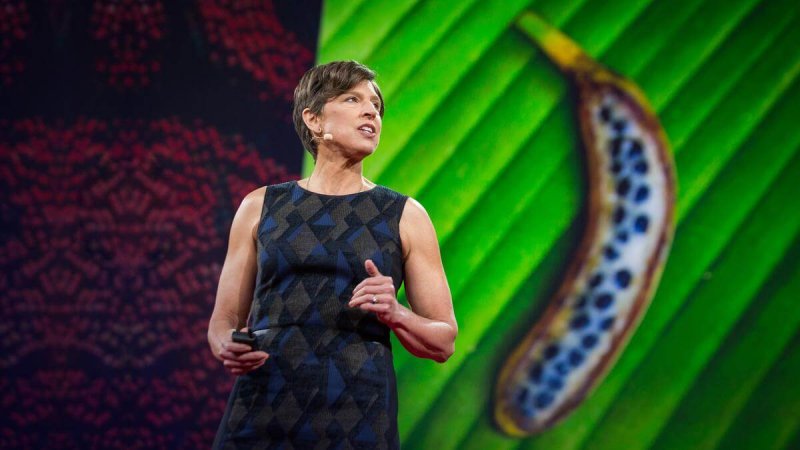
Geneticist Pamela Ronald: Follow the facts—not your feelings—on GMOs

e c aa f cdf d x
Image: TED Talks

What does the drug insulin have in common with cheese, Hawaiian papaya and a vegan burger? All were developed using genetic engineering, an approach established more than 40 years ago.

Every major scientific organization in the world has concluded the genetically engineered foods on the market are safe to eat. These are the same organizations that many of us trust when it comes to other important scientific issues such as climate change and the safety of vaccines.

Despite the record of safety and environmental benefits, the process of genetic engineering (often called “GMO”) still provokes controversy and sometimes, violent protests.

By the year 2100, the number of people on Earth is expected to increase to more than 11.2 billion people from the current 7.6 billion. If we don’t change eating habits or reduce food waste, we will need to produce more food in the next 50 years than we produced in the last 10,000 years. And we need to do this while minimizing environmental impacts.

According to David Ropeik, an expert on risk perception,  “If we want to make the smartest possible choices, we need to challenge ourselves to go beyond what instinctively feels right and try to blend our feelings with a careful, thoughtful consideration of what might actually do us the most good.”

Read full, original post: Organic farming genetics and the future of food

{{ reviewsTotal }}{{ options.labels.singularReviewCountLabel }}
{{ reviewsTotal }}{{ options.labels.pluralReviewCountLabel }}
{{ options.labels.newReviewButton }}
{{ userData.canReview.message }}

Related Articles

Infographic: Global regulatory and health research agencies on whether glyphosate causes cancer

Infographic: Global regulatory and health research agencies on whether glyphosate causes cancer

Does glyphosate—the world's most heavily-used herbicide—pose serious harm to humans? Is it carcinogenic? Those issues are of both legal and ...

Most Popular

ChatGPT-Image-Apr-20-2026-11_17_18-AM-2
10,000 scientists gone: Trump’s cuts create an unprecedented brain drain
ChatGPT-Image-Apr-23-2026-09_20_20-PM
Kennedy’s CDC blocks publication of study that shows vaccines reduce hospitalizations by 50%, then misrepresents why
ChatGPT-Image-Apr-22-2026-04_31_20-PM
‘Irresponsible decision’? On mandatory military flu shots, Hegseth chooses ‘freedom’ over health
ChatGPT-Image-Apr-20-2026-12_28_36-PM
Vaccine skepticism is a growing global problem
Screenshot-2026-04-13-at-3.54.04-PM
AI disinformation stress test: Challenges and response strategies
Screenshot-2026-04-22-at-4.10.32-PM
Viewpoint — ‘Completely unethical’: RFK, Jr.’s medical ignorance deprives melanoma cancer-sufferers of a life-saving therapy
ChatGPT-Image-Mar-11-2026-11_58_46-AM
The Trump administration has run out more than 4,000 National Institutes of Health employees. Here are the consequences
images
The never-ending GMO debate: Pros and cons
ChatGPT-Image-Apr-17-2026-03_30_52-PM
Food labels, decoded: What they really mean
ChatGPT-Image-Mar-2-2026-03_22_54-PM
Why ‘support supplements’ for GLP-1 users are mostly a waste of money
Screenshot-2026-04-15-at-1.22.58-PM
Anti-biotechnology activists smear hybrid wheat breakthrough that could surge yields in poorer countries
glp menu logo outlined

Get news on human & agricultural genetics and biotechnology delivered to your inbox.