Neanderthals’ healthcare skills helped them survive through Ice Age

neanderthals effective healthcare compassion x
Male and female Neanderthals in the Neanderthal Museum, Mettmann, Germany. Image credit: Wikimedia Commons

Neanderthals cared for their sick and wounded, and new research suggests this well-documented behavior was more than just a cultural phenomenon or an expression of compassion—it really did help them survive.

To endure the harsh conditions of Ice Age Europe, Neanderthals adopted several strategies, including group hunting, collaborative parenting, and food sharing. New research published in Quaternary Science Reviews is adding another trick to the Neanderthal survival guide: healthcare.

For the study, the researchers analyzed the skeletal remains of 30 previously discovered Neanderthal individuals. These specimens exhibit wounds ranging from mild to severe, yet each of these individuals managed to survive their injuries (paleontologists can visually tell when a broken bone or fracture has healed). In many of these cases, the researchers say it’s highly unlikely that the individual would have survived without help, and that a well-developed system of care had to have been in place.

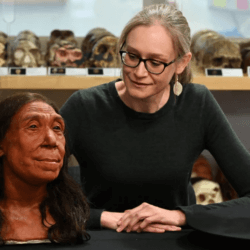
Because they lived in small groups, the loss of a single individual could be catastrophic. Treating severely injured group members was a matter of overall survival. That’s not to say Neanderthals didn’t act out of compassion—they very likely did. What the researchers are saying is that it served a pragmatic, overarching purpose that helped the group to survive as a whole, and by extension, the entire species.

Read full, original post: Neanderthals Survived in Ice Age Europe Thanks to Effective Healthcare

{{ reviewsTotal }}{{ options.labels.singularReviewCountLabel }}
{{ reviewsTotal }}{{ options.labels.pluralReviewCountLabel }}
{{ options.labels.newReviewButton }}
{{ userData.canReview.message }}

Related Articles

Infographic: Global regulatory and health research agencies on whether glyphosate causes cancer

Infographic: Global regulatory and health research agencies on whether glyphosate causes cancer

Does glyphosate—the world's most heavily-used herbicide—pose serious harm to humans? Is it carcinogenic? Those issues are of both legal and ...

Most Popular

Screenshot-2026-05-01-at-11.56.24-AM
‘Science moves forward when people are willing to think differently’: Memories of DNA maverick Craig Venter
Screenshot-2026-04-03-at-11.15.51-AM
Paraben panic: How a flawed study, media hype, and chemophobia convinced the public of the danger of one of the safest classes of preservatives
79d03212-2508-45d0-b427-8e9743ff6432
Viewpoint: The Casey Means hustle—Wellness woo opportunism dressed up as medical wisdom
ChatGPT-Image-Apr-30-2026-12_21_05-PM-2
The tech billionaires behind the immortality movement
Screenshot-PM-24
Viewpoint: The herbicide glyphosate isn’t perfect. Banning it would be far worse.
ChatGPT-Image-Mar-27-2026-11_27_05-AM
The myths of “process”: What science says about the “dangers’ of synthetic products and ultra-processed foods
ChatGPT-Image-Mar-10-2026-01_39_01-PM
Viewpoint—“Miracle molecule” debunked: Why acemannan supplements don’t work
ChatGPT-Image-May-1-2026-02_20_13-PM
How RFK, Jr.’s false vaccine claims are holding up $600 million to fight diseases in poor countries
Screenshot-2026-04-20-at-2.26.27-PM
Viewpoint — Food-fear world: The latest activist scientists campaign: Cancer-causing additives
Drinking lots of water can help reduce the effects of aging
Nanoplastics in drinking water: MAHA activists forge science-based bipartisan coalition 
ChatGPT-Image-Mar-3-2026-01_17_14-PM
MAHA wellness influencers deride proven anxiety medications, tout lifestyle fixes
viva-la-vida-watermelons
Misinformation and climate change are endangering summer watermelons
glp menu logo outlined

Get news on human & agricultural genetics and biotechnology delivered to your inbox.