‘The Tangled Tree’: Book explores what’s wrong with Darwin’s theory of evolution

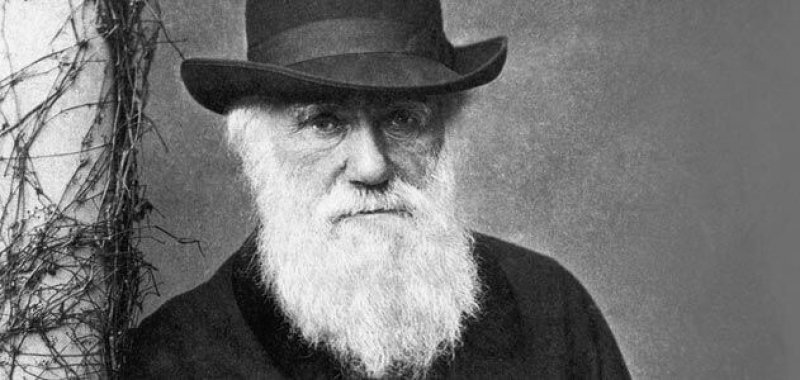
darwin
Image credit: (Bettmann / Corbis)

Until recently, the central tenets of Darwin’s theory of evolution, from how heredity works to the gradual variation in species, had been regarded as settled and beyond challenge. But as David Quammen, a National Geographic contributing writer, explains in his new book The Tangled Tree, new discoveries in human biology in the last few decades have led scientists to radically alter the story of the origins of life.

[NG:] One of the key concepts you explore is “horizontal gene transfer.” Give us a layman’s explanation of what this is.

[Quammen:] Horizontal gene transfer is essentially sideways heredity. It’s the passage of genetic material sideways, from one creature into another, from one species into another. It can even go from one kingdom of life into another, sideways, across great barriers. That was thought to be undoable.

[NG:] Explain the issues and how the latest science is rewriting the idea of natural selection.

[Quammen:] It’s not rewriting the idea of natural selection. Rather, it’s rewriting our understanding of evolution, of which natural selection is still a very important part.

What is new, and caused New Scientist to run that over-stated and provocative headline, “Darwin Was Wrong,” is that we now understand there is another, hugely significant form of variation. It’s not just incremental mutation, but horizontal gene transfer, bringing entirely new packages of DNA into genomes.

Read full, original post: What Darwin Didn’t Know About Evolution

{{ reviewsTotal }}{{ options.labels.singularReviewCountLabel }}
{{ reviewsTotal }}{{ options.labels.pluralReviewCountLabel }}
{{ options.labels.newReviewButton }}
{{ userData.canReview.message }}

Related Articles

Infographic: Global regulatory and health research agencies on whether glyphosate causes cancer

Infographic: Global regulatory and health research agencies on whether glyphosate causes cancer

Does glyphosate—the world's most heavily-used herbicide—pose serious harm to humans? Is it carcinogenic? Those issues are of both legal and ...

Most Popular

ChatGPT-Image-May-26-2026-07_51_21-AM-2
Viewpoint: There are more than 1,000 chemicals in a cup of coffee—including many substances that can cause cancer. Why isn’t it banned?
Picture1
Sounds we can’t hear — the hidden planetary signals behind science, fear, and misinformation
Screenshot-2026-06-01-at-1.35.32-PM
Viewpoint: Swine farmers are under attack for allegedly mistreating their animals. Here are the facts.
the magic of mRNA
Viewpoint: Anti-vax fake ‘turbo cancer’ claims threaten cancer treatment breakthroughs
Screenshot-2026-05-27-at-10.51.25-AM
Viewpoint: ‘Monsanto’ blues—Planned Netflix movie promises yet another round of anti-glyphosate disinformation
Screenshot 2025-07-30 at 10.48
Can gene editing eliminate Down syndrome? Scientists have done it in lab-grown cells
Screenshot-2026-06-01-at-11.07.22-AM
Viewpoint: Many vaccine-suspicious conservatives and MAHA reject shots for their children by invoking ‘patient autonomy’. That’s ridiculous.
ChatGPT Image Jun 1, 2026, 11_39_17 AM
Viewpoint: When food myths go viral, farmers pay the price
ChatGPT Image May 28, 2026, 08_16_38 PM
Viewpoint: Why the EPA mismeasures cancer risk of chemicals and what should be done to fix it
ChatGPT-Image-May-28-2026-02_12_17-PM
Can ‘Social Stress Indicators’ help contain social media misfluencers?
Screenshot-2026-06-01-at-12.25.33-PM
Would you go to a holistic dentist? It’s either a scam or a dentist trying to sell you unnecessary supplements.
downsyndrome_compilation_MID_1
CRISPR breakthrough that can remove the chromosome responsible for Down syndrome raises ethical questions
glp menu logo outlined

Get news on human & agricultural genetics and biotechnology delivered to your inbox.