Will GMO food labels ease consumer fear and bring biotechnology ‘into the limelight’?

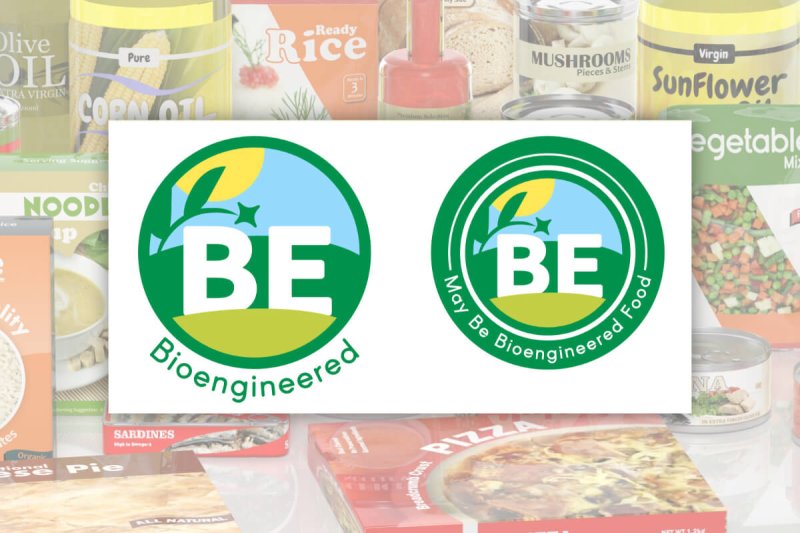
BioengineeredLabels
Image: U.S.D.A., Adobestock

There is …. a debate amongst GMO supporters about whether GMO foods should be labeled. Some supporters believe GMO food labels are costly and unnecessary, while others advocate for transparency by using labels ….

To address this food fight, Congress passed the National Bioengineered Food Disclosure Standard, which President Obama signed into law in July 2016. That bill established national standards for mandatory labeling of foods containing GMO ingredients.

However, the U.S. Department of Agriculture was given two years to determine the exact rules and regulations for the GMO labels. Instead of requiring the labels to use now more-widely known words like “GMO” and “genetically engineered,” [Secretary Sonny] Perdue’s Department of Agriculture has created label proposals using less familiar terms like “BE” and “bioengineered.”

It appears that  Perdue’s Department of Agriculture is attempting to avoid or “tiptoe” around the words “GMO” and “genetically engineered.” But should they be so afraid? Probably not.

As Mark Lynas, an …. opponent-turned-proponent of GMOs, stated, “People are increasingly scared of GMOs precisely because the industry is fighting a battle not to tell people which foodstuffs contain them.”

Thus, Lynas believes putting GMO labels on foods …. will “get biotechnology out of the shadows and into the limelight where it belongs.” He adds, “If we truly believe that this technology has so much potential …. Labels can be our friend.”

Read full, original article: Food Fight: The Debate over GMOs and Food Labeling

{{ reviewsTotal }}{{ options.labels.singularReviewCountLabel }}
{{ reviewsTotal }}{{ options.labels.pluralReviewCountLabel }}
{{ options.labels.newReviewButton }}
{{ userData.canReview.message }}

Related Articles

Infographic: Global regulatory and health research agencies on whether glyphosate causes cancer

Infographic: Global regulatory and health research agencies on whether glyphosate causes cancer

Does glyphosate—the world's most heavily-used herbicide—pose serious harm to humans? Is it carcinogenic? Those issues are of both legal and ...

Most Popular

Screenshot-2026-05-01-at-11.56.24-AM
‘Science moves forward when people are willing to think differently’: Memories of DNA maverick Craig Venter
Screenshot-2026-04-03-at-11.15.51-AM
Paraben panic: How a flawed study, media hype, and chemophobia convinced the public of the danger of one of the safest classes of preservatives
79d03212-2508-45d0-b427-8e9743ff6432
Viewpoint: The Casey Means hustle—Wellness woo opportunism dressed up as medical wisdom
Screenshot-PM-24
Viewpoint: The herbicide glyphosate isn’t perfect. Banning it would be far worse.

ChatGPT-Image-Mar-27-2026-11_27_05-AM
The myths of “process”: What science says about the “dangers’ of synthetic products and ultra-processed foods
ChatGPT-Image-Mar-10-2026-01_39_01-PM
Viewpoint—“Miracle molecule” debunked: Why acemannan supplements don’t work
ChatGPT-Image-Mar-3-2026-01_17_14-PM
MAHA wellness influencers deride proven anxiety medications, tout lifestyle fixes
ChatGPT-Image-Apr-30-2026-12_21_05-PM-2
The tech billionaires behind the immortality movement
ChatGPT Image Apr 30, 2026, 01_11_41 PM
Trump’s America First health aid cuts: Retrenchment has already hit global malaria, HIV, TB, and polio programs
ChatGPT-Image-May-1-2026-03_16_32-PM
Viewpoint: How ‘health care guru’ Joe Rogan circumvented the FDA’s skepticism on psychedelics
images
The never-ending GMO debate: Pros and cons
ChatGPT-Image-Apr-30-2026-05_00_48-PM
Wellness grifter physician turned wellness influencer out as surgeon general nominee
glp menu logo outlined

Get news on human & agricultural genetics and biotechnology delivered to your inbox.