Bad decision: Did your genes make you do it?

RV AG RIDLEY G
Image credit: Monster

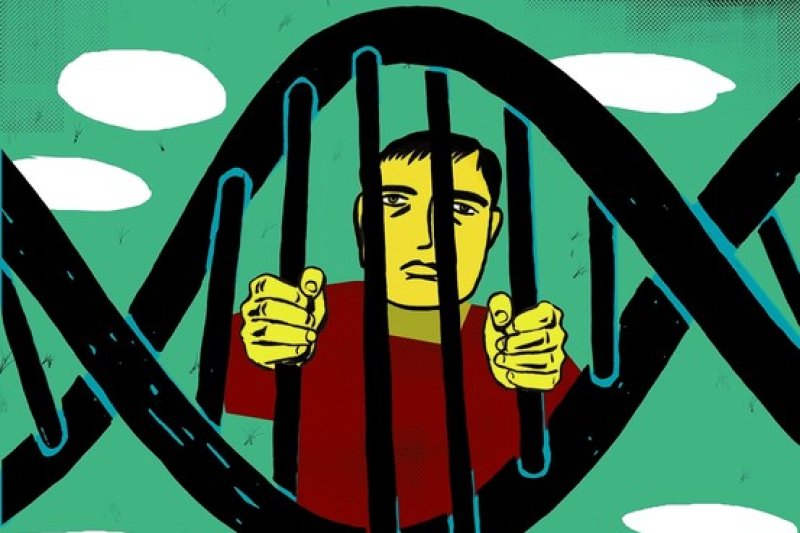
Studies have picked out groups of genes associated with intelligence, academic achievement, criminal activity and other life outcomes. It now seems possible to chart your children’s lives before they ever emerge into the world.

The implications are staggering. Knowing what kind of person a child is likely to become — a kind of scientific prejudice — could easily lead to discrimination. Kids with genes linked to low intelligence could be shunted into inferior schools, and adults with genes linked to criminal activity could be subjected to extra-judicial police scrutiny.

This kind of thinking can be termed “genetic determinism” — the idea that our genes conclusively shape our behavior — and it also wreaks havoc with our notions of morality and free will. If our genes are guiding our behavior, does that mean we’re not responsible?

…
[S]tudies of identical twins, the gold standard for determining the influence genes have on given traits, have suggested that our DNA is probably responsible for around half of things linked to intelligence and behaviors like educational achievement and criminal activity. That’s far higher than one or 16 percent, but the conclusion is clear: Genetic determinism doesn’t seem to be scientifically possible.

Why not? There are just too many genes, and they interact with each other and with the environment in too many ways. We can’t simply look at a handful and divine the future.

Read full, original post: Can We Blame Our Genes for Our Decisions?

Related Articles

Infographic: Global regulatory and health research agencies on whether glyphosate causes cancer

Infographic: Global regulatory and health research agencies on whether glyphosate causes cancer

Does glyphosate—the world's most heavily-used herbicide—pose serious harm to humans? Is it carcinogenic? Those issues are of both legal and ...

Most Popular

ChatGPT-Image-Mar-10-2026-01_39_01-PM
Viewpoint—“Miracle molecule” debunked: Why acemannan supplements don’t work
ChatGPT-Image-Sep-10-2026-10_36_07-AM
Viewpoint: Even lousy scientific articles can shield authors when they hype dubious health claims and products
sorghum farmers in kenya FARMERS TREND
Here are all the ways CRISPR gene editing is transforming Africa’s staple crops—and there’s a lot more innovation to come
Screenshot-2026-10-01-at-11.21.27-AM
Vaccine hesitancy, like malaria, surges globally, topping 35% in some countries
ChatGPT-Image-Sep-30-2026-01_25_34-PM
Blood tests for Alzheimer’s? The latest grifter, social media scam.
ChatGPT-Image-Sep-30-2026-01_11_07-PM
How U.S. teamed with Russia to block global human AI weapons oversight
ChatGPT-Image-Sep-30-2026-01_38_36-PM
Viewpoint: Died “with measles” vs. died “from measles”: RFK, Jr.’s dangerously subversive word games
ChatGPT-Image-Sep-21-2026-03_15_09-PM
Viewpoint: Chipotle-inspired lesson: 10,000 sick customers suggest that processed foods can be safer than fresh ones
ChatGPT-Image-Sep-29-2026-12_16_42-PM
Social media influencers are driving food misinformation across Europe
Screenshot-2026-09-28-at-1.16.38-PM
Defying public perceptions, U.S. cancer deaths plunged 35% since 1991
glp menu logo outlined

Get news on human & agricultural genetics and biotechnology delivered to your inbox.