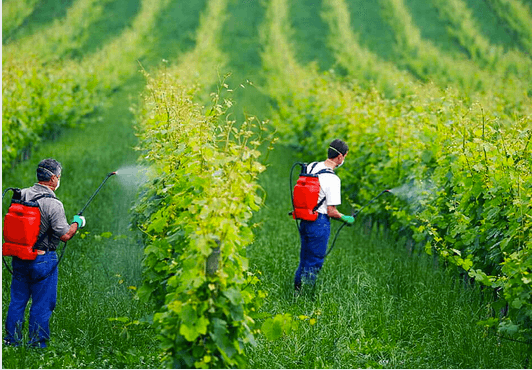
I’ve been following these issues for a long time, and I’ve seen a lot of evidence that organic foods have lower levels of pesticide residues than conventional foods, so I was surprised to read a two-partanalysis on Forbes.com, by Steve Savage, a conventional-side plant scientist I know and respect, showing that the number of residues, and the amount of pesticide in those residues, were virtually the same for organic and conventional foods.
…
Savage’s data were spectacularly wrong. He reported that conventional foods had an average of 3.1 different pesticides, and organic had 2.6. The real numbers, which I downloaded the entire residue database to get, are 3.2 for conventional (okay, that’s close), and 0.8 for organic (definitely not close).
…
The key question, of course, is whether that matters, and this is the crux of the disagreement over residue levels.
There’s no question that pesticides can be toxic to people, and farmworker exposure is a serious issue. But levels in food are very low, and the USDA and the Environmental Protection Agency (along with many toxicologists I’ve spoken with over the years) say you shouldn’t be concerned about them.
Though they look indistinguishable from the other cows on a dairy farm in Utah, three cyborg cows with implanted sensors are munching on grass and sending data to help train an artificial neural network. A biohacker named Tim Cannon created the subcutaneous trackers for livestock after his own experiments with RFID implants. Eventually, he wants to bring the technology back to humans.
Cannon got a Circadia Sensor implanted into his arm in 2013. The sleep and temperature monitoring device, he thought, could help him collect data for AI software he developed to predict illness. But investors were hard to find for the implant: outside of the biohacking community, people remain skeptical of having sensor tracking devices implanted inside their bodies.
And so, Cannon turned to livestock. Working with a tech incubator in Australia, he founded Livestock Labs and created the bovine FitBit, which he named EmbediVet. The sensors can record cows’ heart rate, pulse, chewing frequency, temperature, and movements around the farm.
It all started after the arrest of the alleged Golden State Killer in April. Police had uploaded crime-scene DNA to an open-access genealogy website, GEDmatch, and located some of his relatives. Eventually, they found him.
…
But one question emerged paramount (even for those innocent of anything): what’s the chance they could find you?
…
Specifically, I was willing to bet that more than 95 percent of people could find at least one second cousin match in Ancestry.com, the largest of these relative-finding databases.
…
And the stakes? The loser would have to submit a spit sample, allowing millions of strangers to compare the DNA results with their own. Now, thanks to a couple of academics with a free Friday afternoon, we have an answer of sorts, and it appears I am the loser.
…
According to their estimates, the chance of having a second cousin in that database is 94 percent, just shy of my 95 percent guess.
…
The reason I’ve decided to do the Ancestry test, which costs $99, isn’t only that I am a good loser. It’s that the choice has already been made for me. According to Coop’s estimates, I may have 200 more third cousins and 1,000 fourth cousins who’ve already gotten tested.
Roughly a quarter of all purebred dogs die of cancer, and 45 percent of those who live past the age of 10 succumb to one variety or another. Modern chemotherapies have allowed some of these dogs to get treatment, just like a human would. Those therapies work so well because canine cancers are so close to human tumors.
…
Many breeds are uniquely susceptible to specific types of cancer purely because of their heritage. “If you’re a Scottish terrier, your odds of getting bladder cancer are 22 times higher than your average mutt,” explains [researcher Elaine] Ostrander. That’s a massively increased risk, and it’s likely because of a set of inherited mutations that we’ve inadvertently bred into the group. But the fact that they’re all likely to have almost exactly the same mutation makes them a convenient sample for research.
…
But because all purebred dogs are as related to one another as we are to our immediate family members, every cancer they get is similar to the hereditary human cancers we already know about.
Earlier this month, President Donald Trump announced a slew of well-known celebrities, doctors, executives and athletes to the President’s Council on Sports, Fitness, and Nutrition.
…
Let’s start with the Public Enemy No. 1 on the list: Dr. Oz.
I continually baffled how Dr. Oz. continues to rise in fame in today’s society. It’s well known that he has continued to peddle unscientific, emotionally charged medical advice and snake oil-type products on his television show, “The Dr. Oz. Show.” Heck, he even testified at a congressional hearing on Capitol Hill where senators grilled him about his controversial weight-loss supplements. His defense was that he was a “cheerleader” for his viewers. Please.
He also is vehemently opposed to modern agriculture. He has dedicated a good chunk of airtime on his shows to spouting discredited anti-GMO theories and fear mongering to his all too trusting audience. He regularly featured the “Food Babe” on his show, who stands for just about everything that you and I are against, scientifically and especially with respect to agriculture.
Plain and simple—Dr. Oz and his mouth is a large reason why consumers do not trust farmers and food companies.
To slow the evolutionary progression of weeds and insect pests gaining resistance to herbicides and pesticides, policymakers should provide resources for large-scale, landscape-level studies of a number of promising but untested approaches for slowing pest evolution. Such landscape studies are now more feasible because of new genomic and technological innovations that could be used to compare the efficacy of strategies for preventing weed and insect resistance.
That’s the takeaway recommendation from a North Carolina State University review paper addressing pesticide resistance published today in the journal Science.
Pesticide resistance exacts a tremendous toll on the U.S. agricultural sector, costing some $10 billion yearly. Costs could also increasingly accrue on human lives. If insecticide-coated bed nets and complementary insecticide spraying failed to slow the transmission of malaria by pesticide-resistant mosquitoes, for example, the human health costs in places like Africa could be catastrophic.
…
“We’re working down the list of available tools to fight weeds and insect pests,” said Zachary Brown, assistant professor of agricultural and resource economics at NC State and a co-author of the paper. “It hasn’t been economically feasible to develop new herbicides to replace glyphosate, for example, so what’s old is becoming new again. But the current incentives don’t seem to be right for getting us off this treadmill.”
Editor’s note: Read the full study (behind paywall)
[Researcher Andrew] Read and his colleagues are studying how the herpesvirus that causes Marek’s disease — a highly contagious, paralyzing and ultimately deadly ailment that costs the chicken industry more than $2 billion a year — might be evolving in response to its vaccine. Its latest vaccine, that is. Marek’s disease has been sickening chickens globally for over a century; birds catch it by inhaling dust laden with viral particles shed in other birds’ feathers.
…
[I]n recent decades, the virus has become more deadly. Read and others, including researchers at the U.S. Department of Agriculture, posit that the virus that causes Marek’s has been changing over time in ways that helped it evade its previous vaccines. The big question is whether the vaccines directly incited these changes or the evolution happened, coincidentally, for other reasons, but Read is pretty sure the vaccines have played a role.
In a 2015 paper in PLOS Biology, Read and his colleagues vaccinated 100 chickens, leaving 100 others unvaccinated.
…
The team found that, over the course of their lives, the unvaccinated birds shed far more of the least virulent strains into the environment, whereas the vaccinated birds shed far more of the most virulent strains. The findings suggest that the Marek’s vaccine encourages more dangerous viruses to proliferate.
…
Most people have heard of antibiotic resistance. Vaccine resistance, not so much.
Lawmakers in the House of Representatives recently proposed legislation for NASA’s future that includes some intriguing language. The space agency, the bill recommends, should spend $10 million on the “search for technosignatures, such as radio transmissions” per year, for the next two fiscal years.
The House bill—should it survive a vote in the House and passage in the Senate—can only make recommendations for how agencies should use federal funding. But for [Search for Extraterrestrial Intelligence, or] SETI researchers like [Jill] Tarter, the fact that it even exists is thrilling. It’s the first time congressional lawmakers have proposed using federal cash to fund SETI in 25 years.
…
[T]echnosignatures refer to a wide assortment of potential markers of advanced beings that could conceivably be spotted by telescopes, on the ground or in space. Perhaps other technologically advanced civilizations use laser transmissions to communicate. Maybe they have forged blast shields to protect themselves from invaders, or built enormous spheres to harness their star’s light and power their operations. Maybe, like us, they’ve lit their surfaces with shimmering city lights or padded their atmosphere with pollutants.
…
Today, after 25 years of discoveries and breakthroughs and progress, the suggestion that we might someday—and perhaps someday soon—stumble upon an alien civilization, even the remains of one, doesn’t seem quite so silly anymore.
It is now common sense to argue that the issue lies not in the concept of the technology, but with a phenomenon known as technophobia that is normally associated with humans and new technologies. It connotes fear and dislike for technological innovations, mostly among those who do not really understand scientific principles.
Biotechnology is simply any technique that uses living organisms or substances from other organisms to make or modify a product, such as to improve plants and animals or to develop microorganisms. It is an easy application of natural processes that scientists have studied and are able to apply to enhance human activities.
…
The crisis now is that hunger, poverty, malnutrition, and sustainable agricultural growth disproportionately impact Less Developed Countries (LDCs). And solutions like biotechnology are often inaccessible where they are most solely needed. Biotechnology is at the heart of this discussion, inciting a debate fuelled by misinformation and dominated by anti-GMO activists. Meanwhile, those whose lives would be impacted by advances in biotechnology are left out of the global conversation.
…
Going forward, Nigeria needs to focus less on the concerns raised by technophobes and more on the modernization of its biotechnology resources as it strives to enhance the standard of living of millions of Nigerians through the application of this new agricultural tool.
Insects are everywhere—in the air, on the ground, in the ground, and sometimes in your house and food. Yet there are none whatsoever in the known fossil record between 385 million and 325 million years ago. The earliest known insect fossil is a 385-million-year-old wingless creature that looks like a silverfish. But for the next 60 million years there is not so much as a single dragonfly, grasshopper or roach.
…
One hypothesis suggests that chokingly low oxygen levels kept insect diversity from soaring during the gap and that these creatures proliferated only once the life-giving gas increased.
But advances in the understanding of atmospheric oxygen levels are challenging that idea, explains Sandra Schachat, a paleoentomologist at Stanford University, who led a recent study that modeled the gas’s availability during the hexapod gap. Atmospheric oxygen at the time was much higher than once believed, according to the research, which was published in January in the Proceedings of the Royal Society B.
…
Schachat and her team combed through fossil information from a public paleontology database and realized there was something special about many of the insect fossils that came after the gap: they had wings.
…
The origins of wings, then, must lie within the gap itself. Lurking somewhere in it, there may be undiscovered fossils that could reveal how insects became the first animals to take to the skies.
Editor’s note: Read the full study (behind paywall)
From [early draft legislative texts on GMOs in the EU], it is clear that the intentions were to have an evolving and increasingly trait-oriented regulatory framework taking into account technical developments, potential safe history of use as well as potential benefits resulting from the application of these techniques and their resulting products. However, despite nearly three decades of research, product development, demonstrated benefits and a lack of demonstrated risks associated with recombinant nucleic acids per se, the GMO regulatory framework in the EU has neither evolved nor been implemented as intended.
…
[T]he regulatory framework for GMOs in the EU, and its implementation, has deviated considerably from the original intentions three decades ago when the fields of recombinant nucleic acid techniques and cross-species gene transfer were still relatively new in research and commercial applications. Given the experienced benefits of GMO applications, the safe history of use and the technical progress in the field of gene technologies, it is imperative to bring the GMO regulatory framework back in line with the original intentions and provide for a more trait- and benefit-oriented interpretation.
This is part two of a four-part series attempting to separate fact from fiction regarding pesticide use on organic farms. In the first installment, we looked at the common claim that organic farms actually use more pesticides and more dangerous pesticides than convention farms through the lens of a few simple observations and talking to actual organic farmers. Here we look at the factoids that have been taken out of context and twisted into a dishonest narrative. In part three we look at the special cases of pest control in organic orchards and vineyards. Finally, in part four, we take a critical look at a widely circulated article purportedly busting myths about organic farming that managed to create a few myths.
In the first part of this series separating fact from fiction regarding pesticide use in organic farming, I started with a meme that has become all too common as the politics of food production become tribal and polarized. I see lots of people on Twitter and Facebook claiming that not only do organic farms use pesticides (surprising to lots and lots of people), but they use MORE pesticides!!! And not only that, the pesticides are MORE TOXIC!!! We looked at the lack of herbicides in organic production, the research literature on the impacts of organic farming compared to conventional on on-farm biodiversity and eco-toxicity, and finally went over an informal survey of organic farmers I trust to test the general proposition and found it wanting to say the least.
It’s just not the case that organic farmers are secretly using more pesticides, and more dangerous pesticides than conventional farmers. But that idea must have started somewhere. There must be some grain of truth that this misleading meme sprung from. Yes, there are some facts that have been twisted in cynical ways to convince people who are fed up with the overblown claims of organic marketing that these things are true.
There are a few basic facts that form the basis of this narrative.
1. BECAUSE ALL ORGANIC APPROVED PESTICIDES are available to conventional farmers, but not all pesticides are available to organic farmers and it is more difficult to develop new organic approved pesticides, it is true that there are cases where the best organic options for pest control are notably worse for the environment and riskier for human health than their best synthetic counterparts.
So yes. There are specific instances where the risk profile of organic pesticide use is higher in certain crops and regions, that doesn’t change the fact that overall organic pesticide use is low and the measured impacts on eco-toxicity and on-farm biodiversity tend to be lower than in conventional systems. Orchards and vineyards are two areas where a higher risk profile is likely because those are types of crops that farmers can’t use crop rotations to break up pest cycles, a pest management tool used to a greater degree in organic production more intensively than in conventional (By and large. That’s not to say that you can’t find conventional farms with very diverse crop rotations). And the chemical tools available to organic farmers are not as good as some of those available to conventional farmers, but you’d be surprised how much conventional farmers use coppers and sulfurs as well. We’ll take a closer look at organic pest control in orchards and vineyards in part three.
2. BECAUSE MOST ORGANIC PESTICIDES, mineral oils in particular, degrade faster than their synthetic counterparts, it’s often the case that organic farmers have to re-apply them more often and in greater amounts – at least measured in pounds of active ingredient. But be careful losing the thread of the logic here. The reason for the greater applications is that the pesticides are biodegrading and they are less effective. That certainly means less risk of residues for consumers and it suggests that environmental persistence is less of an issue. It’s hard not to laugh when I’ve seen people try to use more frequent applications to counter fear-monger the idea that organic farmers use MORE PESTICIDES AND MORE DANGEROUS PESTICIDES !!!!! Turn off the capslock, dude. Take a deep breath. Think it through.
That’s not to say this is a hard and fast rule. Sulfur compounds are used frequently in vineyard and organic production, in both organic and conventional, but more sulfur is used in conventional than in organic, but at lower rates. They are hard on beneficial insects, unpleasant for neighbors and risky and unpleasant for farm workers. The use of copper based fungicides, which don’t degrade, is another example of a chemical used far more often in organic, while conventional farmers have better synthetic options. We’ll look at these in greater detail in part three.
3. PESTICIDE USE IN ORGANIC FARMS is not tracked specifically. The USDA gathers information about every pesticide, the number of total pounds applied, number of applications, pounds applied per acre, etc. What they don’t keep records of is whether those rates are different between organic and conventional farms. This completely banal fact is sometimes twisted into a near conspiracy theory that the USDA is in cahoots with organic marketers to downplay and hide organic pesticide use. But it’s just not the job of the service of the USDA that compiles that data to break it out that way. But it certainly is the job of organic marketers to downplay and even evade the fact that organic farmers DO use pesticides.
Related to this, I’ve seen this graph created by plant pathologist and crop consultant Steve Savage put to bad use.
What Steve was trying to show with the chart is that use of highly toxic pesticides is very low – reserved for special cases, with the majority of pesticides rated as very low in toxicity. “On a weight basis, the largest share of pesticides used in California in 2010 fall into the least toxic category (62%). The blue part of the bar includes products which allowed for both organic and conventional farms.”
What I ran across, was that chart pasted into a graphical meme that made it seem like the majority of pesticides in California were applied on organic farms, because the majority of pesticides applied in California are approved for organic production. It completely missed the fact that most organic approved pesticides are used on conventional farms. Instead, it insinuated that the entire blue chunks of those bars in the graph were a representation of pesticide use on organic farms.
Here’s a little back of the envelope math showing how ridiculous the idea that all organic pesticides were applied on organic farms in California.
In 2010 173 million pounds of pesticides were used in California. As the chart shows, roughly 50% or 86.5 million pounds were approved for organic. There are 25 million acres of cropland in California, but only half a million in organic production (1 in 50). If all 86.5 million pounds of organic pesticides had been applied to California’s organic farms that would have been an average rate of application of 173 pounds per acre.
Organic lettuces | Public domain
4. ROTENONE
OMG !!! Rotenone !!!
In this narrative, the highly toxic organic insecticide rotenone plays an outsized role in the story. Rotenone is a compound extracted from the roots of a number of different plants. It is a broad spectrum insecticide, that is highly toxic to off-target insects, as well as being highly toxic to aquatic life, especially fish. It functions by cutting off the cellular absorption of oxygen, so any organism that requires the cellular absorption of oxygen is going to find rotenone poisonous. In humans and other mammals, it is considered moderately toxic, and it’s been implicated in the development of Parkinson’s Disease.
It’s pretty nasty stuff. And in the United States, it’s on the National Organic Program’s list of approved pesticides. The EPA hasn’t set a tolerance for residues. Yikes!
Just one thing. The EPA deregistered rotenone for food crops in 2010, a process begun in March 2007. Phase out in the EU was begun in 2008 and wrapped up in 2013. It’s now only used to a piscicide to control invasive fish. And it fell out of favor in the late nineties. A 2006 report on botanical insecticides found that use had been on the wane. In California, about 440 pounds were used annually, mostly on lettuce and tomato crops.
So out of nearly 200 million pounds of pesticides applied on California farms in 2005, 440 of those were rotenone used on organic farms. Before it was taken completely off the market, organic farmers were using it sparingly, if not downright surgically, as a last resort.
Here’s a little more granular context for rotenone use in California (the center of organic farming in America, and especially in fruit and vegetable farming where the crops are more vulnerable to pests than in row crops grown in cooler regions) – a 2001 report by the Integrated Pest Management Database [PDF] on lettuce production in California logged 108 pounds of rotenone (and 126 pounds of pyrethrins) on lettuce.
That compares with 154,395 pounds of the fungicide maneb, 55,849 pounds of the fungicide fosetyl-aluminium, 48,175 pounds of the ozone layer depleting fumigant methyl bromide (phased out in 2005), 46,867 and 15,004 pounds respectively of diazinon and malathion of the rightly dreaded organophosphate class of insecticides, 33,927 pounds of the fairly nasty methomyl of the carbamate class of insecticides, 33,225 pounds of the herbicide propyzamide, and finally 3,475 and 1,787 pounds respectively of the organic insecticides spinosad and BT.
That’s just eight of the two and half dozen or so pesticides that were used on lettuce in California in 2001, but OMG!!! organic farmers used 108 pounds of rotenone and it’s vitally important to fear monger you about that to get back at dastardly organic marketers!!!
A search on the USDA QuickStats database confirms the scale of use and the trend. 1000-2000 pounds a year used nationally during the early nineties, dwindling amounts in the hundreds of pounds from 1996 to 2006 when it disappears completely from use.
Wait. There’s a catch.
So, it turns out that rotenone, a nasty insecticide – though nowhere near as nasty as chlorpyrifos, a synthetic insecticide the Obama administration had slated to deregister because it negatively affects cognitive development in children and just got a new lease on life from the Trump administration – was an insecticide that was barely in use before it was taken off the market. Meanwhile, Dow sells 5 million pounds of chlorpyrifos every year in the US. That’s not a lot in the overall context of pesticide use, but it’s a lot more than 440 pounds. The use of chlorpyrifos is highly restricted in California, but that didn’t prevent more than 50 farmworkers outside of Bakersfield, CA from being poisoned a month after President Trump reversed the ban.
However, there is something you should know about current rotenone use. I’ll tell you, if you promise to turn off the caps lock.
Black streak disease | Photo by Scot Nelson | Flickr | Public DomainPanama wilt |Photo by Scot Nelson | Flickr | Public Domain
Is it turned off? OK. There is still one crop where rotenone use is still a legitimate concern. Bananas. Rotenone is still legal to use in the Central American countries that export bananas to the US.
Rotenone is critical to organic banana production which is among the least sustainable crops and modes of production I can think of. Mass-market banana production isn’t particularly environmentally friendly to begin with, to say the least. They are shipped long distances. The Cavendish bananas (your standard sweet supermarket banana) are under attack from Black leaf streak disease and Panama disease among other fungal threats. Fungicides and soil fumigants are not very effective in controlling the fungal disease. Instead, insecticides are used in a zero tolerance effort to control the insects that serve as vectors of the disease. Organic production is done at higher altitudes and requires clean soil, as Panama disease can stay active in soil for years. Expanding organic production can mean clearing forests to lay claim to soil free of the pathogen. A zero tolerance policy for disease spreading insects means rotenone, since it is the most effective organic insecticide against those pests.
The National Organic Standards Board (NOSB) is a citizen body that advises the National Organic Program (NOP) subsequently recommended prohibiting the use of rotenone in organic production, effective January 1, 2016, which would ostensibly put the kibosh on organic banana sales. The NOP has not taken their advisement as of yet. Whether that’s due to the influence of the banana lobby – Dole, Chiquita, Del Monte, et al, not a group to be trifled with – or some other reason is a matter of speculation.
Organic bananas and perhaps some other organic tropical fruits from those countries might be the one instance where “OMG!!! Rotenone!” could be justified. But before proponents of conventional farming start to feel smug, consider that conventional banana farmers use an estimated average of 40 kgs of active ingredient per hectare, reaching a jaw-dropping 76 Kg per hectare in Belize. Chlorpyrifos is the most commonly used insecticide in banana production, and as bad for the environment as rotenone is, I strongly feel that chlorpyrifos is a much more troubling insecticide. As mentioned above, chlorpyrifos is strongly linked to developmental impairment in kids. One study of the exposure of indigenous children living near banana plantations that used chlorpyrifos for insect control found for “more than half of the children their estimated intake exceeded the US EPA chronic population adjusted dose. For some, the acute population adjusted dose and the chronic reference dose were also exceeded.”
We’ll have to end on that sobering note. In the next installment, we’ll take a comparative look at organic and conventional orchard and vineyard production in the US.
Marc Brazeau is the GLP’s senior contributing writer focusing on agricultural biotechnology. He also is the editor of Food and Farm Discussion Lab. Follow him on Twitter @eatcookwrite
As genetically-modified (GM) ingredients become more common in the global food supply, particularly in the U.S., we know that consumers may have questions about this technology.
On safety – our number one priority – we find broad global consensus among food and safety regulatory bodies that approved GM ingredients are safe.
Those who have approved biotech crops to be as safe and acceptable as their conventional counterparts include:
Biotech seeds have been approved by global food safety agencies and widely used by farmers in food crops for more than 20 years. Because U.S. farmers use GM seed to grow certain crops, 70 percent of foods on U.S. grocery store shelves likely contain GMO ingredients. As a result, if an American food or beverage product lists corn, soy, canola, cottonseed or beet sugar as an ingredient – and it it’s not organic – it likely contains GMOs.
Global food safety experts will note there has not been a single incident of harm to health or safety demonstrably linked to the use of GMOs anywhere in the world.
GM crops generally need less insecticide, may allow for the use of less harmful herbicides, and enable sustainable farming practices like no-till farming which can:
One in eight people in the world today – or 870 million people worldwide – do not have enough to eat. And by 2040, the world’s population is projected to increase by 2 billion to nearly 9 billion people. Global Experts project that to meet the growing needs of an increasingly hungry world we will need at least:
50 percent more food.
45 percent more energy.
30 percent more water.
It’s a daunting challenge. But biotechnology shows promise to address such issues as strengthening crops against drought and extreme temperature, and delivering more nutritious food, even in poor soil conditions.
We agree with the World Health Organization (WHO) that “the development of GM organisms (GMOs) offers the potential for increased agricultural productivity or improved nutritional value that can contribute directly to enhancing human health and development.”
We offer options
We know that some consumers remain uncomfortable with GMOs and are concerned that GM crops may encourage farming practices that over rely on one herbicide and decrease biodiversity. Others worry about the economic impacts on farmers trying to keep non-GM separated from GM crops. As a global food company, we produce products without GM ingredients in some markets – we also offer organic and non-GMO alternatives in most of our major categories in the U.S.
In the spirit of transparency, we’ve enrolled several products – especially our organic products – in the U.S. Non-GMO Project.
Because foods containing GM ingredients are safe and deemed essentially identical to their conventional counterparts, there is no requirement for special labeling in the U.S. by the FDA.
In July 2016, President Obama signed into law a set of new, national standards for disclosure of information for bioengineered food. The law requires the U.S. Department of Agriculture (USDA) to develop standards for mandatory disclosure of GMOs in covered food using one of three formats: text, a symbol, or electronic or digital link, like the SmartLabel QR code. USDA has two years to develop the language and specifics for these options.
We’re pleased that we finally have a national standard for GMO disclosure in the U.S., and we look forward to reviewing the USDA guidance as it develops. We will review USDA’s guidance, talk with our consumers on their preferences, and develop our long-term plans.
Ensuring safe and effective food production, while conserving precious natural resources, is a longstanding commitment for General Mills. We believe biotechnology can help.
A British biotech company seeking federal approval to release millions of genetically modified mosquitoes at 12 sites in the Florida Keys to combat naturally occurring mosquitoes that spread deadly diseases like Zika and dengue fever has touted for months its success in an identical pilot project carried out in the Cayman Islands as evidence of the proposal’s efficacy.
But emails released this week to a United Kingdom activist group through a freedom of information request reveal scientists working for the Cayman government’s Mosquito Research and Control Unit dispute the results reported by the company, Oxitec.
“None of the scientists at MRCU would have said that the project was a success,” Dr. Alan Wheeler, assistant director of the MRCU’s research and development office, wrote in a Feb. 18 email to Nancy Barnard, then-acting MRCU director.
…
Wheeler wrote in an Oct. 25, 2017, email to Catherine MacGillvray, an information officer with the Government Information Service. “Targets were not set for the release and therefore, no targets were achieved. MRCU was expecting to see a reduction in the region of 90%+ as had been reported in all other Oxitec releases. This was not achieved and the figure of 62% reduction is also not accepted by MRCU.”
China’s purchases of U.S. corn have slowed significantly due to worries the grain might be drawn into the trade spat between the world’s two largest economies, and as Chinese customs keeps the brakes on clearances for cargoes, four traders told Reuters.
Chinese buyers have canceled multiple cargoes of corn so far this year, the latest product roiled by the China-U.S. trade tensions, traders and industry sources said.
Now some traders say they have halted buying from the United States completely despite signs some of the trade tensions may be starting to ease.
…
Some Chinese corn buyers switched to rival supplier Ukraine earlier this year, as Beijing tightened controls on processing genetically modified strains of the crop. Corn from the United States is mostly genetically modified.
“I have washed out more than 20,000 tonnes of U.S. corn in the recent couple of months because getting a GMO processing certificate has still been impossible, and the situation is very unclear with the ongoing Sino-U.S. trade war,” said a trader based in southern China.
In the hope of discovering more about themselves, millions of people have sent DNA-filled tubes of spit to commercial testing companies throughout the world.
…
What do people hope to get from this testing? If you believe the marketing campaigns, you will, as AncestryDNA declares on their website, “discover what makes you uniquely you.”
…
A consistent, underlying theme is that biological difference matters. These companies are selling a history that is largely rooted in biological variation, not culture or emotional connection. The clear message is that your genes are closely tied, at some intrinsic level, to who you are as a person.
…
[While] racial categories have remained remarkably resilient to scientific debunking, there is almost universal agreement within the science community that they are largely biologically meaningless.
…
Studies have found that an emphasis on genetic difference has the potential to (no surprise here) increase the likelihood of racist perspectives and decrease the perceived acceptability of policies aimed at addressing prejudice.
…
So, don’t believe the marketing. Your genes are only part of the infinitely complex puzzle that makes “you uniquely you.” If you feel a special connection to lederhosen, rock the lederhosen. No genes required.
Pregnancy comes with many unknowns. Perhaps one of the most harrowing is whether a child will be born healthy. Now, preconception screening—looking at the genetic risk factors of both partners before they conceive—is starting to answer that question.
…
[R]esearchers at the National Human Genome Research Institute’s Clinical Sequencing Exploratory Research Consortium are trying to expand screening options using whole-genome sequencing, which allows researchers to look broadly for carrier risk rather than screening specific genes or targeted panels.
Science spoke with Sue Richards, a clinical medical geneticist at Oregon Health & Science University.
…
Q: What are the upsides? Why would people want to get this new kind of testing?
A: Because we were using this technology of whole-genome sequencing, we were able to screen and offer people additional information about their own personal health. If you have a clinically actionable variant that for example is going to predispose you to have breast cancer or colon cancer, then we would report that finding if they wanted that. It was interesting that 99% wanted [medically actionable] information back. I think it speaks loudly to the fact that people want to know this information when they’re given that choice.
With the term of controversial International Agency for Research on Cancer (IARC) Director Christopher Wild thankfully at an end, speculation about the new head of the embattled UN agency was rampant, probably for the first time in its history.
The reason there was so much concern is simple: They have lost their way. They no longer do science, they do activism and call it epidemiology.
…
We now have the answer. The status quo has won, which means we may be facing 10 more years of ideological winter masquerading as evidence.
[In April] I handicapped the top 8 choices and I concluded there two ways this could go: Dr. Elisabete Weiderpass, an IARC insider so inside she is even married to a member of the Old Guard, Harri Vainio; or Dr. Shuji Ogino, an Asian pathologist in the U.S. I noted that Weiderpass had an advantage in that she is a reliable choice for a group that does not want to shake things up too much.
…
It’s not like Dr. Weiderpass is unqualified, I instead noted she had excellent credentials with an MD and a PhD, but IARC faces an existential crisis. The only people pretending to care what IARC says are trial lawyers in California. Only an outsider can fix that.
[B]y the time [Ariana] Anderson’s third kid came along, the UCLA computational neuropsychologist realized she had become fluent in baby. Her ear had learned which sounds meant “feed me!” which ones were “change me!” and which ones signaled something more serious: pain. Anderson wondered if she could train an algorithm to do the same thing.
Five years, thousands of howls, and more than 1,700 babies later, Anderson’s AI-powered translator is here. Called Chatterbaby, the free app analyzes changes in frequency and patterns in the sound to silence ratio to tell parents why their kiddo is crying.
…
You see, Chatterbaby isn’t just an app designed to help parents, be they deaf, or new, or just overwhelmed and underslept. It’s also a massive data-collecting tool to see if irregularities in cry patterns could carry signals about autism.
…
Anderson’s team plans to combine all this data with the audio files to build a machine learning model capable of predicting different kinds of autism from cries alone.
…
[A]lgorithms won’t be enough to democratize good outcomes. But they might be a start.