About 100,000 years ago, ancient humans started etching lines and hashtag patterns onto red rocks in a South African cave. Such handiwork has been cited as the first sign our species could make symbols—distinct marks that stand for some meaning—and thus evidence of a sophisticated mind.
…
[Researcher Kristian] Tylén figured that if the marks were chiefly decorative, created because someone enjoyed looking at the pattern, the eyes of living humans would be able to see the patterns easily. If the markings were cultural traditions, they would need to be memorable, because the cave dwellers may have had to make them multiple times. And in that case, people today also ought to able to remember and copy them.
…
Tylén asked 65 Danish university students to examine 24 cleaned-up images of the original stone or shell markings, and then perform tasks such as sorting or copying the lines. The researchers wanted to know whether people could tell the marks from one site from those from the other, and whether they could copy them after looking at them briefly.
…
[P]eople weren’t able to sort the markings into the correct groupings by place, and weren’t able to distinguish signs from each other. That’s a minimal test of being a symbol—being distinct from another marking—and the engravings failed.
In mid-April, famous anti-GMO activist Vandana Shiva was paid nearly $20K by my hometown university to speak on campus. While I can appreciate her passion for the environment (we all have that common ground), I have always been disappointed with her ability to connect to real American family farms. Here are eight things I wish she knew:
1. Behind the “blank faces” of “industrial ag” are real people. 99% of farms are family owned by people who care.
…
3. The environment and proper stewardship not only affects their profits, it’s their livelihood and family history.
…
5. GMOs do great things for farmers and the environment. Thanks to GMOs, (everything we eat has been modified, btw) farmers can produce more crop on less land. They allow us to eliminate insecticide sprays, use fewer and safer chemicals, save crops from disease, be better tolerant of weather elements, fortified with more nutrients, reduce food waste, producer a higher quality crop, allow farmers to utilize no till farming more effectively, while preserving our precious topsoil. The list goes on. Just think – if GMOs were bad, 95% of certain crop farmers wouldn’t be growing them!
Editor’s note: Click the link below to view the full list
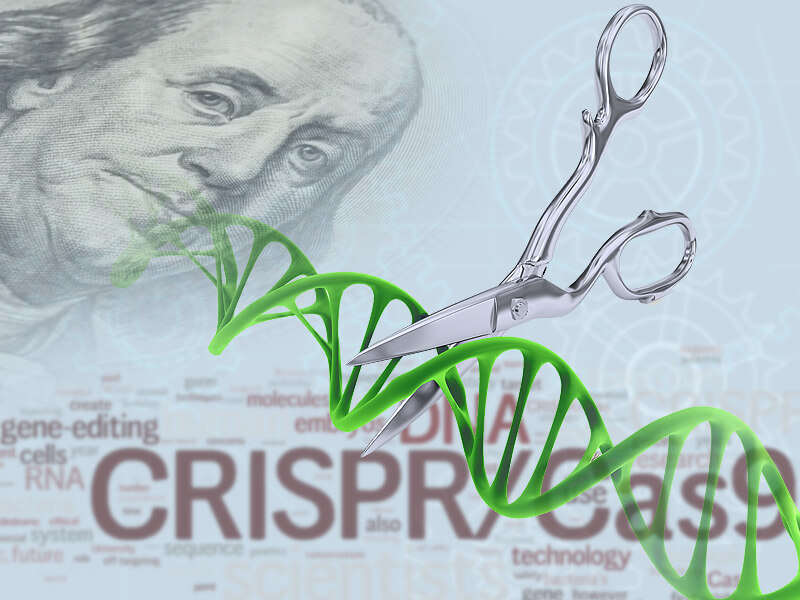
Scientists are now using a pioneering technology called CRISPR to edit a plant’s own genes, ushering in a host of new crop traits that directly benefit consumers.
PRODUCE THAT DOESN’T BRUISE OR BROWN
In 2015, scientists at Pennsylvania State University described the first CRISPR-edited food: a mushroom that doesn’t brown.
…
Non-browning mushrooms, potatoes and apples are just the beginning. Injury and infection activate PPO genes in tomatoes, pineapples, wheat, pears, cucumbers, grapes, cherries, mangos and more, making them all possible candidates for gene editing fixes to minimize bruising.
HYPOALLERGENIC WHEAT AND NUTS
Allergens are typically caused by proteins like gluten. Theoretically, scientists could use CRISPR to turn off the genes that lead to allergenic proteins.
For many allergenic plants, there are dozens of genes responsible for allergies. In order to make wheat safe for people with Coeliac disease, scientists would have to turn off 45 genes. So far, scientists have managed to take out 35 of them using CRISPR.
…
HEALTHIER PRODUCE
Scientists have already used CRISPR to produce high-amylose rice, a healthier option for overweight or diabetic individuals. CRISPR is also being used to produce oils enriched with healthier fat profiles, including more omega-3 fatty acids.
Three women have received a surgery intended to improve G-spot sensitivity and increase sexual satisfaction. The procedure tightens tissue in the vaginal wall around the so-called G spot, an area of the vagina reputed to produce intense orgasms when stimulated, although experts still argue over whether this really exists.
The surgery – dubbed a “G-spotplasty” – has been performed on three women who said they lost the ability to orgasm through vaginal stimulation alone following the birth of a child.
…
For each woman, [surgeon Adam] Ostrzenski removed a small, diamond-shaped piece of tissue from the supposed location of the G spot. He then stitched the vaginal wall back together again, causing it to tighten. The procedures were carried out in 2013, using a local anaesthetic and a sedative
…
Following the procedure, all three women went on to say that they had regained the ability to reach vaginal orgasm – without stimulation of the clitoris – and now had intercourse more frequently.
However, there was no placebo in the study, and it is unclear if these women would have seen the same improvements over time without the surgery.
…
[F]or women who are sexually frustrated, the G-spotplasty reinforces the message that they have a problem, and that the problem is their own body. “What is actually statistically normal – difficulty achieving orgasms through penetrative vaginal intercourse – is now considered pathological,” [Devan Stahl] says.
If you’ve heard that GMOs are bad, I want to introduce you to Pamela Ronald. A plant geneticist, Pamela co-authored the book Tomorrow’s Table: Organic Farming, Genetics and the Future of Food with her husband, Raoul Adamchak, who is an organic farmer.
…
Also known as “The Rice Whisperer,” Pamela is a Distinguished Professor at the University of California, Davis and Director of the Institute for Food and Agricultural Literacy. Her laboratory studies genes that make rice plants tolerant of environmental stress and resistant to disease.
In 2015, Pamela was selected by Scientific American as one of the world’s 100 most influential people in biotechnology and by Grist magazine as an innovator who will lead us toward a more sustainable future. Tomorrow’s Tablewas selected as one of the best books of 2008 by Seed Magazine and the Library Journal. Her 2015 TED talk has been viewed by nearly 1.5 million people and translated into 24 languages.
Pamela and I discuss how to navigate through the confusing landscape of genetically modified or genetically engineered crops and why science matters when sifting through the politics and perceptions that surround food information today. You’ll learn about the challenges that farmers face as the Non-GMO labeling movement affects consumer choices.
[T]wo years in, an ambitious project to synthesize genomes — including human ones — is moving on from its shaky start and plunging in to the practical work of creating better genomes than nature did. As some 200 scientists participating in “Genome Project-write” met in Boston…the group announced its first target: creating cells that could never be infected by viruses, and that perhaps would also be resistant to other killers.
…
Resistance to viruses and more would be accomplished by a process called recoding, which depends on the fact that the genetic code — which sequences of DNA letters “spell” which amino acids — is redundant. Each three-letter string of DNA letters, called a codon, codes for the production of a particular amino acid.
…
Why bother? Because viruses’ genes include the redundant codons. If a virus entered a cell and, as is its wont, tried to take over the cell’s genetic machinery to produce more viruses, [participant Jef] Boeke said, “it would get stuck.” It wouldn’t be able to get the cell to produce viral proteins and therefore viruses — which is what happens with a viral infection. “That’s recoding for viral resistance.”
…
If recoded human cells were resistant to HIV, hepatitis, influenza, and every other virus, they could be the basis for stem cell therapeutics.
The 20th century was a period of unprecedented biological growth for our species. The average human lifespan increased from 31 years in 1900 to 66 years in 2000. Adults grew more than 8 centimeters taller. Sports records toppled on an annual basis.
Yet at the dawn of the 21st century, humanity’s growth has noticeably slowed, and the change seems to be a trend, not an anomaly. Much to the dismay of fanciful futurists like Ray Kurzweil, who envision humans living 200 years or more, our species shows no signs of pressing forward to new biological heights without serious technological intervention. Instead, we are plateauing.
Last year, in the journal Frontiers in Physiology, Adrien Marck and a team of researchers at the Institute of Biomedical Research and Epidemiology of Sport in France, laid out a strong case that humanity may be nearing its biological limits.
“It is now possible to ascertain the biological limits of the human species, through sport records, lifespan, or height,” they wrote. “These traits no longer increase, despite further continuous nutritional, medical, and scientific progress. This suggests that modern societies have allowed our species to reach its limits. We are the first generation to become aware of these limitations.”
Marck and his colleagues made those limitations plain to see. Performance in fundamental sporting events is leveling off, as depicted in the graph below, showing the ten best performances in track and field’s 800-meter sprint, high-jump, and shot-put for each year.
Image credit: Marck et al. / Frontiers in Physiology
Moreover, humans are no longer growing any taller, as seen in the figure below showing average adult height for each country over time.
Image credit: Marck et al. / Frontiers in Physiology
And consider this: for the past century, the age of death of the oldest man and woman has remained between roughly 110 and 120 years. Only one person, Jeanne Louise Calment of France, lived beyond the age of 120. She died in 1997.
These data do not evince a species pushing forward to new physiological heights, but a species inching closer to potentially unbreakable biological limitations. Transhumanist endeavors in the realms of robotics, human augmentation, and cybernetics may allow us to transcend them, but at the cost of our own humanity.
Mis- and disinformation are distorting science and public policy. Subscribe to our Daily and Weekly Digests for incisive coverage of ‘disruptive’ innovations in AI, agricultural biotechnology, food, chemicals, nuclear energy, vaccines, and other disruptive innovations.
Though Homo sapiens may have reached a plateau, Marck and his colleagues believe there is still much work to be done to ensure that every human being has the opportunity to reach their full potential.
Knowing limits of the human species indicates clear goals for any nation; states should govern in such a way that human size, lifespan, and physical performance increase in order to reach their highest values for most people. When plateaus are reached, care should then be taken to prevent regression even if remaining close to the upper limits may become more costly. This aim will be one of the most intense challenges of this century, especially with the new pressure of anthropocenic activities responsible for deleterious effects on both humans, environment and health. However, solutions may be found and collective actions may taken to restrain this pressure and, in an optimistic way, maintain the possibility of reaching and remaining at the upper limits.
Ross Pomeroy is Chief Editor of Real Clear Science and a zoologist and conservation biologist by training. Follow him on Twitter @SteRoPo.
This article was originally published at Real Clear Science as We Are Reaching the Biological Limits of Humanity. Now What? and has been republished here with permission.
A new study published in the Nature journal opens the possibility to accelerate rice breeding to achieve food security for some of the world’s most vulnerable rice farmers.
[T]he research will enable scientists to discover new gene variants and characterize known genes for important traits, such as the natural ability of a particular variety to resist diseases and withstand floods, drought, and salty water. Additionally, molecular breeders could use the genetic markers to select rice plants that are more likely to carry a desired trait before they are planted in the field.
…
This recent research revealed that, among the 3,000 rice genomes, there are significant variations in gene content and immense sequence variation. Researchers identified more than 10,000 new rice genes and over 29 million simple variations throughout the genome. Additionally, within the two major rice variety groups, the analysis revealed the existence of previously unreported populations that are unique to specific geographic origins. Other evidence revealed that Asian rice was domesticated multiple times thousands of years ago.
Rusty Gage and colleagues at the Salk Institute [recently] announced that they had successfully transplanted lab-grown blobs of human brain tissue into mice. Gage’s team grew the blobs, known as brain organoids, from human stem cells. Once surgically implanted into rodent brains, the organoids continued growing, and their neurons formed connections with those of the surrounding brains. It was the first time such transplants had worked: Until now, organoids had only ever been grown in dishes. To be clear, Gage’s mice weren’t running around with human brains.
…
They do, however, capture some of the architectural features of parts of a brain, which is why they’re useful. Scientists can use them to understand how brains develop, and how they differ in disorders.
…
[T]he ethical discussion around organoids has yet to catch up with the fast-moving technology for creating them. They are getting bigger and more complex.
…
At what point would an organoid be worthy of moral status? Of respect? “At what point is it reasonable to at least discuss the question of sentience? Or conscious experience? Pain? Pleasure?” asks Christof Koch from the Allen Institute.
…
“[S]cience is advancing rapidly. As it becomes more powerful and mature, with untold promise for therapies, one has to approach these issues in a thoughtful way, and get in front of them.” [says Koch].
Democratic gubernatorial candidate Dennis Kucinich received $122,000 in consulting fees in 2016 from a group that works for food sustainability and safety, his campaign said [May 1].
…
[Cleveland.com reported] that in 2016, he made $120,000 from consulting, but his tax documents didn’t show the source of the money.
Kucinich spokesman Andy Juniewicz on [May 1] said it came from the Center for Food Safety, a Washington, D.C., nonprofit that says it’s dedicated to “organizing a powerful food movement that is fighting the industrial model and promoting organic, ecological, and sustainable alternatives.”
“Dating back to his days in the Congress, Dennis Kucinich was a leader in the area of consumer protection, especially as it related to (genetically modified foods), food additives, chemically treated foods, and dangerous toxins and substances, such as Dicambia, 2-4-D, and glyphosate,” Juniewicz said in an email. “In 2016, legislation was moving through the Congress that might have stripped states of their ability to test and label foods for safety and content, including GMO and other safety-related criteria. Both Dennis and Elizabeth (Kucinich, his wife,) worked with the Center for Food Safety on research, analysis, and strategy.”
Read full, original post: Kucinich says he got $120K as consultant for sustainable food group
It’s baaaaack, that reputation-shredding, stock-moving fight to the death over key CRISPR patents. On [April 30] in Washington, D.C., the U.S. Court of Appeals for the Federal Circuit [heard] oral arguments in University of California v. Broad Institute. Questions?
How did we get here? The patent office ruled in February 2017 that the Broad’s 2014 CRISPR patent on using CRISPR-Cas9 to edit genomes, based on discoveries by Feng Zhang, did not “interfere” with a patent application by UC based on the work of UC Berkeley’s Jennifer Doudna.
…
What’s the morning line? UC has its back to the wall. As in an appeal of a criminal case, this appeal is all about the law and whether the patent office interpreted and applied it correctly; there won’t be any dramatic new evidence.
…
Does UC have a shot? Not much of one, said the experts consulted by STAT.
…
When will we have a decision? In as little as a week if the judges regard the case as meh, with no need to establish precedent and therefore write a long, complicated opinion. But that seems very unlikely…That probably means in 60 to 90 days.
And then it’s over, right? The losing side will have at least 60 days to appeal to the Supreme Court, which would decide sometime after October whether or not to take the case.
For much of his professional golf career [Jack] Nicklaus has had aggravating back pain that he describes as an eight or nine out of 10 on the pain scale. While most golfers live with some degree of back pain Nicklaus said his was particularly debilitating. Despite trying therapies ranging from cortisone shots to a back operation the pain persisted. At the time he flew to Munich, Nicklaus was willing to try anything, even an, as of yet, unproven treatment.
…
At the Isar Klinikum in Munich, Germany, Nicklaus was prepped for the procedure. After getting a shot of local anesthesia and light sedation, he underwent liposuction on his abdominal area to harvest the stem cells, which come from the blood vessels.
…
After a quick check for contamination, the cells were injected back into Nicklaus’s body. Nicklaus received 10 injections in his back on each side of his lumbar spine, or lower back, and four in his cervical spine, or neck.
…
While he didn’t feel “immediate relief,” he did notice “the pain he used to feel while actively playing golf, had subsided after a few months”.
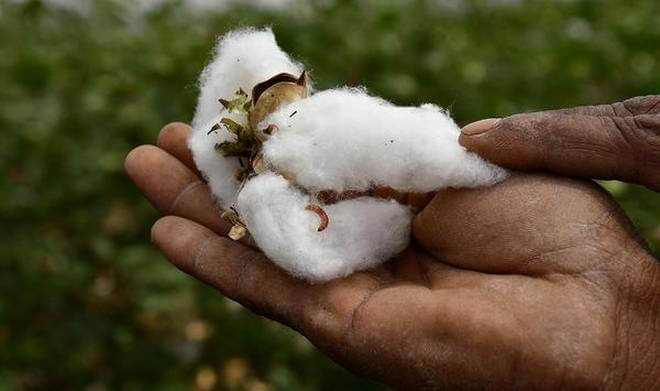
A Bt cotton variety developed by the Punjab Agricultural University (PAU) is ready for trials. It took the university ten years to develop the variety with resistance against bollworm and it hopes to get better results than the prevailing Bt varieties.
The new genetically modified variety, PAU Bt 1, will go for trials over 3,000 acres in the current kharif season and the university has started distributing seed packets of 400gm each free of cost, asking cotton growers to sow it over one kanal (one-eighth of an acre).
…
“I am very positive about our variety and hope it would give best results. Besides, it being resistant to common pest, the farmers don’t have to buy the seeds every season. They could select good plants for producing seeds for the next season. It’s economically beneficial for farmers,” said PAU vice-chancellor BS Dhillon.
The new variety is considered a landmark achievement of the PAU, which has been criticised by the farmers and farm unions for allegedly not undertaking research for newer varieties.
“It’s an achievement for PAU, especially being a public sector body,” said Dhillon. The commonly used varieties in the past were developed by multinational companies.
[S]cientists and government officials, in a series of exclusive interviews with the Alliance for Science, opined that biotechnology is one of the technologies that could help Nigeria solve some of its most pressing environmental problems.
Yerima Peter Tarfa, director of the Department for Climate Change in the Federal Ministry of Environment, said biotechnology — if rightly applied — holds enormous potentials for environmental conservation. He described it as a platform technology that may significantly contribute to climate change mitigation and adaptation.
…
[Rose Gidado, Nigeria Chapter country coordinator for the Open Forum on Agricultural Biotechnology (OFAB) in Africa] highlighted numerous environmental and social gains that the nation stands to make by embracing biotech in revamping its agricultural sector.
“Biotechnology can make a tremendous contribution to combating climate change by reducing the environmental impact of productive agriculture,” Gidado said. “This includes a significant reduction in pesticide use, savings on fossil fuels, decreasing CO2 emissions through no or less plowing, and conserving soil and moisture by optimizing the practice of no till through the use of crops with herbicide tolerant traits.”
Depression is a tricky beast. Symptoms vary widely from person to person, as does the response to treatment. But there’s no question that genetic makeup plays an important role, and understanding the genetic architecture of depression could help us better understand how to treat it.
A new study in the journal Nature Genetics has identified 44 genetic variants that can increase the risk of developing major depression. The authors of the study, which examined the genes of nearly 500,000 people, say their work suggests that all humans may carry at least some of these variants. The largest study of its kind, the work refines our understanding of the complex ways that genetics impacts mental illness.
…
To identify them, more than 200 scientists working with the Psychiatric Genomics Consortium conducted what’s known as a genome-wide association study, scanning the genomes of 135,458 people with depression and 344,000 people without depression to identify variants associated with major depression. The variants were linked to the regions of the brain targeted by some antidepressant drugs.
…
The study is an early step to more fully understanding the disorder, but identifying the molecular underpinnings could explain why some patients respond to treatment while others don’t, as well as point the way to new therapies.
Carey Gillam is an anti-GMO activist who once wrote for Reuters, but no longer does. An e-mail obtained from a FOIA request shows that her activism may be why. Indeed, Gillam’s work has been described as “polemical, sometimes fraudulent and routinely misleading.”
Any editor worth his or her salt should think twice before allowing Gillam to publish anything, particularly when it comes to GMOs. Alas, that didn’t happen here:
Literally, the very first sentence of the article is a lie. Gillam wrote: “US government scientists have detected a weedkiller linked to cancer in an array of commonly consumed foods…” That’s a bald-faced lie. Period.
The scientific consensus is that glyphosate does not cause cancer. The EPA, FDA, EFSA (European Food Safety Authority), and WHO (World Health Organization) all have arrived at the same conclusion. The only odd one out is IARC, a bizarre little outfit inside the WHO. Why? Investigations have revealed that IARC insiders are engaged in scientific fraud and have massive financial conflicts of interest.
Is any of that mentioned in the article? Nope, of course not.
A controversial biotech engineer was found dead Sunday [April 29] in a sensory deprivation tank at a spa in downtown Washington.
…
[T]he body of Aaron Traywick, 28, who ran a company called Ascendance Biomedical, was found by staff in an isolation pod at Soulex Float Spa…
The flotation company’s website says the pods are a “scientifically proven, time efficient method to unwind and bring regeneration to the daily grind.”
The spa did not respond to requests for comment….
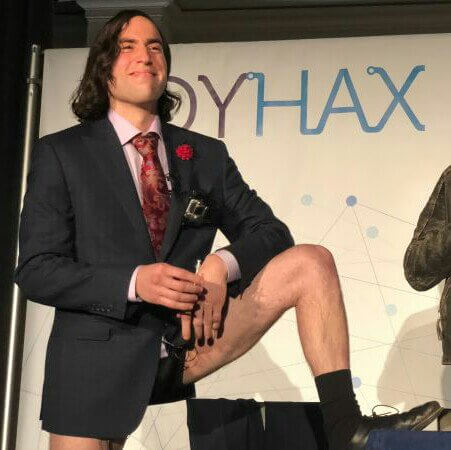
Traywick was known as a bio-hacker, a genetic engineer or scientist who works outside the mainstream ethical and institutional guidelines established by private corporations, universities and the Food and Drug Administration. He once gained attention when he injected himself with what he called a genetically designed herpes treatment while on Facebook Live at a conference in Austin.
…
According to the company website, he was recruiting volunteers to participate in gene therapy studies for HIV and AIDS “elimination and immunization” and a way to preserve and augment bone density.
Canadian breeders and seed technology companies are anxious about how regulators will handle new crops developed through gene editing.
Gene editing is the latest breakthrough in crop breeding. It involves tweaking existing genes within a plant as opposed to genetic modification, which involves inserting genes into a plant.
Ian Affleck, vice-president of plant biotechnology with CropLife Canada, said gene-edited crops could hit the market in 2019 yet Health Canada and the Canadian Food Inspection Agency have given no indication if or how they will be regulated.
“If that is not addressed soon, this uncertainty could most definitely put Canadian farmers and plant breeders at a disadvantage,” he said.
…
Stuart Smyth, agri-food innovation chair at the University of Saskatchewan, said regulatory reviews in Canada typically take about 18 to 22 months.
So, if gene-edited crops were regulated in Canada, farmers might have to wait nearly two years to get their hands on new crops already being grown in the U.S.
All of the plant breeders he has spoken to at the university use gene-editing techniques in their labs. They are worried about how it will be regulated at home and abroad.
“A lot of them are really concerned about how external export markets are going to regulate this,” he said.
Read full, original post: Rules for gene editing a worry
[A] study of the first ancient DNA recovered from South Asia shows that populations there mingled repeatedly thousands of years ago. Nearly all of the Indian subcontinent’s ethnic and linguistic groups are the product of three ancient Eurasian populations who met and mixed: local hunter-gatherers, Middle Eastern farmers, and Central Asian herders.
…
[This study] sheds light on where these populations came from and when they arrived in South Asia. It also strengthens the claim that Proto-Indo-European (PIE)—the ancestral language that gave rise to modern languages from English to Russian to Hindi—originated on the steppes of Asia.
…
[T]heir team recovered and analyzed ancient genomes from 65 individuals who lived in northern Pakistan between 1200 B.C.E. and 1 C.E. They also analyzed 132 ancient genomes from Iran and southern Central Asia, and 165 from the steppes of Kazakhstan and Russia, and compared them with published ancient and modern genomes.
…
[H]erders from the Eurasian steppe moved into the northern part of the subcontinent and mixed with Indus periphery people still there, forming the Ancestral North Indian population. Today, people who belong to higher castes and those who speak Indo-European languages such as Hindi and Urdu tend to have more of this ancestry. Shortly after, these two already mixed groups mixed with each other, giving rise to the populations living in India today.