Scientists challenge Center for Biological Diversity report claiming monarch butterflies threatened by dicamba herbicide

dicamba
Dicamba drifts. Apparently, more than expected by a lot of farmers, agriculture officials and manufacturers. But does that mean, as the Center for Biological Diversity claimed recently, that the herbicide is hurting migrating Monarch butterflies?

According to figures gathered by the University of Missouri, about 3.6 million acres of soybean were damaged in 2017 by drifts of dicamba, accounting for 2,708 dicamba-related damage reports. About a third were in Arkansas, but the rest ran through the center of the country (except Texas) and the Midwest, Southeast and Middle Atlantic. These figures were behind several movements by state agricultural officials to either ban the herbicide or limit its application. They also factor into several lawsuits against Monsanto and DuPont, companies that have developed new lines of soybeans engineered to work with the herbicide.

As luck would have it, the dicamba-damaged areas are in prime Monarch migration territory.

So, the Center for Biological Diversity issued a report in late February, “Menace To Monarchs,” looking at the correlation between dicamba use and drift, and Monarch migrations. The center’s report concluded that dicamba could erect significant barriers to migrating butterflies making their way north in the summer and south in the fall. The damage, according to CBD, comes mainly from the weed-killer’s ability to kill off milkweed, a plant essential for furthering the growth of Monarch larvae.

dicamba 3 28 18 2
Grape vines damaged by dicamba drift. Image credit: University of Arkansas Cooperative Extension Service

The report predicted that 60 million pounds of dicamba could be used in 2018, particularly on tolerant soybeans and cotton, and called for the US Environmental Protection Agency to let a two-year registration for use on GM soy and cotton expire this year. “We’re not calling for an outright ban on dicamba, but we don’t believe that it can be used safely on Monsanto’s genetically engineered crops,” said Nathan Donley, senior scientist at CBD and author of the report.

At issue is dicamba’s equal effectiveness on milkweed. The report’s findings are pretty much a correlation between mapping done by another group, Journey North, and dicamba use. The report concluded:

By 2019 more than 60 million acres of the monarch’s migratory habitat across the heart of the United States will be doused with dicamba. The projected increase in dicamba use across an area larger than the state of Minnesota poses a quickly escalating new threat to monarch populations that have already fallen by 80 in the past two decades.

Of course, dicamba and GE soybeans don’t go back 20 years. And the dicamba drift problem arose just last year, and its cause is now being scrutinized.

While the “report” is not exactly a peer-reviewed study, a few scientists have weighed in on the results.

Bob Hartzler, an agronomy professor and weed expert at Iowa State University, posted his doubts on his university website:

While I have been fairly critical of the Xtend system due to off-target movement of dicamba and subsequent injury, I think CBD has exaggerated the threat to monarchs posed by dicamba. I would like to make it clear that while I think their analysis is flawed, I do believe additional restrictions on dicamba use are required to minimize risks associated with volatilization.

The loss of common milkweed from crop fields in the Cornbelt is a contributing factor in the monarch’s decline. However, to expect farmers to intentionally allow milkweed to survive within their fields is unrealistic. Farmers use the most cost-effective practices available to control weeds. Decreasing the intensity of management to allow milkweed to survive within fields would increase the likelihood of other weeds surviving, and therefore negatively impact yield and profitability.

Under field conditions I suspect the damage to milkweed would be much less since the majority of common milkweed in the field develops from established rootstocks, and the plants would be exposed to dicamba at later stages of development. We evaluated the response of common milkweed to low doses of dicamba, and the influence dicamba injury had on ovipositioning by monarchs. Doses simulating drift equivalent to 0.1 and 1.0% of the labeled rate (0.5 lb/acre) caused severe distortion of leaves that emerged following application, but the emergence rate of leaves was not affected (Table 1). We did not determine milkweed biomass; while I suspect there was some reduction, it would have been much less than 50%.

Orley “Chip” Taylor, a retired ecology professor at University of Kansas who runs the organization Monarch Watch, observed that while dicamba drift could have been avoided, it probably isn’t solely responsible for Monarch issues:

When dicamba was proposed, there was strong opposition since this product was known to have unintended effects due to drift. That admonition was ignored and the product was approved and the unintended consequences became a reality as drift into soybeans that were not dicamba resistant devastated soybeans crops in many states. I don’t know the details, but there are now lawsuits due to lost and diminished soybean yields.

As to monarchs, the impact, should drift occur, could be on the flowering plants and milkweeds adjacent to treated fields. There are a lot of “ifs” to deal with here since we don’t have a good grip on the amount of monarch and pollinator habitat adjacent to fields that are likely to be sprayed. That said, the loss of plant biodiversity due to drift of dicamba needs to stop.

Other scientists in the past have questioned whether Monarch population declines have much to do with milkweed. Anurag Agrawal, an entomologist at Cornell University, observed in 2016 that Monarch declines began in late summer and continued during the butterfly southern migration, when they don’t rely on milkweed. Others have contended that in the last two decades, there actually hasn’t been a significant and trending Monarch decline, while yet another scientist, Lincoln Brower, points to habitat destruction in Mexico as a contributing factor.

So, reality is complicated.

dicamba 3 28 18 3Media coverage hasn’t been so complex. St. Louis Public Radio ran a story entitled “Dicamba is hurting monarch butterflies, scientists say,” and essentially quoted solely from the CBD report.
The Minnesota-based City Pages was even more alarmist, announcing that “Monsanto’s newest scheme is very bad news for monarch butterflies,” and that “Minnesota may soon be a state without its state butterfly.”

What is the Center for Biological Diversity?

As Richard Levine, former editor at the Entomological Society of America, wrote in the Genetic Literacy Project last year (in a story about another CBD report raising alarm about wild bees):

The Center for Biological Diversity is a nonprofit conservation organization with more than 1.2 million members and online activists. In 2014 it generated more than $14 million in support and revenue.

Part of what made the report so unusual was that it was not written by a team of bee specialists or by independent entomologists, and it excluded any input or even a review from wild bee experts. Instead, this “comprehensive review of all literature” was written by a single author with no training or background in entomology.

Similarly, this report was not written by a team of specialists or entomologists, and was authored by Nathan Donley, who has a background in cancer biology, not entomology.

Andrew Porterfield is a writer and editor, and has worked with numerous academic institutions, companies and non-profits in the life sciences. BIO. Follow him on Twitter @AMPorterfield.

Examining the curious genes behind ‘magic mushrooms’

mushrooms
“One pill makes you larger, and one pill makes you small,” sang Grace Slick in Jefferson Airplane’s classic White Rabbit, conjuring images of Alice in Wonderland in Lewis Carroll’s 1865 novel. But Alice also nibbled a mushroom to grow taller or smaller, following the advice of a hookah-smoking caterpillar perched atop the fungus.

alice aAlice might have munched one of the 200 species of mushroom that produce psilocybin, a hallucinogen. A recent article in Evolution Letters, from Jason Slot, an assistant professor of fungal evolutionary genomics at The Ohio State University and co-workers, reports the sequencing of the genomes of three species of psychedelic mushrooms: Psilocybe cyanescens, Gymnopilus dilepis, and Panaeolus cyanescens.

Their research reveals how the hallucinogen that could make Alice think she was growing or shrinking and that hippies loved in the 1960s is actually a fungal defense mechanism, and the product of a set of genes that flit from one species of fungus to another. The biochemical shields the mushrooms from the bugs that share the rotting-log and dung-heap habitats.

Brief history of fungus-based drugs

Fungi have long played an important role in the pharmaceutical industry. They lie behind the famous penicillin story from 1941, and provide the natural products that inspired such varied drugs as cephalosporin antibiotics, statins and immune suppressants.

The ergot alkaloids were early migraine drugs. The most famous is LSD, lysergic acid diethylamide. It comes from a fungus of genus Claviceps that grows on certain grains, such as rye.

Of course drugs require a specific dose. But bread made from Claviceps-infected grain can cause the uncontrollable movements and terrifying visions of ergotism. People high on contaminated bread would imagine they were being chased by snakes or possessed by the devil. Ergotism may have been one impetus for burning women at the stake in colonial New England for being witches. Also called St. Anthony’s Fire, ergotism killed thousands in Europe in the Middle Ages.

colorsAlbert Hofmann, a chemist at Sandoz Laboratories in Basel, Switzerland, first synthesized LSD in 1938, in search of a migraine treatment. In a notebook entry after he went home early because he was dizzy, Hofmann wrote that he felt “a not unpleasant delirium which was marked by an extreme degree of fantasy … visions of extraordinary vividness accompanied by a kaleidoscopic play of intense coloration continuously swirled around me.” After he calmed down, Hofmann wondered if he’d unintentionally eaten crystals of LSD left at his work area.

To find out, he ate some more.

After 40 minutes, Hofmann wrote, he experienced “mild dizziness, restlessness, inability to concentrate, visual disturbance, and uncontrollable laughter.” Someone helped him home, where he began running around, although he thought he was still. Terrifying faces loomed, he had a metallic taste in his mouth, and thought he was looking down at himself from afar. “Multihued metamorphizing fantastic images overwhelmed me,” he wrote.

From Hofmann’s discovery until the mid-1960s, Sandoz labs tried to develop drugs to treat mental illnesses from LSD. But then Harvard psychology professor Timothy Leary’s promoting of LSD as a recreational drug led to a halt of research. In 1966, Sandoz turned over its LSD stash to the National Institute of Mental Health for research.

Progress on developing fungal psychedelics languished until 1999, when Roland Griffiths of Johns Hopkins began studying the effects on behavior of drugs of abuse. One of his first subjects: psilocybin. Dr. Hofmann described and synthesized it in 1958. Psilocybin is activated in the body, and may have been what Alice took when she sampled the mushroom.

a psychedelics expert says magic mushrooms will be approved for depression by heres whyToday ClinicalTrials.gov lists 23 studies on psilocybin, including some at highly respected institutions such as Johns Hopkins’ Heffter Research Institute. The eclectic applications include obsessive-compulsive disorder, depression, smoking cessation, spiritual practice, “depression, grief, and distress in long-term AIDS survivors,” “experience associated with classical mystical experiences,” effect on religious professionals, alcohol and cocaine dependence, and anxiety from having cancer. And, of course, migraines.

Understanding how mushrooms make psilocybin might provide clues to developing new pharmaceuticals. That’s what Dr. Slot’s team investigates.

Psilocybin as mushroom’s weapon

To a gilled mushroom, a chomping insect poses as much of a threat as a stomping human hiker, and the compound the fungus produces to preserve its niche affects insects and us.

A phenomenon called horizontal gene transfer — HGT — explains why 200 species of mushrooms that don’t have much in common nevertheless produce the same psychoactive compound, psilocybin.

corn genome h
Jumping genes were discovered in corn, where they cause color spots on kernels. They also lie behind the “magic” of magic mushrooms.

Vertical gene transfer is familiar — grandparent to parent to child. Horizontal gene transfer moves a bunch of genes from one species to another. Barbara McClintock discovered these “jumping genes” in 1951 as spotting white or yellow corn kernels. Her discovery was years before researchers identified similar “transposons” in bacteria.

Jumping genes can cause genetic disease in people when they plop into important genes, disrupting their functions. They are also responsible for the transfer of sets of antibiotic resistance genes from one type of bacterium to another, which explains how multiple drug resistances spread easily in hospitals.

Dr. Slot and his co-workers suspected horizontal gene transfer behind psilocybin production because it takes five biochemical steps to get from the amino acid tryptophan to psilocybin, which is a “prodrug.” A digestive enzyme in the animal that eats the mushroom removes a phosphate from psilocybin, releasing the active drug psilocin. It binds to a subset of receptors for the neurotransmitter serotonin, which affects the behavior of various species of flies, beetles, ants, termites, and other arthropods. Perhaps they hallucinate, as Alice did.

Psilocybin
Psilocybin

(We may not live on dung heaps or in rotting logs, but we have serotonin and serotonin receptors. Many drugs, both therapeutic and recreational, interact with the serotonin pathway, such as the selective serotonin reuptake inhibitors – SSRIs).

“The psilocybin probably doesn’t just poison predators or taste bad. These mushrooms are altering the insects’ ‘mind’ — if they have minds — to meet their own needs,” Dr. Slot said in a news release, which is not quite how evolution works. (News releases tend to oversimplify.) Natural selection isn’t purposeful.

Over time, mushrooms containing biochemical that discourages predators were more likely to survive to reproduce, passing on their ability. And that talent could move to other fungal species thanks to horizontal gene transfer.

Imagining nauseated ants tottering off mushrooms, I asked Dr. Slot if the reaction is like a person taking syrup of ipecac to induce vomiting after swallowing poison. It doesn’t appear to be that straightforward. “I’m taking a bigger picture of behavior modification. The substance changes the rate of feeding. Specific activity on neurotransmitter receptors might indicate direct manipulation of the neurological controllers of behavior,” he hypothesizes.

Mushroom mind control? It happens. Other fungi that manipulate neurotransmitters include those of the genus Ophiocordyceps that enslave zombie ants and the effects of psilocybin on spinning spider webs.

HalluMush eGenome sequencing of mushrooms is part of the field of neurochemical ecology, and the current research “provides a methodological roadmap for the future discovery of novel fungal pharmaceuticals, with both social and medical applications,” Dr. Slot said.

Unlike synthetic chemist Dr. Hofmann or the pharmacologists tweaking natural hallucinogens today, Dr. Slot, an evolutionary ecologist, prefers to look to nature. “I find the possibility of identifying unexpected derivatives that have been refined by natural selection more intriguing.”

(The section on history is from “Discovery: Windows on the Life Sciences,” by Ricki Lewis, Blackwell Science, 2001.)

Ricki Lewis is the GLP’s senior contributing writer focusing on gene therapy and gene editing. She has a PhD in genetics and is a genetic counselor, science writer and author of The Forever Fix: Gene Therapy and the Boy Who Saved It, the only popular book about gene therapy. BIO. Follow her at her website or Twitter @rickilewis.

Talking Biotech: The powerful potential—and risks—of CRISPR engineered ‘gene drives’

mosquito and dna

Gene drives are a powerful technology that may be used to control pests. The concepts key off of exploiting genetic vulnerabilities that are rapidly inherited, and cause populations to crash over a short time. Such instances happen naturally, but now scientists are engineering the genetics of pests to induce steep population declines from gene drives. Fred Gould from North Carolina State University discusses the technology, its risks, regulation and some of the social aspects of the application of the science.

This episode is part one of a two-part series on gene drives. This episode (part one) is on the technology and its ecological implications. The social considerations are discussed in part two in an interview with Jennifer Kuzma.

Visit the Talking Biotech website

Follow Talking Biotech on Twitter @TalkingBiotech

Follow Kevin Folta on Twitter @kevinfolta | Facebook: Facebook.com/kmfolta/ | Lab website: Arabidopsisthaliana.com | All funding: Kevinfolta.com/transparency

Follow Paul Vincelli on Twitter @Pvincell | University of Kentucky webpage 

Viewpoint: Population declines are a greater crisis than extinctions

tim flach endangered saiga ht jef x

Forget extinctions. Population decline is a much greater crisis.

…

We watch for extinctions like those with the thought that, like Noah, we only need two of each species to preserve biodiversity assembled over millions of years. In the meantime, though, animals and plants are rapidly declining all around us. The Living Planet Index, which monitors more than 14,000 populations of 3,706 species of vertebrates, reports that populations fell by 58 percent on average from 1970–2012.

…

Before species disappear from the earth entirely, they disappear from a particular segment of the map. These local extinctions, called extirpations, do not make as many headlines. But they are naturally much more common than extinctions, and happening rapidly.

…

There are technical reasons to care about thinning. Colony collapse disorder, a crisis in honeybee populations that seems to have abated in recent years, and the melting of the polar ice caps are two crises of abundance whose perceived seriousness is fueled by a sense of interconnection, the ominous sense of a looming natural domino effect. The early, technocratic stirrings of American conservation policy were similarly motivated by a sense that the decline in the continent’s massive numbers of moose, deer, and salmon might combine to make Americans less prosperous.

…

Urbanites have the most to gain from the replenishment of once-common plants and animals. Abundance doesn’t have to be an African mangrove forest. It is flocks of geese, and butterflies, and the oysters that once thronged New York Harbor.

Read full, original post: Population Collapse

Genetically modified weeds could usher in new era of ‘genetic control’

PalmerAmarath x

The USDA’s National Institute of Food and Agriculture has announced a $500,000 grant to University of Illinois researchers in the Department of Crop Sciences. The project will lay the groundwork towards developing a new type of weed control system, known as genetic control, for waterhemp and Palmer amaranth.

“Currently, we use chemical, physical, cultural, and biological control strategies to reduce weed populations. A genetic control strategy would be a way to introduce specific genetic controls that could change and ultimately eliminate the population,” says Pat Tranel, molecular weed scientist, interim head of the Department of Crop Sciences at U of I, and principal investigator on the grant.

The idea is to use genetic modification techniques to change the sex ratio – the ratio of males to females – in waterhemp and Palmer amaranth populations. Theoretically, with the right genetic manipulation, every mating would result in only male offspring. If this occurred over multiple generations, every individual in these populations would eventually be male. Reproduction would cease and populations would crash.

Read full, original post: USDA invests in research to develop genetic control of waterhemp

Viewpoint: Consumers gain little from 23andMe’s screening for BRCA cancer genes

Cancer hp slide D OF master

This month [March], the FDA granted the genetics company 23andMe permission to offer direct-to-consumer testing for three of the more than 1,000 known variants of the genes BRCA1 and BRCA2 that have been found to confer an increased risk of breast and ovarian cancer. (The tests were previously only available through a doctor.)

But not everyone is celebrating. Because the gene variants found by the test are extremely rare, most people who take the test won’t come away with much meaningful information, and there’s no good evidence that people who take the test will be better off than those who don’t.

What we have is a clash of philosophies: Should consumers have a right to information that some experts have deemed unhelpful and potentially harmful for most people?

…

[23andMe CEO Anne Wojcicki said] even though there aren’t many carriers of BRCA1 or BRCA2 mutations, some women who could benefit from screening aren’t getting tested. And even if the test doesn’t change what you know about your cancer risk, Wu said, “the results can still inform your conversations with your doctor.”

…

The marketing of these tests “thrives on the idea that people can make their own decisions,” [epidemiologist Cecile] Janssens said. If a customer believes that the test has utility for them, then in their view, it does.

Read full, original post: Anyone Can Now Take This Breast Cancer Gene Test, But It Probably Won’t Tell You Much

CRISPR food in grocery stores in 5 years? Gene editing research picks up speed

Fruit and vege market small

CRISPR, which works by finding and then replacing, editing or deleting a genetic sequence inside an organism, is currently being tested in agricultural products in several countries, including the U.S., U.K. and Spain, among others. DuPont Pioneer is developing a strain of CRISPR-edited corn that could be on the market in five years. U.K. livestock company Genus Breeding is using CRISPR in animal embryos to breed healthier pigs and cows at a faster pace. Scientists at the Institute for Sustainable Agriculture in Spain recently used CRISPR to edit wheat so that it’s safe for people with celiac disease. Berkeley, California, startup Caribou Biosciences, the first company to commercialize CRISPR technology, is working directly with Genus and DuPont to get edited crops and meat on store shelves faster.

Not everyone is enthusiastic about that prospect. Staunch anti-GMO advocates don’t know what to make of CRISPR-edited food yet, but they’re not so sure they want it on their plates. The technology isn’t waiting, though. Gene editing plants and livestock with CRISPR has picked up speed as the technology has recently become less complicated and more efficient.

…

“I think this technology can help produce better food that’s safer for people by preventing allergies,” Francisco Barro Losado, one of the researchers, tells OZY.

Read full, original post: You could be eating CRISPR food in five years

Honeycrisp-enterprise cross: Cosmic crisp is biggest-ever launch of apple variety

lead navidbaraty wander

Nearly 30 years ago, Dr Bruce Barritt was jeered when he branded the apple industry in Washington state a dinosaur for growing obsolete varieties such as red and golden delicious. Now, farmers in the state, where 70% of US apples are grown, are ripping up millions of trees and replacing them with a new variety, the cosmic crisp, which Barritt, a horticulturalist, has created in the decades since.

With 12 million trees to be planted by 2020, and the first harvest of apples due in the shops in 2019, it is the biggest ever launch of a new apple.

…

“It’s a traditional breeding programme, not genetically modified; it’s hybridising existing varieties,” he explains. “All the traits important in an apple – the flavour, juiciness, crispness – are controlled by many genes. Our knowledge of genetics is not good enough to collect all those genes together and change them with genetic modification.”

…

The cosmic crisp, so named because of its yellow star-like flecks on a burgundy skin, is a cross between the honeycrisp and the enterprise.

…

Testing of the apple continued and it was patented in 2014, with Barritt named as the “inventor”. For the next 10 years, it will only be available to US farmers in Washington, because they helped fund the breeding programme.

Read full, original post: Cosmic crisp – a new apple to get your teeth into

Popular fluoroquinolones antibiotic can go haywire in rare cases, causing irreversible nerve damage

cbsn fusion antibiotics use resistance worsens pnas study today thumbnail x

Miriam van Staveren went on holiday to the Canary Islands and caught an infection. Her ear and sinuses throbbed, so she went to see the resort doctor, who prescribed a six-day course of the popular antibiotic levofloxacin.

…

[Three weeks later,] she developed shooting pains in her legs and feet, as well as fatigue and depression. “I got sicker and sicker,” she says.

…

[F]or a small percentage of people, fluoroquinolones have developed a bad reputation.

…

For decades, regulatory agencies and the medical profession were sceptical that a brief course of antibiotics could have such a devastating, long-term impact. But after persistent campaigning by patient groups, attitudes began to change in 2008, when the US Food and Drug Administration (FDA) announced the first of what would be a series of strong alerts about the side effects of fluoroquinolone drugs, including tendon rupture and irreversible nerve damage.

…

[F]luoroquinolones are damaging mitochondria, the power packs inside human cells that evolved from symbiotic, bacteria-like cells billions of years ago. This kind of harm can affect every cell in the body, explaining why a wide range of symptoms can appear and get worse over time.

…

“I want doctors to be informed about the risks, no matter how rare or not they are,” van Staveren says. “I want warnings all over and I want the warnings to be taken seriously.”

Read full, original post: When antibiotics turn toxic

Viewpoint: Anti-GMO opposition to CRISPR gene editing driven by skepticism of corporations, capitalism

image

The Des Moines Register recently reported on research … which unveiled Russian funding for and promotion of articles that question the safety of GMOs in farming.

…

It is important because this technology could bring important solutions to agricultural problems in our crops — like a genetically modified citrus tree resistant to HLB or a tomato plant immune to bacterial spot. Those already are in development by scientists here in Florida.

But, what is more concerning is anti-GMO forces are turning their attention to new breeding techniques and scientific breakthroughs. One of those technologies is CRISPR, a gene-editing technique that takes away the need to introduce “foreign” DNA into a species like in GMOs. It has huge potential in human medicine and plant breeding. I am not surprised to hear that anti-GMO campaigners are turning their attention toward these new technologies. I believe it is driven more by anti-corporate and anti-capitalist sentiments than anything to do with safety and the environment.

It seems that if we listened to the anti-GMO arguments, we would freeze plant breeding and innovation in time and stifle advancements in productivity and other positive traits. Of course, we must approach CRISPR ethically, because it is an extremely powerful tool. But, it would be a shame to deny this to agriculture and a world of hungry people it can benefit.

Read full, original post: Watch out for Anti-GMO Fake-out

Understanding genetic mutations: Why do some cause disease while others don’t?

mutation

Why do some mutations lead to disease while others seemingly overcome injury without harm? How do some cells pinch hit for their missing or hurt comrades?

…

Genetic compensation, [Dr. Didier Stainier] explained, involves changes in RNA or protein levels that can functionally compensate for the loss of function of another gene. Transcriptional adaptation refers to changes in RNA levels that result from a mutation, but not from the loss of gene function.

…

[S]cientists want to fully understand how the process starts and what occurs to prompt the actions. “The main question we had at this point is, what is the trigger for the transcriptional adaptation response?” Stainier said.

His research group tested several hypothetical prompts, finally settling on damaged or mutant RNA as the culprit. That led to more questions.

“Why do some genetic mutations cause disease while others do not?” Stainier asked. Are some mutations more or less severe than others? Also, how can more effective therapies be developed that would “enhance an organism’s robustness to a mutation rather than trying to correct the mutation?”

Investigators now are exploring ways to trigger up-regulation of the specific compensating proteins and trying to understand how the degraded mutant RNA prompts the response in the first place.

Read full, original post: What Organ Formation, Function Tell Us About Overcoming Mutations

Bayer-Monsanto merger reflects larger trends in global agrochemical industry

Monsanto Bayer x

The progress of the Bayer-Monsanto mega-takeover, which [recently] secured regulatory approval from European Union (EU) competition authorities, is only the most recent manifestation of a wider trend of structural transformation in the global agrochemical industry.

…

[F]ar-reaching developments such as climate change and a rapidly growing human population have instilled the agrochemical industry with widespread urgency to find solutions to related challenges. Against a backdrop of downward pressure on the global prices of seeds and agrochemicals, industry consolidation has been one of the logical outcomes of such considerations.

If Bayer’s bet on a long-term recovery in agrochemical prices due to rapid population growth is successful, the company stands to be handsomely rewarded for its pivot from being a mixed chemical-pharmaceutical company to a more specialized leader in the subfield of biotechnology. A key rationale behind Bayer’s takeover bid in this context is to gain access to Monsanto’s “digital farming” products.

According to Monsanto CEO Hugh Grant, together, the two firms could hereby become “innovation drivers” helping farmers to cope with new pressures resulting from structural transformation in the agricultural sector.

Read full, original post: News Analysis: Bayer takeover of Monsanto highlights tectonic shifts in global agrochemical industry

Ars Technica decision to reject reporting on latest cellphone scare study illustrates how journalists apply science literacy

cell phone radiation anti media
[Recently], a fellow editor emailed me a link to yet another study purporting to show that cellphone use could be associated with cancer.

…

[W]e thought we’d describe how we went about evaluating the paper, since it could help more people identify similar issues in the future.


A quick glance at the study identified significant issues with its primary conclusion. Normally, at this point, the decision would be to skip coverage unless the study picked up unwarranted attention from the rest of the media. (See: Scott Kelly’s DNA). But in this case, we thought we’d describe how we went about evaluating the paper, since it could help more people identify similar issues in the future.

…

[T]he normal response to a study like this would be to simply ignore it unless it became widely discussed. But highlighting the process that we use to decide to ignore it should give you a sense of how we determine what to cover when it comes to scientific studies at Ars. And, if you decide to try this method at home, it can also help you determine which results to pay attention to.

Read full, original post: A critical analysis of the latest cellphone safety scare

Kosher pork? Meat from cloned pigs and lab-grown meat are Kosher, prominent Israeli rabbi says

Pork Jews Ben Kendall

Prominent Israeli Rabbi Yuval Cherlow says meat from a cloned pig would be considered kosher under Jewish dietary laws. Cherlow, who is a leading scholar on modern interpretations of Kashrut, is advocating for rabbinic approval of cloned meats in order to reduce animal suffering, decrease meat industry pollution and stamp out starvation.

Rabbi Yuval Cherlow e
Rabbi Yuval Cherlow

In an interview published … by the Israeli newspaper Yedioth Ahronoth, Rabbi Cherlow makes the case that transgenic or cloned meat would not be subject to the same Kashrut dietary laws that guide what is kosher, or “fit,” for consumption by Jews.

…

Cherlow says that because meat grown from cells in a lab would have lost its “identity,” observant Jews would also be able to eat it alongside dairy products.

…

Cherlow argues that allowing genetically engineered meat from a pig would serve a two-fold purpose of reducing starvation and reducing reliance on a worldwide meat industry he sees as unclean and causing pollution.

Read full, original post: Israeli Rabbi says eating cloned pork is Kosher, genetic engineering would prevent animal suffering

Could LSD treat schizophrenia and depression?

lsd stress and anxiety

A small new study published in the Journal of Neuroscience seems to offer some insight into what’s happening in the brain while we’re on a LSD trip. And it might even provide a hint as to how certain mental disorders develop. German researchers asked 24 healthy volunteers to lay down in a MRI machine and play a little game. They were told to interact, via eye movements, with a virtual human avatar on a computer screen.

…

The researchers found that when the volunteers were on LSD (as opposed to a placebo), they were less able to pay attention to the avatar and recognize it as another person.

…

[Researcher Katrin] Preller and her team used the experiment to try to better understand mental disorders like depression, anxiety, and schizophrenia. The same sort of alterations we see with LSD can be found in these disorders.

…

[W]hen the volunteers were given both LSD and a drug that blocks serotonin 2A receptors, they performed just as well on the game and had similar brain activity as they did on placebos. That finding in particular highlights the potential applications of drugs that directly interact with and stabilize a person’s level of serotonin 2A.

…

[A]s some researchers and adventurous volunteers have speculated, both in the past and even today, these treatments could even include LSD.

Read full, original post: New LSD Research May Help Explain the Brain Chemistry of Depression and Schizophrenia

GMO maize could halt devastating fall army worm invasion in Uganda—if it gets approved

Mary Yangi
Mary Yangi trekked a long journey from South Sudan to Uganda’s West Nile region to settle as a refugee and, a few months later, into farming. Unlike others, who were reliant upon food rations from the United Nations High Commission for Refugees, the 59-year-old widow saw an opportunity when she settled in the Ngurua Village in the Arua District.

She befriended native Ugandans who were able to lend her land on which to grow maize.

“You know when one is watching news on Television or reading news on print media about the plight of refugees from South Sudan, the common thing you will see is families leading difficult life but coming from a family who treasured farming, I had to do what is right,” Yangi said.

But now, Yangi and other maize farmers in the region are struggling to deal with a fall army worm invasion. The biggest hope for controlling the pests, which eat leaves and damage ears, may be found in new GMO seed varieties under development – but with no clear path to farmers. The nation is still developing its legal framework for the commercial release of GMO seeds, in the face of opposition from anti-GMO forces.

The jolly woman lives in a grass-thatched house on a homestead surrounded by a maize garden – though part of her small farm is some 200 meters away and suffering from a devastating fall army worm infestation.

Growing maize is nothing new for Yangi, whose family worked a small farm Nimule South Sudan before they were forced to flee the area. The army worms, however, are a new problem to face.

army worm 3 23 18
Fall army worm

“Back home we used to grow a lot of maize and we experienced no insect infestation which is a different case here in Uganda,” she said.

She said scientists from Abi Zonal Agricultural Research and Development Institute (Abi ZARDI) in Arua, located in the northwest part of the country, have visited on a number of occasions, advising farmers to spray a chemical called rocket to eliminate the army worms from their farms. But the team also promised that in the near future, farmers will be given a GMO maize variety that resists the fall army worm.

That farmers like Yangi are desperate for a solution is plain to see. Upon my arrival, the woman asked whether I might have thought to bring along a package of GMO maize seeds from Kampala.

Yangi now has a food security of sorts and has urged other refugees to take up agriculture to avoid being reliant upon UN aid. Still, there are challenges, including a prolonged drought, that makes plants more vulnerable to pests and disease. And many farmers in the area have given up on worm-threatened maize, shifting to crops such as cassava.

GMO Maize breeding

There are a number of maize farmers in Africa who have faced the wrath of the fall army worm with some farmers experiencing 100 percent yield loss.

However scientists at the National Crop Resources Research Institute (NaCRRI) in Namulonge are working on a  GMO varieties with both drought tolerance and resistance to the fall army worm.

An ongoing trial of the Water Efficient Maize for Africa (WEMA) have shown promising results for resistance against stem borers and fall army worms, said Dr. Godfrey Asea, director of the institute.

At the same time, scientists in several countries are testing GMO maize which can grow well in drought stricken condition and resist stem borer. The countries include Uganda, Kenya, Tanzania, Mozambique and South Africa, with farmers in the latter already growing the crop.

Uganda is in its fourth round of testing, with hopes that it could be released within two years.

Dr Asea 3 23 18
Dr. Godrey Asea explains the breeding process of GMO maize at a field trial site in Uganda. Image credit: Lominda Afedraru.

The GMO variety has shown considerable promise in field testing, Asea explained while taking visiting journalists on a tour. The GMO maize has stood successfully against infestations that have ravaged traditional varieties.

He believes that enough data has been collected by scientists involved in the research work. And he hopes that once the regulatory framework is finalized, farmers such as Yangi will see the benefits of these new seeds.

The conventional WEMA maize varieties bred for drought tolerance have already been released. But the GMO maize variety is expected to improve yields if farmers follow solid agronomy practices.

On average farmers in Uganda using traditional hybrid varieties are able to harvest about 2.5 tons of maize per hectare. The hope is that the GMO varieties will boost that yield to 7 tons per hectare.

The case of Mozambique

Roseiro Moreira, social scientist heading the WEMA communications team in Mozambique notes that since scientists in Uganda have confirmed the GMO maize variety resists the fall army worm, this is good news for farmers in the southern part of the continent.

“In the case of Mozambique, there will be no problem in releasing the maize variety to farmers because the country has a biosafety law in place which allows release of GMO farm products,” Moreira said.

Mozambique passed its law in 2007, allowing scientists to conduct research and release products which have gone through final product development. The country is in its second stage of planting GMO maize.

Lominda Afedraru is a freelance science journalist in Uganda who specializes in agriculture, health, environment, climate change and marine science. Follow her on the Daily Monitor web site www.monitor.co.ug, Facebook or Twitter @lominda25.

What’s stopping us from using CRISPR to gene edit humans to fight disease?

CRISPR
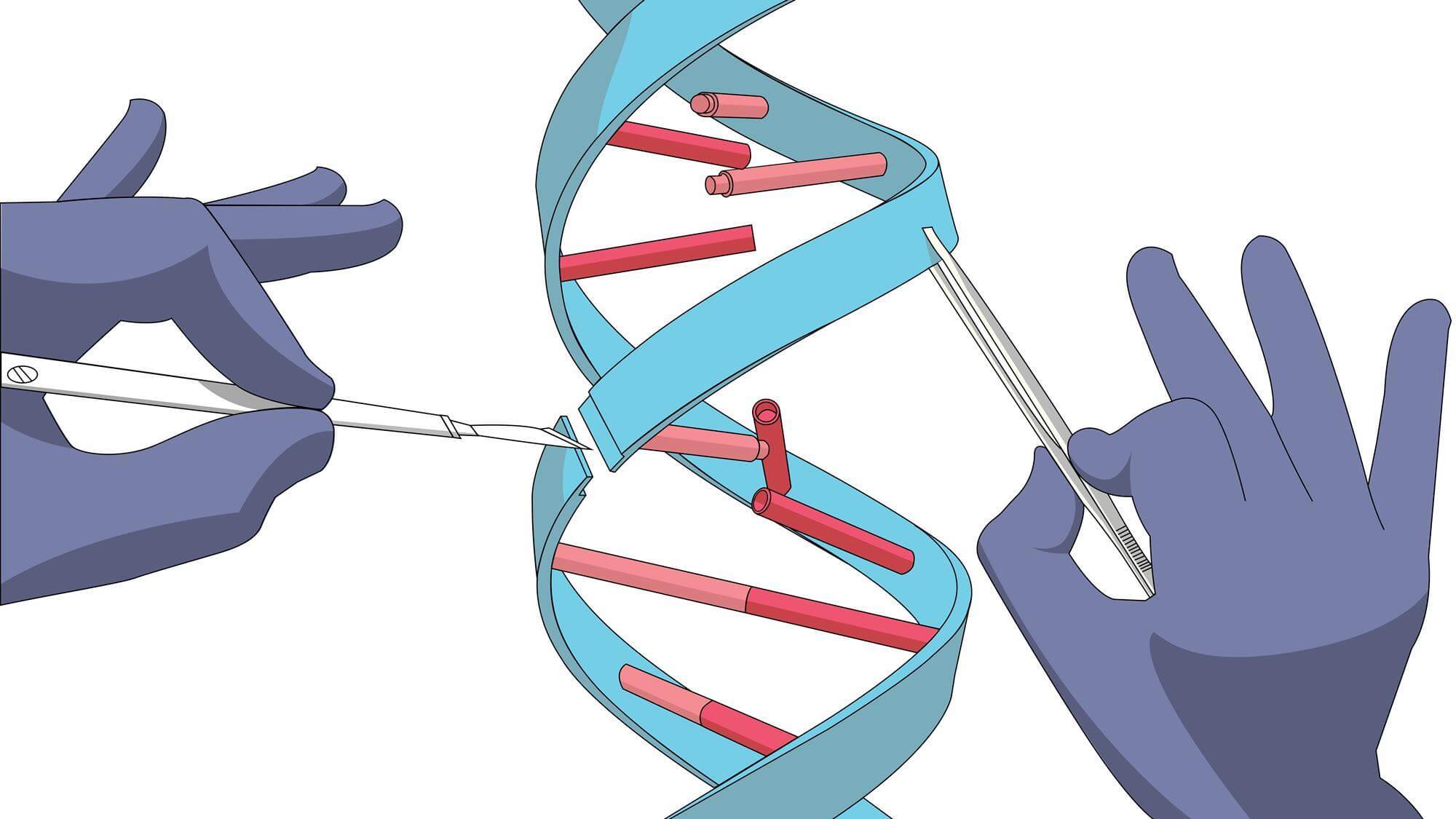
CRISPR gene editing is all the rage in biomedical research, plant engineering and basic biology. Using it as molecular scalpel, scientists can do a range of things — from making mice whose tissues act human, pig organs that the human immune system will not reject, and perhaps in the years to come, plants that self-fertilize. The technology also is showing promise in gene therapy, by enabling correction of stem cells extracted from a patient’s blood or bone marrow. Once corrected, such cells can then be infused back into the same patient to cure a genetic disease.

Alongside all of this, however, is another approach to gene therapy that delivers CRISPR systems in vivo —  inside the body — to repair genetic sequences in tissues that cannot be extracted and infused back. This is a potential game changer in medicine and is closer to current clinical practices when compared with the germline editing and designer baby applications that grab more headlines.

Already, we have seen a clinical trial launched, with a 44-year-old man in November becoming the first person to have gene editing inside his body. The treatment is targeting a metabolic disease called Hunter syndrome that’s caused by a bad gene. In February, a second patient was added to the California study, which hasn’t seen any side effects or safety issues yet.

madeux 2 19 18There are obstacles that must be overcome before such treatments can become routine, including the potential for CRISPR to cause off-target effects — where the editing snips unintended areas of DNA sequence. This is less of an issue in procedures that involve the extraction and reinsertion of modified cells. Unacceptable cells can simply be discarded. But the issue is more significant where CRISPR is left to work inside a person’s bodies. Unintended changes could create substantial problems, according to ABC News science reporter Belinda Smith: “Cutting the wrong stretch of DNA could, for instance, switch on a cancer-causing gene or disable another that suppresses tumours.”

Researchers are seeking to refine their methods, to reduce the chances of potentially harmful off-target effects. In October 2017, for example, scientists from the Broad Institute and Massachusetts Institute of Technology revealed a new CRISPR-based system, called RNA Editing for Programmable A to I Replacement, or “REPAIR.” According to a news release: “The team further modified the editing system to improve its specificity, reducing detectable off-target edits from 18,385 to only 20 in the whole transcriptome.”

Team leader Feng Zhang, of the Broad Institute, said:

The ability to correct disease-causing mutations is one of the primary goals of genome editing. So far, we’ve gotten very good at inactivating genes, but actually recovering lost protein function is much more challenging. This new ability to edit RNA opens up more potential opportunities to recover that function and treat many diseases, in almost any kind of cell.

What is CRISPR?

CRISPR 12 20 17 3

CRISPR stands for Clustered Regularly Interspaced Short Palindromic Repeat. That’s a mouthful, but essentially it’s a pattern of genetic sequences that many types of microorganisms use to remember viruses that once infected their ancestors. It’s like a molecular mugshot, useful if the same kind of virus invades again, in which case a special endonuclease — a cutting protein — is guided by another molecule, called RNA, to the remembered sequences of the viral genome, in order to chop up the viral DNA.

For several years, scientists and genetic engineers have utilized different endonuclease systems to cut out particular strands of DNA in order to edit organisms. But most such endonucleases need to be custom-designed to the target sequence and organism. Thus, while they are particularly useful in certain applications, the cost and manpower is typically excessive.

But a half decade ago, scientists started using the RNA-guided endonucleases that have evolved to work with CRISPR systems, and tweaking components of those systems, making the the systems easily programmable. The same cutting protein can be employed for a variety of editing jobs on multiple sequences in any species, kingdom, or domain of life. Programming a CRISPR editing system to find and delete a particular DNA sequence requires only the assembly of a custom strand of RNA, which is quick and cheap. You can order any RNA sequence online for next day delivery — in some cases even same day delivery — at a cost measured in dollars to hundreds of dollars. With the needed RNA sequence and a CRISPR kit, which is also cheap, a single person can carry out a gene-editing job fairly easily.

The most commonly used cutting protein is called Cas9, so when you hear or read about CRISPR, it’s actually short for CRISPR-Cas9. But there are many different CRISPR endonucleases, and  some researchers are also using them in CRISPR editing.

A game changer

Over the past two decades, gene therapy has come of age, but there are different categories of gene therapy and different means of delivering genetic payload. If one modifies the genome of a human’s gametes — female ova and male sperm cell — to correct a defect that otherwise would lead to disease, then the descendants of that individual will carry the modification in their genomes. Similarly, if one modifies the product of male and female gametes — an embryo — the sequence is changed down the line. Both scenarios are examples of germline editing. Over the past couple of years, researchers have tested CRISPR-Cas9 for human embryo editing, which constitutes a type of gene therapy if the genetic change corrects a sequence that would cause disease. In China, for example, researchers have demonstrated use of CRISPR in human embryos to eliminate a blood disease called beta thalassemia. In the US, a similar thing was done in connection with hypertrophic cardiomyopathy, and its all moving quite rapidly.CRISPR 12 20 17 2

But the overwhelming amount of gene therapy, both in basic and clinical research, is not in germlines, but the somatic cells that comprise body tissues other than those that produce new people. To fight beta thalassemia, which is caused mostly by the presence of a mutated sequence in the gene that encodes what’s called beta-globin, the beta protein of hemoglobin, one can try to prevent it by changing all cells of embryo that will have beta thalassemia later in life. However, the same disease also is potentially curable in an individual born by way of a gene therapy that works only on the stem cells that produce red blood cells. Even though all of your genes are carried in all cells of your body, only certain genes are actually used by certain cell types.

This brings us to the realm of somatic gene therapy, which is the category of gene therapy that has been advancing into the clinics, in contrast with germline editing. In the early years, the challenge for gene therapy researchers was to make it safe to deliver genetic payload to diseased cells. This proved fairly easy for blood stem cells that could drawn out of the body, treated and then infused back in. But the challenge is greater in the case of solid organs, for which the therapy must be sent through the body to the needed location.

Many genetic diseases involved the liver, because it contains so many different enzymes involved in metabolism that can be defective from minor mutations. But other organs, such as the brain, the eye, and skeletal muscles are targets as well. A huge achievement in the past few decades has been learning how to utilize particular carrying particles, called vectors, to contain genetic payload and deliver it to specific body tissues. One particularly useful vector is called adeno-associated virus (AAV) of which there are several subtypes, each attracted to particular body tissues, being the liver, the brain, the muscles.

Use of CRISPR systems inside AAV and other vectors is leading to a kind of gene therapy 2.0, characterized by a maturing capability to send genetic treatments through the bloodstream, and only to particular cells where they are needed. Such tactics are boosting the number of conditions treatable with gene therapy, in all cases avoiding germline modification.

David Warmflash is an astrobiologist, physician and science writer. BIO. Follow him on Twitter @CosmicEvolution.

Controversial CRISPR paper claiming widespread ‘off-target mutations’ retracted by Nature Methods journal

Screen Shot at AM

Nature Methods has retracted a 2017 paper suggesting a common gene editing technique may cause widespread collateral damage to the genome.

The notice has a long backstory: After the paper was published, it immediately drew an outcry from critics…. Some critics argued that the authors, led by Vinit B. Mahajan at Stanford University, hadn’t employed sufficient controls, so they couldn’t be sure that the observed mutations stemmed from the tool, rather than normal background variation between mice…In a new preprint posted on BioRxiv on Monday, the authors concede that their critics may be right.

In the new preprint, Mahanjan and his colleagues acknowledge that the gene editing technique — known as CRISPR-Cas9 — “may not introduce numerous, unintended, off-target mutations.”

However, according to the retraction notice, Mahajan and several of his co-authors object to the retraction….

Read full, original post: Nature journal retracts controversial CRISPR paper after authors admit results may be wrong

It’s official: California will require cancer warning label on coffee products

coffee cancer e

A Los Angeles judge has determined that coffee companies must carry an ominous cancer warning label because of a chemical produced in the roasting process.

Superior Court Judge Elihu Berle said Wednesday [March 29] that Starbucks and other companies failed to show that the threat from the chemical was insignificant.

The Council for Education and Research on Toxics, a nonprofit group, sued Starbucks and about 90 other companies under a state law that requires warnings on a wide range of chemicals that can cause cancer. One is acrylamide, a carcinogen present in coffee.

“While plaintiff offered evidence that consumption of coffee increases the risk of harm to the fetus, to infants, to children and to adults, defendants’ medical and epidemiology experts testified that they had no opinion on causation,” Berle wrote in his proposed ruling. He added that the companies failed to prove that coffee provides benefits to human health.

The coffee industry had claimed the chemical was present at harmless levels and should be exempt from the law because it results naturally from the cooking process that makes beans flavorful.

The ruling came despite eased concerns in recent years about the possible dangers of coffee, with some studies finding health benefits. In 2016, the International Agency for Research on Cancer — the cancer agency of the World Health Organization — moved coffee off its “possible carcinogen” list.

Read full, original post: California judge says coffee needs cancer warning labels