Could GMO crops stymie Africa’s fall armyworm invasion?

e

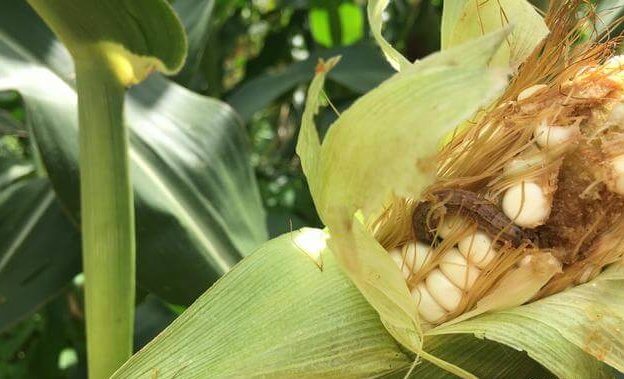
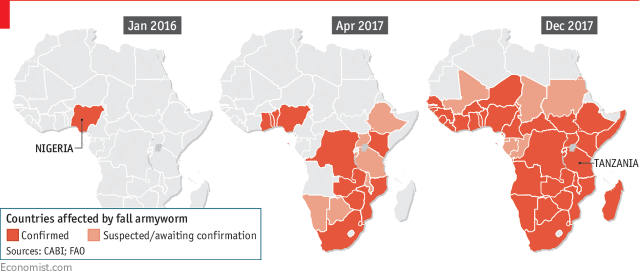
When just a hungry caterpillar, the fall armyworm will happily munch on more than 80 plant species. But its favourite is maize—the staple for more than 200m sub-Saharan Africans. The UN’s Food and Agriculture Organisation (FAO) estimates that sub-Saharan Africa has about 35m hectares of maize grown by smallholders, and that almost all of it is now infested or at risk of infestation.

If the pest is not controlled, it could gobble up as much as 20% of the region’s total maize crop.

Originally from the Americas, these worms were a plague there for hundreds of years. Yet American farmers have beaten them back with the help of genetically modified plants and advanced pesticides. By contrast, the worms are meeting little resistance in Africa.

Allan Hruska of the FAO hopes … to teach farmers to use some of the techniques that smallholders in the Americas have long used. These include mixing crops, encouraging natural predators and patrolling fields to crush the eggs by hand.

Better still would be to copy America’s commercial farmers, who plant GM crops that are largely resistant to the worm. Almost all African countries apart from South Africa have formally or informally banned GM crops, following iffy advice from ecowarriors. Lifting these restrictions would lead to fewer hungry caterpillars and fewer hungry people.

MAC

Read full, original post: An army of worms is invading Africa

Is glyphosate unsafe? European Food Safety Authority rejects accusations of ‘undue industry influence’ in rejecting carcinogenic designation

Editor’s note: Bernhard Url is the Executive Director of the European Food Safety Authority

The job of the European Food Safety Authority (EFSA) is to assess what might make food unsafe. That’s hard enough. It is even harder when the agency is at the centre of a public debate that goes far beyond science.

This has happened with artificial sweeteners, genetically modified (GM) organisms and glyphosate, the world’s most ubiquitous herbicide.

PP UrlBernhard x e
Bernhard Url

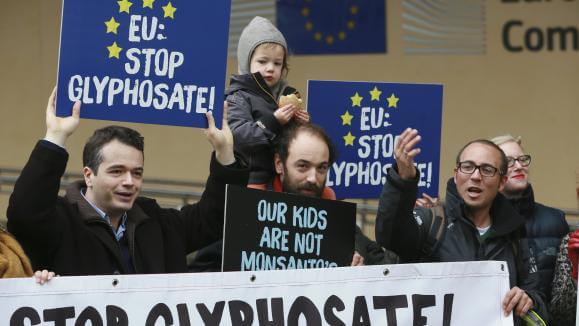
The glyphosate controversy began in earnest two-and-a-half years ago, when EFSA and experts designated by European Union members concluded that the product is unlikely to be carcinogenic.

Other independent assessments — by the European Chemicals Agency and regulatory bodies in the United States, Canada, Japan and Australia — agreed with EFSA. So did an expert body on pesticide residues convened by the Food and Agriculture Organization of the United Nations and the World Health Organization.

Why the frenzy? Agencies that find low risk of regulated products are often accused of undue industry influence. We at EFSA believe that some campaigners are unwilling to accept any evidence that certain regulated substances are safe, and will tout weak scientific studies showing the opposite.

It seems to us that some campaigners contest the science of safety assessments in pursuit of greater political arguments. These arguments deserve airing — but they belong with policymakers.

Read full, original post: Don’t attack science agencies for political gain

‘Personal omics’: Weight changes affect what’s happening in our gut, disease susceptibility

imagesCA BPY E e

Gaining and losing weight causes extensive changes in the gut microbiota and in biomarkers related to inflammation and heart disease, researchers report today (January 17) in Cell Systems. The authors tracked what they call “personal omics profiles,” composed of the genomics, transcriptomics, proteomics, metabolomics, and microbiomics, of people who ate an average of 880 extra calories every day for a month.

“It’s a landmark paper,” says Leroy Hood, chief strategic officer at the Institute for Systems Biology, a Seattle biomedical nonprofit organization, and senior vice president and chief science officer at Providence St. Joseph Health. … Using this type of data “to study aspects of disease is going to be a transformational approach in medicine, and this is one of the first beautiful, clear demonstrations of how powerful that will be,” he says.

Although subjects only gained an average of about six pounds, the researchers detected considerable changes in molecules related to fat metabolism, inflammation, and dilated cardiomyopathy, a condition where the heart is less able to pump blood, which can lead to heart failure.

Most of the changes went back to baseline after weight loss, but a few—such as molecules associated with folate metabolism—stayed elevated. And while the researchers saw some common responses to weight gain and loss across the group, “you still look more like you than somebody else,” Snyder explains. “That means that our inherent biochemical profiles are pretty stable, at least through weight gain [and] weight loss.”

Read full, original post: How Gaining and Losing Weight Affects the Body

Human muscles from stem cells: Advance could aid research into muscular dystrophy, other diseases

muscle jpg

For the first time, biomedical engineers have grown functioning skeletal muscle from human pluripotent stem cells.

Using stem cells enabled researchers from Duke University to improve upon similar efforts in 2015 that had started with more specialized cells called myoblasts, taken from muscle biopsies. Using true stem cells instead, fashioned from a person’s skin fibroblasts, avoids the painful biopsy and would theoretically up the output of mature muscle cells. The paper appears in the January 9 Nature Communications.

Nenad Bursac, professor of biomedical engineering at Duke and co-workers, derived the stem cells from skin cells and then coaxed (“reprogrammed”) the cells to specialize as myogenic progenitor cells by applying the transcription factor protein Pax7. The manipulation also included the gene for the jellyfish’s green fluorescent protein, which made the doctored cells distinguishable when implanted into mice.

muscle 1 11 18 2.jpg
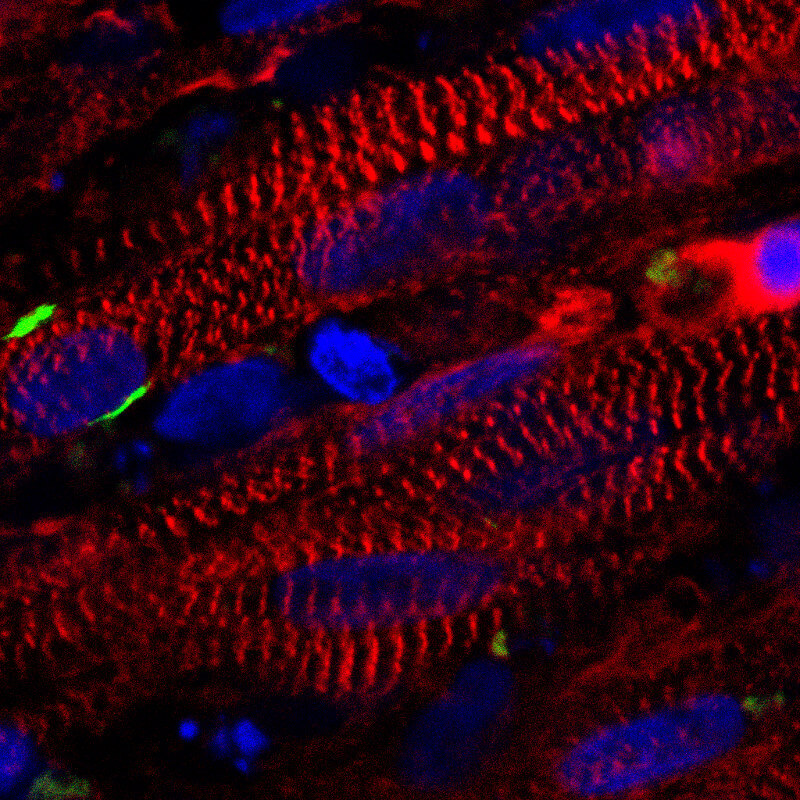
Human skeletal muscle derived from pluripotent stem cells (Duke University)

The myogenic progenitor cells continue dividing, giving rise to mature skeletal muscle fibers consisting of aligned actin and myosin protein filaments, as they would be in a human body. Instead the engineered cells are grown on a 3-D scaffold anointed with a nutrient-rich gel. And the cells work, contracting in response to electrical and biochemical signals, again much as they would in a body. Placed in mice, the human lab-created muscle knits itself a blood supply and contracts.

The secret to success in tissue engineering is to try to mimic the functioning of the optimal cell type. “These progenitor cells resemble adult muscle stem cells called ‘satellite cells’ that can theoretically grow an entire muscle starting from a single cell,” Bursac said.

Researchers have long sought to tap into the developmental potential of satellite cells to jumpstart formation of new muscle, which makes up about 40 percent of the body. In uninjured muscle, satellite cells tuck quietly between the membranes of the muscle fibers and the outer layer, a little like a small rubber eraser might be packaged atop a bunch of pencils.

Within a day of muscle injury, satellite cells awaken and get to work doing what stem cells do: each time they divide, one daughter cell keeps dividing to give rise to mature, specialized muscle cells, while the other yields another stem cell to maintain the ability to heal. Within a few days of this awakening, new muscle tissue appears. In the body, Pax7 orchestrates the production of new muscle.

Although the new method cranks out enough stem cells to make applications in tissue engineering feasible, the resulting muscle is not quite as strong as the researchers would like. Still, they think the new cells will provide an excellent resource to test drugs to treat a variety of muscle diseases, many of which have few therapeutic options.

“When a child’s muscles are already withering away from something like Duchenne muscular dystrophy, it would not be ethical to take muscle samples from them and do further damage. But with this technique, we can just take a small sample of non-muscle tissue, like skin or blood, revert the obtained cells to a pluripotent state, and eventually grow an endless number of functioning muscle fibers to test,” Bursac said. It might also be possible to correct the mutations that cause these diseases.

muscle 1 11 18 3.jpgAnother potential application of muscle tissue grown from stem cells is to treat injuries. From 35 to 55 percent of sports injuries damage skeletal muscle, and subsequent scar tissue buildup can painfully deform and shorten muscles. Sometimes conventional treatments take too long or just aren’t enough, including “RICE” (rest, ice, compression, and elevation), drugs (NSAIDs and steroid shots), range of motion exercises, and heat. If researchers can limit the proliferation of stem cells to replace compromised tissue but not overgrow, implants that speed healing, using a patient’s own cells, might be possible. Stay tuned!

Ricki Lewis has a PhD in genetics and is a genetics counselor, science writer and author of The Forever Fix: Gene Therapy and the Boy Who Saved It, the only popular book about gene therapy . Follow her at her website or Twitter @rickilewis.


Lessons learned from the 2017 Monsanto dicamba herbicide fiasco

dicamba waiting game b d

Last year, Monsanto introduced new varieties of cotton and soybean plants that were resistant to the well-established herbicide, dicamba. New formulations of the chemical have been devised specifically for use on these engineered crops.

Many farmers in the midwest and southern U.S. began planting these varieties in earnest and spraying them with the herbicide. However, other farmers in these regions found that their crops, including non-dicamba resistant soybeans, began showing the signature symptoms of dicamba injury, even if dicamba was not being used in adjacent farms. The evidence began to build that there was significant movement of the herbicide from the application site that damaged crops potentially miles away, sparking great tension in the agriculture industry.

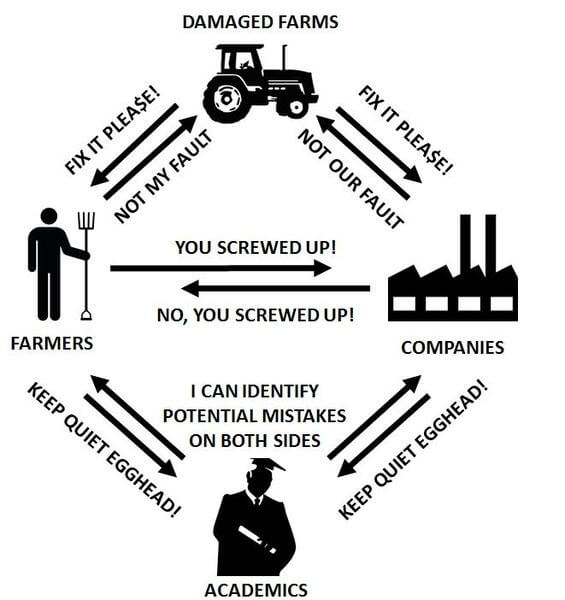
The New York Times implies that big agrochemical companies are yet again shoving their pesticides and GE crops down our throats, and bullying anyone who challenges them. Monsanto, on the other hand, blames farmers entirely for the off-target movement problem. The company says growers aren’t following dicamba’s label instructions when applying the herbicide.

So who’s right, the agrochemical giant or farmers? Well, both are. Some farmers may have misused dicamba, inadvertently or by design. But the companies manufacturing dicamba-based herbicides (BASF, Dow-Dupont and Monsanto)  fumbled the rollout of their new products and reacted poorly to expert criticism.

A little background

To understand the current dicamba controversy, we need to start with a brief review of another herbicide, glyphosate. When glyphosate, the active ingredient in Monsanto’s Roundup, entered the market in 1974, farmers applied it sparingly – mostly to control weeds in row middles as well as in other places around their properties. Glyphosate is a non-selective herbicide – it kills all plants – so spraying the crop haphazardly is a huge mistake. The limited use of glyphosate-based products kept the development of glyphosate-resistant weeds in check for nearly 30 years. With the introduction of Roundup Ready crops in 1996, however, the acreage of gglyphosate-tolerant crops increased dramatically. Glyphosate soon replaced other herbicides on the farm, and the first reports of weeds resistant to the chemical appeared later that year. Since then, at least 38 weed species have developed resistance to glyphosate.

dicamba 1 10 18 2The herbicide is still very effective and in widespread use around the world, but scientists and farmers are trying to devise new strategies to stay ahead of constantly-evolving weeds. In practice, that means mixing glyphosate with other herbicides that kill weeds through a different mechanism, or using glyphosate for one year and then switching to another chemical the next. This is where dicamba enters the story.

A primer on dicamba

Dicamba is a broadleaf herbicide and was approved for use in crops in 1967. It works by mimicking a hormone called auxin, which controls cell elongation and division, and other processes that contribute to plant growth and development. The targeted plant takes up the herbicide and essentially dies from unbridled, non-coordinated cell division, metabolism, and expansion. When properly applied, dicamba is a clever weed management tool.

Unfortunately, dicamba is extremely volatile; it can vaporize after application. Wind and temperature inversions can carry it to adjacent plants or even miles away, where it can impart its herbicidal effects. Volatilization is affected by the pH and other ions present in the mixture, the nozzles used to apply it, the boom height above the crop, the temperature, humidity, wind and temperature gradients above the ground. In short, there are many factors that influence volatilization and off-target movement, which has led to endless claims of others’ negligence in connecting responsibility to the tremendous crop losses.

The controversy begins

Monsanto first released a variety of dicamba-resistant cotton in 2016. The industry prefers to develop herbicide-resistant crops instead of new herbicides, because it’s less expensive and presents fewer regulatory hoops to jump through. Nonetheless, Monsanto knew the older dicamba formulations were too volatile and would cause drift, so they developed a new product with “vapor grip” technology that would minimize the problem. Monsanto and several smaller regional companies sell the new seeds. Monsanto, DuPont and BASF sell new formulations of dicamba to use in concert with the GE crops.

Working in combination, the new seeds and herbicide formulations shouldn’t have caused a problem. However, Monsanto released the dicamba-resistant seeds before the new herbicide formulations were available. Farmers could buy the seeds but not the new dicamba formulations.

Monsanto explicitly instructed growers not to use the older, more volatile formulations. But some farmers, losing a battle to glyphosate-resistant weeds, illegally sprayed dicamba products on their new crop varieties, where it worked quite well. However, the tell-tale symptoms of dicamba damage began to show up on other farms. Various crops have remarkably different sensitivities to auxin-like herbicides, some showing the signatures of dicamba damage with 1/20,000 of the application rate.

Much of the crop damage occurred in Arkansas, and the state may ban dicamba. But farmers in dozens of states have reported crop damage to the EPA that is consistent with dicamba volatilization. Damage has been reported on both conventional and organic farms, including peaches, vineyards, tomatoes, and in huge acreage of non-dicamba resistant soy. In total it is estimated that 3.6 million acres of soybeans have shown symptoms. The situation is further complicated because it is unclear if minor symptoms (like a curled leaf) have anything to do with yield loss, where in other cases yield losses are clearly evident.

He said, she said

The situation has ignited a heated debate. Monsanto and farmers who have benefitted from the company’s new products are facing off against university weed scientists, along with farmers whose fields have been damaged. The company maintains that their new dicamba formulation is not to blame for the damaged crops. Citing the studies they submitted to the EPA, Monsanto claims that their new dicamba formulation is 90 percent less volatile than earlier versions of the herbicide and causes minimal drift. They say the damage is likely due to “illegal use of unapproved products and potential product contamination.” For instance, it has been well demonstrated that residual fertilizers in sprayer tanks can significantly favor dicamba volatilization.

But some experts aren’t buying that explanation. They say that Monsanto doesn’t have enough data to vindicate their dicamba formulation. The company’s new herbicide is less volatile, critics concede, but “…low volatility is not the same as no volatility,” and in the large amounts used, if a tiny fraction volatilizes and moves, we might expect widespread reports of damage. These scientists further point out that “symptoms in many affected fields do NOT follow patterns associated with physical drift or contaminated application equipment,” and volatility remains the most likely source of the crop damage.

Dicamba producers have not backed down, though. They say the off-target movement of their herbicide is caused by “inadequate buffers, unapproved nozzles, and wrong boom height.” The companies say they will happily train farmers to properly use their products. They have provided proper nozzles and other equipment. They have also offered to send agronomic specialists to review any damage farmers believe was caused by their products.

But Monsanto has attacked some of its critics because these scientists are employed by the company’s competitor Bayer. As consultants to another chemical manufacturer, these researchers have a financial stake in the outcome of the situation, so their testimony is suspect, Monsanto claims.

Lesser-known facts

The mainstream press has been too conspiratorial in their coverage of this situation, and they’ve overlooked some important facts we should all keep in mind. First, crop damage caused by dicamba drift predates Monsanto’s herbicide-resistant crops by almost 50 years. The phenomenon was first described by scientists in 1966. The introduction of glyphosate-resistant crops in 1996 greatly reduced the use of dicamba and, as a result, crop injury from dicamba for two decades. The media hasn’t reported that, however.

Monsanto released dicamba-resistant seeds before the new herbicide formulation because they anticipated the EPA would approve the low-volatility dicamba before the growing season started. Farmers would have had access to both the seeds and herbicide in that case. But the federal agency delayed the approval to review public comments. The seeds were produced and ready to go, so they were sold before the new herbicide formulations were available, but Monsanto didn’t tempt “…farmers to use older versions of dicamba,” as the media has suggested. It is hard to give farmers a solution to a problem and expect them not to use it.

Moreover, the industry hasn’t collectively thrown farmers under the bus. Monsanto has been far too dismissive of concerns, but DuPont and BASF have been more responsive to complaints from farmers that the new dicamba formulations were damaging their crops. Additionally, all three companies “voluntarily agreed to label changes that impose additional requirements” on the use of dicamba, according to the EPA. The story of evil corporations trampling small farmers for profit is compelling–but it’s not entirely true.
dicamba 1 10 18 3

Caught in the middle

Observations have been made by university scientists and independent agronomists that clearly denote the off-target damage, drawing ire from farmers and companies alike. At issue are the damages that demand compensation, and sorting out the liability of the company vs. the potential cases of off-label use, inappropriate timing of application or unclean tank mixtures that contribute to volatilization. The latter cases are likely to be rare, though.

As independent arbiters, extension faculty find themselves in a difficult situation, as their expert observations potentially drag universities into the frey. Their websites feature conservative interpretations of the situation, and remain the most trustworthy sources of information on this situation.

Babies and bathwater

The dicamba situation is a volatile one.  It presents a nightmare scenario where an agricultural product has led to off-target effects. When consumers are asking questions about agriculture, it only fortifies the claims of agriculture and biotechnology critics that claim these technologies are rife with unknown risks. In reality, the risks of dicamba volatilization were well documented, but not enough steps were taken to mitigate their occurence in wide application.

Politicians and activists want to halt use of the technology, but this would be excessive. Rather, dicamba requires careful handling and further refinement. Manufacturers need to continue to improve the application formulae, study application conditions, and minimize off target damage to odd exceptions spawned from unusual weather events. Moreover, steps should be taken to compensate farmers for losses and earn the trust of ag producers and the general public.

In the end, this is a good technology that clearly was not ready for prime time. The silver lining is that independent experts quickly worked with farmers to identify the problem. Farmers, universities, the EPA and ag companies are now working (sometimes together) to solve it. It is this kind of response that will ultimately make the use of any agricultural technology sustainable and provide the social license to use it.

Kevin Folta is a professor and chair of the Horticultural Sciences Department at the University of Florida. He teaches science communication workshops for scientists and ag professionals, and hosts the weekly podcast Talking Biotech. Follow him on twitter @kevinfoltaCameron English is a freelance science writer and podcast host. He covers nutrition, public health, biotechnology and occasionally other topics. He lives in California with his fiance and lab-cocker spaniel puppy. Visit his website and follow him on Twitter.

This article was originally published at Real Clear Science as “The Real Story Behind the Dicamba Controversy” and has been republished here with permission.

Broken barrier: Monkeys are first primates to be cloned

clone

There have been mice and cows and pigs and camels, bunnies and bantengs and ferrets and dogs, but ever since Dolly the sheep became the first cloned mammal in 1996, the list has had a conspicuous hole: primates. Now that hole has been filled.

Scientists in China reported on [January 24] in Cell that they had cloned two healthy long-tailed macaque monkeys from the cells of another macaque, using the Dolly technique. The two clones, born 51 and 49 days ago, were created from a fetus’s cells; so far, the scientists have not been able to make the tricky procedure work when they used cells from adult macaques.

Cloning pioneers said the monkey clones represented, as Dr. Robert Lanza put it, “an impressive breakthrough, which overcomes the last major hurdle in the field.” Lanza co-led teams that cloned a gaur in 2000 and in 2014 used the Dolly technique to produce human embryos (but not pregnancies) from the cells of an adult.

Before this, “no one was able to produce living offspring” through primate cloning, said Shoukhrat Mitalipov, of Oregon Health and Science University, who in 2013 also used the Dolly technique to create human embryos (technically, blastocysts) from the cells of an 8-month-old. (He did not use the embryos to create pregnancies either.) “These guys made it work, which is quite an achievement.”

Read full, original post: In a scientific first, cloned monkeys are born. Will they accelerate biomedical research?

Following pest infestation, will Indian farmers turn wary of GMO Bt cotton?

india not scared if monsanto leaves as gm cotton row escalates

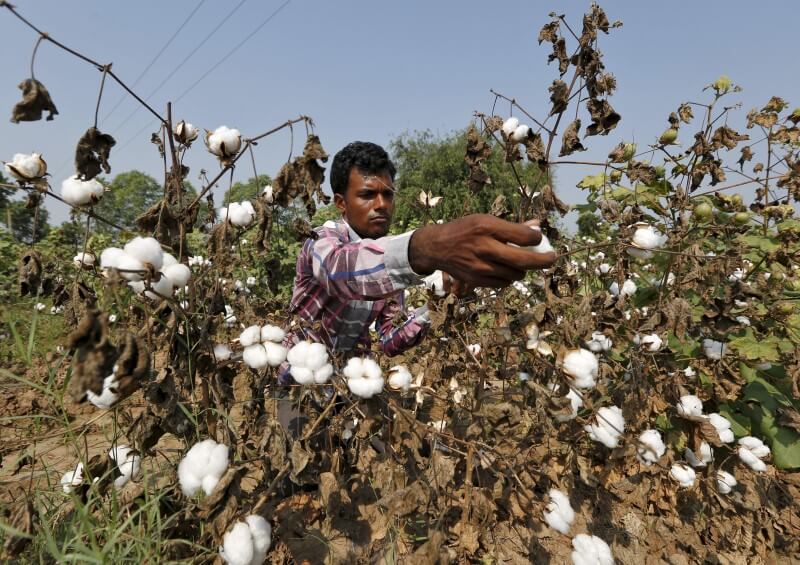
The loss caused by the pink bollworm infestation has raised questions about the sustainability of GM cotton, which accounts for over 90% of all cotton grown in [India]. Bt cotton, as GM cotton is known, is the only commercialised GM crop in the country. Monsanto introduced its first-generation Bt cotton, called Bollgard I (BG-I) in 2002 and Bollgard II (BG-II) in 2006, the latter of which is still the de facto GM cotton variety.

“Resistance is a natural and evolutionary adaptation of insects and pests to widely and continuously applied stress factors,” says a spokesperson for Monsanto Mahyco Biotech (MMB), a joint venture between Monsanto and Maharashtra Hybrid Seeds Company.

Among the reasons for the rise in pink bollworm infestation area, according to the company, are use of unapproved Bt cotton, lack of planting of non-Bt crops next to Bt cotton and early planting and prolonging the life cycle of the plant.

Some advocate abandoning Bt cotton for local varieties, even of the organic kind, which they say will reduce farmers’ dependence on companies.

[G]iven that Bt cotton is certainly not cheap … those affected may not take the viability of Bt cotton for granted anymore.

Read full, original post: These two issues could put the brakes on the Bt cotton story

Searching for alien life: Maybe we should start with extraterrestrial viruses

europa atomic clock

One possibility for what might be out there that’s, relatively speaking, one of the most plausible theories has so far also been overlooked: space viruses. While some might dismiss microscopic phages as considerably less thrilling than fluorescent green humanoids, they’d actually be a hugely exciting first find.

Ken Stedman, the co-chair of NASA’s Virus Focus Group, is hoping to raise viruses’ profile and repair their reputation—last week, he published a review in which he and two other scientists, Aaron Berliner of UC–Berkeley and Tomohiro Mochizuki of the Tokyo Institute of Technology, lay out the case for how, where, and why we should be looking for these tiny not-quite life forms.

[V]iruses are an excellent indicator for life itself: Wherever there’s life on Earth, there are viruses, too, and almost invariably in far greater numbers.

[T]he researchers contend that “if a virion (or a viruslike particle) were to be unequivocally detected in an extraterrestrial sample, very few people would claim that this would not be evidence for life—wherever that sample was from.” This makes sense: If these hypothetical viruses, unlike the ones we’ve found so far on Earth, are actually self-sustaining, they do meet NASA’s criteria for a life form; if not, it means that an actual living organism must be nearby to play host.

Read full, original post: NASA’s Been Ordered to Search for Life in Space. They Should Start With Viruses. Really!

China poised to do gene therapy ‘better and cheaper’ than US

crispr

China wants to go big on biotech and already is marching into experimental gene therapy.

So far, CAR-T has shown extraordinary results. More than 60 percent of children treated with Kymriah were cured, while the rate of full remission for patients treated with Yescarta was more than half. The big problem is price. Kymriah costs $475,000 for a single treatment; Yescarta goes for $373,000. Now China reckons it can do this better and cheaper.

Already, China has one therapy commercially available in a free-trade zone for medical tourism on the resort island of Hainan. The product, made by Innovative Cellular Therapeutics Co., sells for 490,000 yuan ($76,000) per treatment. Prices for CAR-T can be expected to drop below 100,000 yuan in three years, according to local media reports.

It’s not hard to see the potential. For one thing, China’s huge population means an abundance of patients for trials. For another, the nation is now flooded with venture-capital money to throw at well-qualified “sea turtles” — as returning Chinese expats are known — to build world-class medical labs at home.

Pricing aside, will Chinese patients accept the notion of genetically altered cells? They may not be fans of genetically modified food, viewing it as an unnecessary risk to health. But when taking that risk is the only way to save lives, attitudes can change quickly.

Read full, original post: China’s Great Leap Into Biotech

111-year old mystery solved: Egyptian mummies from 2000 BCE are half-brothers, DNA analysis shows

Two Egyptian mummies that rested next to each other for nearly 4,000 years are not full brothers, but rather half brothers, finds a new study that used advanced DNA sequencing.

The finding settles a 111-year-old mystery that began when excavators exhumed the two mummies in Deir Rifeh, a village 250 miles (400 kilometers) south of Cairo, in 1907. Both mummies — thought to be of noble lineage, based on their luxurious grave goods and the elite placement of their tomb — had the female name “Khnum-Aa” written on their coffins.

Khnum-Aa was referred to as the mother of both men, but studies in subsequent years couldn’t confirm it. Now, by analyzing DNA extracted from the mummies’ teeth, researchers have verified that these two ancient Egyptians had the same mother but different fathers.

[T]he researchers analyzed the mitochondrial DNA (genetic material passed down from the mother) and Y chromosomal DNA (genetic material passed down from the father).

“The two mummies had identical mitochondrial profiles, [so] we can be sure they were related maternally,” the study’s lead researcher, Konstantina Drosou, a research associate at the Manchester Institute of Biotechnology, in the United Kingdom, told Live Science.

[T]he Y chromosome results indicated that the two men likely had different fathers. The study is published in the February issue of the Journal of Archaeological Science: Reports.

Read full, original post: 4,000-Year-Old Mummies Are Half Brothers, DNA Analysis Shows

Nigeria’s agriculture minister seeks advice on GMO food safety from country’s scientists

Nigerian Farmers

The Minister of Agriculture and Rural Development, Audu Ogbeh, has called on Nigerian scientists to advise the Federal Government on the acceptability or otherwise of Genetically Modified Organisms (GMOs).

The minister said opinions from indigenous scientists on the matter would help form the government’s decisions, noting that there has been much debate on the issue.

Audu Ogbeh
Audu Ogbeh

“Genetic modification has been greeted with skepticism in Europe. It has been seen with suspicion in Africa. Within the reality of science and the anxiety of sentiments, the academics must tell us which one is safe or not.

“I am not a scientist; I am just a farmer. Is GMO safe? Should we suspect it? Should we embrace it? Should we engage it? Is there a ploy by those who engineer it to take over the seed business worldwide?

“Does it threaten our future stability? What should we, laymen, do with GMOs? Should we allow genetically modified grains into this country? Please, help us out,” he appealed.

Read full, original post: FG seeks scientists’ advice on genetically modified organisms

Trump administration’s biotech oversight plan echoes Obama’s, but regulatory approach remains unknown

download

Editor’s note: Gregory Jaffe is the director of the project on biotechnology at the Center for Science in the Public Interest

In 2017, agricultural biotechnology was not high on the U.S. Department of Agriculture’s (USDA) policy agenda. Then, this month, the USDA released its report on Agriculture and Rural Prosperity, which highlights the value of biotechnology innovation in U.S. agriculture and recommends streamlining biotechnology regulations. While the report’s recommendations don’t seem to differ from positions taken by the Obama administration, it will be important to watch how the Trump administration implements them in the coming months.

It calls for the White House’s Office of Science and Technology Policy (OSTP) to coordinate and improve science-based regulatory approaches among the relevant agencies. (This is all well and good, but the fact is that OSTP has been decimated under the Trump administration and only has a shoestring staff.)

The Trump administration should strive for appropriate risk-based oversight, and should not rush, in a deregulatory zeal, to eliminate regulations that are needed to ensure safety and consumer confidence, both domestically and internationally.

How (and how quickly) the report’s recommendations are implemented will tell us how important agricultural biotechnology will be during the Trump administration.

Read full, original post: Biotechnology and Biosafety Policy Under the Trump Administration: The Devil Will Be in the Details

Frankenstein story reminds us why fear is an ‘easy sell’ for science skeptics

Frankenstein emerges from the Storm

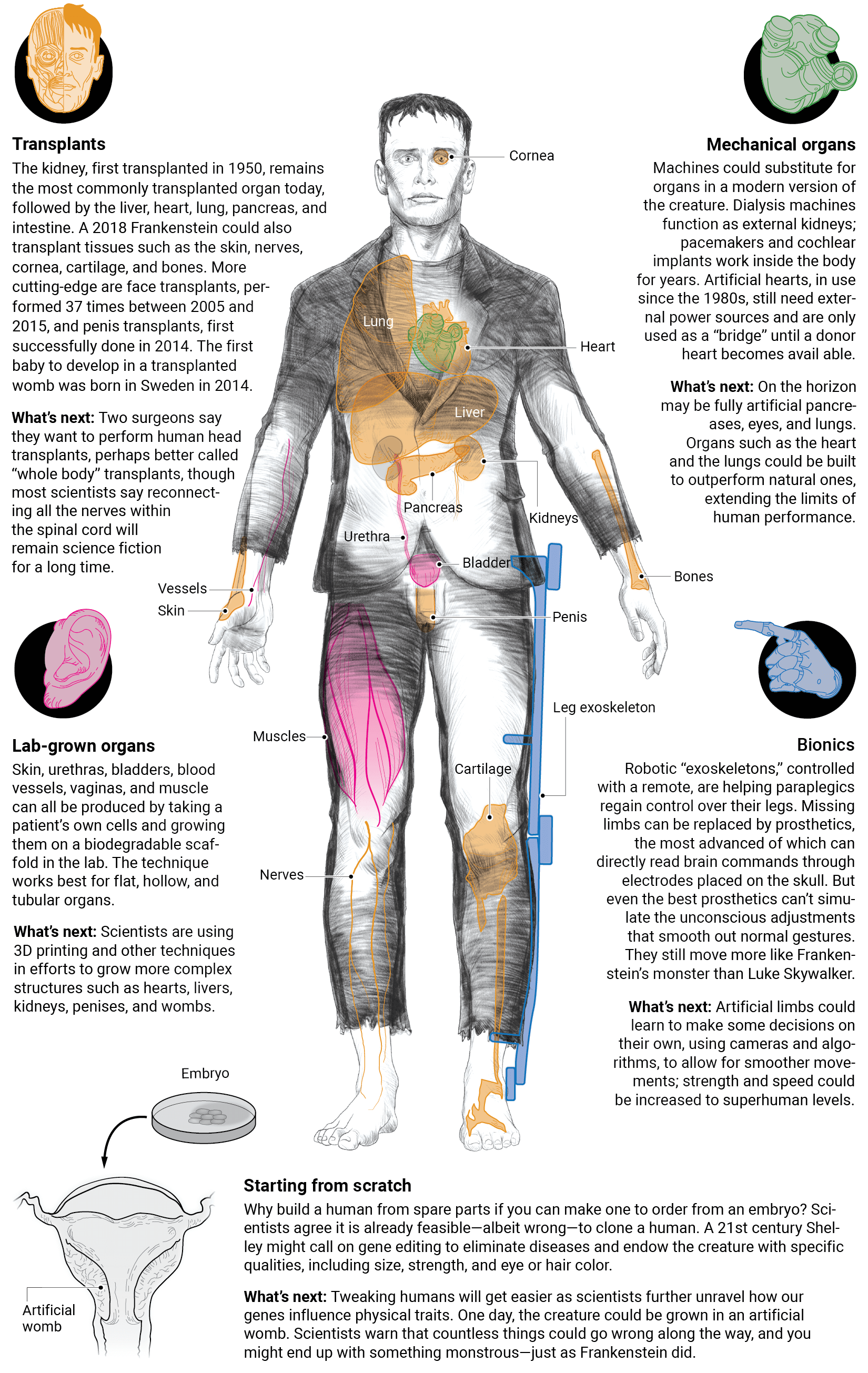
On 1 August 1790, a precocious student named Victor Frankenstein submitted a radical proposal to an ethical panel at the University of Ingolstadt in Bavaria. Under the title “Electro-chemical Mechanisms of Animation,” Frankenstein explained how he wanted to “reverse the processes of death” by collecting “a large variety of human anatomical specimens” and putting them together to try and “restore life where it has been lost.”

Of course no such proposal ever went to bioethicists at the University of Ingolstadt, where the fictional Frankenstein created his monster…. But the proposal does exist in a 2014 paper, which speculates about whether the Frankenstein story would have had a happier ending if 21st century safeguards had existed 2 centuries ago.

But by far the bulk of the scientific literature hand-wrings, ponders, and philosophizes about the most familiar form of the Frankenstein myth…the idea that mad scientists playing God the creator will cause the entire human species to suffer eternal punishment for their trespasses and hubris.

J. Craig Venter, a pioneer in genomics based in San Diego, California, has been called a Frankenstein for his effort to create artificial bacteria with the smallest possible genomes.

The Frankenstein myth endures, he says, because “fear is easy to sell”—even when unwarranted. “Most people have a fear of what they don’t understand,” he says…But by throwing around labels like Frankenfood and Frankencells to rally the public against potentially valuable innovations, he says, the “fear-based community will potentially do more damage to humanity than the things they fear.”

frankenstein graphic 1 23 18

Read full, original post: The horror story that haunts science

Some large Australian supermarket chains removing neonicotinoid insecticides from shelves, citing bee health concerns

woolies

Woolworths in Australia has joined a growing list of companies to stop supplying a controversial pesticide linked to global declines in bee populations.

On Tuesday [Jan. 23] the grocery giant announced it would join Bunnings in pulling Yates Confidor, a class of pesticide which some international studies have found damage the survival of honeybee colonies.

A spokesman for Woolworths said the company would cease selling the product from the end of June.

Neonicotinoids represent about a quarter of the multibillion-dollar international pesticide market but have been repeatedly linked to serious harm in bees in lab-based studies.

But Australian regulators remain unmoved.

In 2013, the Australian government undertook a review of neonicotinoids and the health of honey bees, which found that “the introduction of the neonicotinoids has led to an overall reduction in the risks to the agricultural environment from the application of insecticides”.

This month the Australian Pesticides and Veterinary Medicines Authority said that it was “not planning to review the use of neonicotinoids” because Australia’s honey bee populations are not in decline.

Read full, original post: Woolworths to stop selling pesticide linked to global bee decline

‘GMO stigma’: Arctic Apple—on sale in US—battles public perceptions

ORIGINAL e

The Arctic Apple, on sale in the US from Canadian company Okanagan Speciality Fruits, is a genetically modified (GM) apple that doesn’t brown when sliced or bruised. President of Okanagan Specialty Fruits Neal Carter discusses the product’s creation, and developing opinions of GM products in the US marketplace.

Is there still a stigma in the US about using or consuming GM products?

Neal Carter: It’s a controversial topic, no doubt about it. But it’s only a very vocal minority of people who are actively against GM crops, and we will likely never convert those people, but there are many people who are either neutral, or who don’t know much about them at all, so we have a significant undertaking ahead of us as we educate consumers around this product.

What we do see is that at the end of the day, the apple sells itself.

The GM stigma isn’t really something we see as a huge impediment to the growth or market potential of our product.

We like to think that in the future, with more education and outreach, there will be a broader acceptance of GM crops, as right now a lot of the pushback is people not really understanding what the technology is doing and how it works.

Read full, original post: Arctic Apples: combating the genetically modified stigma

CRISPR patent dispute: Broad Institute has key rights revoked in Europe

broad

A decision from the European Patent Office (EPO) has put the Broad Institute in Cambridge, Massachusetts, on shaky ground with its intellectual property claims to the gene-editing tool CRISPR. EPO revoked a patent granted to the Broad for fundamental aspects of the technology, one of several of its patents facing opposition in Europe.

[T]he Broad cites U.S. patent applications dating back to December 2012.

Unfortunately, those earliest U.S. filings include an inventor, microbiologist Luciano Marraffini of The Rockefeller University in New York City, who was not listed on the European filing. Disagreement between Rockefeller and the Broad over Marraffini’s role in key CRISPR inventions led to a bizarre dispute, creating conflicting, identical patents with different authors, The Scientist reported in 2016.

In the United States, the Broad has had better fortune. It has so far prevailed in a high-profile patent dispute with the University of California (UC), Berkeley. Last February, the U.S. Patent Trial and Appeal Board ruled that although a team led by UC Berkeley structural biologist Jennifer Doudna had first laid claim to the use of CRISPR to cut DNA in a test tube, the use of the method on human cells by molecular biologist Feng Zhang’s team at the Broad was still an advance.

Read full, original post: Broad Institute takes a hit in European CRISPR patent struggle

Farmers, scientists worry anti-GMO activists could stymie CRISPR and other gene-edited crop research

ece f d c c a a af ff ab large
[N]ew precision breeding tools are creating such a buzz that some activists suggest techniques like CRISPR Cas9 – which involves “cutting and pasting” DNA within a plant at specific sequences – should be regulated the same as genetically-modified organisms (GMOs), which are created by the insertion of genetic material from a different species.

There is no science-based risk associated with either form of breeding, but GMOs have gotten a bad rap from several environmental groups which have pressured food companies to avoid them in food products.

Even the Non-GMO project, which attempts to verify and label food and beverage products that do not contain GMOs, wants to exclude gene-edited foods from consideration – even if they are not technically GMOs.

As a result, farmers and plant breeders are worried that much-needed research – aimed at solving some of the most pressing plant diseases – is at risk of being stymied in the commercial marketplace over unfounded fears about GMOs. Gene-editing could be one way around that barrier.

Some firms are already marketing gene-edited plants as non-GMO or working to do so in the near future. And because the production and regulatory costs associated with gene editing are so much lower, a lot of smaller technology companies are jumping into the action alongside much bigger seed companies.

Read full, original post: The promise and potential for new plant varieties

8 common cancers could be detected early with $500 blood test

mg

A simple-to-take test that tells if you have a tumor lurking, and even where it is in your body, is a lot closer to reality—and may cost only $500.

The new test, developed at Johns Hopkins University, looks for signs of eight common types of cancer. It requires only a blood sample and may prove inexpensive enough for doctors to give during a routine physical.

The test, detailed [January 18] in the journal Science, could be a major advance for “liquid biopsy” technology, which aims to detect cancer in the blood before a person feels sick or notices a lump.

That’s useful because early-stage cancer that hasn’t spread can often be cured.

For their test, Hopkins researchers looked at blood from 1,005 people with previously diagnosed ovarian, liver, stomach, pancreatic, esophageal, colorectal, lung, or breast cancer.

Their test searches for a combination of eight cancer proteins as well as 16 cancer-related genetic mutations.

The test was best at finding ovarian cancer, which it detected up to 98 percent of the time. It correctly identified a third of breast cancer cases and about 70 percent of people with pancreatic cancer, which has a particularly grim outlook.

The chance of a false alarm was low: only seven of 812 apparently healthy people turned up positive on the test.

Read full, original post: A Cheap and Easy Blood Test Could Catch Cancer Early

Critics push back against Australian government recommendation to loosen constraints on CRISPR gene editing research

rural australia

Australia’s gene technology regulator has proposed a bold shake-up of rules surrounding genetic engineering processes, potentially loosening constraints on research and development within the sector.

The key recommendation from Ray Bhula, who occupies an independent statutory position within the ambit of the federal Department of Health, is a change to the definition of “genetic modification” to exclude the use of gene editing techniques such as CRISPR.

At present, any procedure deemed to involve genetic modification is very tightly regulated. Bhula says this is because until recently GM procedures involved introducing genetic material from one species into the genome of another.

This is not the case with gene editing.

“With gene editing you don’t always have to use genetic material from another organism, it is just editing the [existing] material within the organism,” Bhula told broadcaster ABC.

“All of our regulatory frameworks and laws have been established based on people putting unrelated genetic material into another organism.

“Whereas this process is just manipulation within the organism and not introducing anything foreign.”

Opposition to the proposal, however, is expected to be loud and prolonged, with even some experts in the field expressing caution.

“The technology is likely to have significant long-term benefits in medicine and agriculture but current claimed benefits are perhaps overemphasised. The technology is still in its infancy and should continue to be highly scrutinized under rigorous federal authorities that govern GMOs,” [said Clovis Palmer, head of the Immunometabolism and Inflammation at the Burnet Institute in Melbourne, Victoria.]


Read full, original post: Gene-edit deregulation proposal draws mixed response