Viewpoint: African farmers blocked from using life-saving GMO bananas by European activists

madagascar kid

I stood in a field of tall banana plants and had to hold back tears. The large green leaves from rows of evenly spaced plants created a dense ceiling above us, and formed a cave behind us as we clumsily trekked across the ruts and mounds in shoes designed more for the ballroom than the plantation. A group of scientists and journalists from Ghana, the UK, Uganda, and the USA made their way to the heart of the field as the sun rapidly set on the National Agriculture Research Laboratory (NARL) in Kawanda, Uganda. The facility is about 10 kilometers north of the capital, Kampala. We traveled together to witness (and celebrate) a great step forward in the mission to aid East Africa’s poorest subsistence farmers and ensure the availability of a food staple that feeds millions in the region.

The ride to Kawanda was slow. We snaked through dusty standstill traffic in a minivan, jammed amongst fumy cars, buses, and noisy trucks. The bodabodas (motorbikes) were the only vehicles moving with any authority, as even those on foot seemed to be making faster progress.

The glacial pace provided us ample opportunity to study the fruit stands encamped along the roadside and there was a common theme—large green bunches of matooke (ma-tok-ae) freshly cut from the tree. Matooke are cooking bananas. To the visitor they look like the familiar dessert banana, maybe a little larger and pointier. To my untrained eye they didn’t look much different from bananas in a New York City produce aisle, but locals could tell you about varieties and flavors just from looking at a bunch in the market.

In this region the matooke is a daily staple. They are starchy with mild flavor, and are prepared by steaming the pulp and covering it with a sauce or stew. The closest parallel to the westerner it is the plantain, but to the people of the African lakes region the matooke is the foundation of the diet, much like rice, noodles or potatoes in other parts of the world.

Threatened by Disease

Production of this dietary cornerstone is under threat. A bacterial disease known as banana Xanthamonas wilt (BXW) infects the plants, and they rapidly succumb in deadly decline. The disease first presents as a notable decrease in vigor, followed by leaves that yellow, wilt, and die.

The farmers of the region refer to their simple plot of crops as their “garden,” which says a lot. There is intimacy in a garden that separates it from a farm. It is personal. Their garden feeds them, sustains their families. Each plant is special and honored.

When the disease hits it spreads rapidly through matooke garden, leading to devastating losses. Once symptoms are present the trees must be cut down and burned. A new productive replacement tree takes years to grow. The garden lives as disease dictates.

The farmers of the region do not have the options of western farmers. There are limited chemicals available to combat microbial pathogens and nematodes (soil worms), so they rely on impeccable sanitation and careful agronomic practices to avoid problems in the first place. Tools are bleached, hands are washed, knee-high rubber boots are splashed in disinfectant before entering the garden. Rigorous prophylaxis is the only defense in a place not blessed with alternative solutions.

Or so it was.

A Solution for Africa, From Africans

Government scientists in Uganda and Kenya have employed the strategies of genetic engineering to address the problem. Over the last thirty years, scientists worldwide have characterized the genes that fortify disease resistance in plants in hundreds of plant species. We eat the genes and their encoded products in every bite of apple, lettuce, rice, or any plant. Resistance genes are present in all plants, and the right combination of genes is the blueprint to a powerful defense against pathogens.

The resistance genes from sweet pepper have been studied for decades. Dr. Leena Tripathi and her team at the International Institute of Tropical Agriculture then moved two specific resistance genes (called HRAP and PFLP) from sweet pepper into matooke. Years later, the plants are beautiful, standing tall, green and strong, even in the presence of the disease.

Standing beneath them is breathtaking. I stood and starred up at a cure for starvation. Maybe these plants would not feed the world, but they could bring desperately-needed security to the plates of East African small farmers.

It was in that canopy of disease-resistant plants that Dr. Priver Namanya told us the story of the modified matooke, and its success in conferring resistance to bacterial wilt. She kindly escorted us to the field, in flip flops and a bright flowered skirt, smiling the whole time as she showed us her work. You could tell she was proud of the solutions that she helped create and foster. She told us about the genetics that also fought off fungal diseases like black sigatoka, also endemic in the region. We stood beneath the proof that this food staple could be protected by a tweak from modern biotechnology.
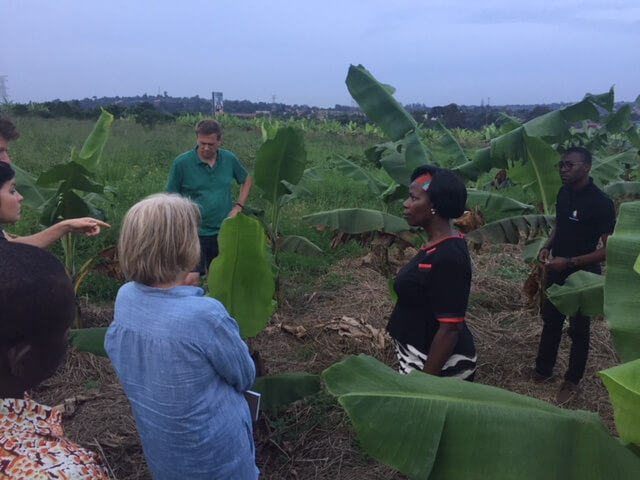
I think this was the first time I became very emotional in the field. As a scientist, it becomes overwhelming when dedicated professionals like Dr. Namanya explain a problem, like BXW, its devastating effects, and then the solution they devised and made real. It was easy to feel her love of people, her passion, her mission. Then there’s the powerful moment when you touch the physical proof that scientists can indeed protect plants by transferring a gene or two from one plant to another.

And when you turn to the left, the plant labeled “control” is a brown stump with leaves long gone.

The disease resistant banana stands ready to be gifted to farmers that need it. They can then make additional plants from the “suckers”– the daughter plants spouted from the roots that may be cut and replanted to make more disease-resistant trees.

Saving Children from Blindness

On another front Dr. James Dale from the University of Queensland has developed a matooke with an entirely different mission—to save the sight of Ugandan children. Vitamin A deficiency is a tremendous problem in the Developing World, and is commonplace in areas that consume matooke. The matooke banana lacks beta-carotene, the orange pigment found in carrots. When consumed, beta carotene is transferred in the blood, and some of it ends up in the tissues of the eye, where specialized enzymes convert it to vision-saving, life-saving Vitamin A.

Dale’s team provided the genetic information for matooke bananas to produce the healthy orange pigment. They installed a gene from a banana relative called auspina into the matookee. Auspina grows tiny sweet, orange bananas.

Dale says that the high-beta carotene banana plants also are doing well and that they should be deployed within a few short years. The problem is, the children need them today. They needed them yesterday. Children suffer from lifelong effects of vitamin A deficiency if not administered sufficiently in the first four years.

The beta-carotene enriched banana has been growing well for years. Why are these products confined to experimental fields and not meeting human need? This is not a freak “Frankenfood” as Western pundits and Indian eco-terrorists claim. This is a self-propagating, virtually free Vitamin A delivery system in a place where Vitamin A is scarce.

The Frustration of Arrested Solutions

The problem now is not a scientific one. Caring scientists identified the problems of bacterial wilt and vitamin A deficiency, and then took on the challenge of creating solutions. And now, those solutions are ready.

Scientist heroes like Priver Namanya identified new, effective remedies to human problems, crafted from components nature already bestowed on sweet peppers and wild bananas. Scientists simply borrowed bits from nature’s genetic toolbox and place them into culturally familiar crops that local farmers know and local consumers want. Scientists applied technology to help farmers, help children, and improve the environment.

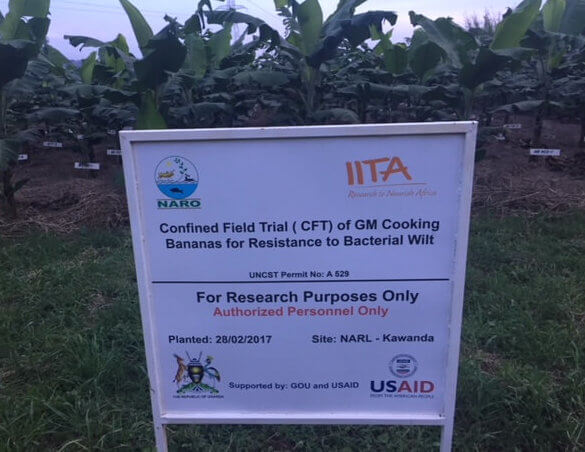
Today these solutions are frozen in place, unable to serve those they were intended to serve. The green, lush plants remain locked behind high fences, the tops wound with razor wire. The carefully designed plants stand behind an official sign that says, “For Research Purposes Only”. The fence, the security, the sign – it makes a heart hurt. These plants are the living options for people who are out of options.
e

This is a shameful political failure that falls firmly at the feet of western activists, well-financed NGOs, and those that make careers manufacturing non-existent risk around sound technology. Throughout the development of these products for Africans, created in Africa with help of Africans, there has been a steady drumbeat of dissent in the affluent West, as well-fed activists and their “clean food” mantra strive to kill these life-giving products.

The anti-biotech sentiments of the USA and EU resonate loudly in the African continent, as African officials contemplate why they should approve technologies that wealthy countries in the EU reject. There is well-earned suspicion of “western” technology. But in Uganda, where solutions to small holder subsistence farmers thrive behind the security fences and razor wire, there was not even a mechanism to begin to debate, to test, or to deregulate these solutions that their own scientists created.

A Change

That changed on October 4, 2017. I got the text message from a friend in Uganda, and shed a few tears of joy.

The Parliament passed a Biosafety and Biosecurity Bill into law, a step that now provides a roadmap to ensure that these wonderful, live-saving plants may finally be evaluated for safety, efficacy and environmental impacts.

The technologically advanced matooke may now take its first steps toward saving the people it was created to save. Those fenced-in plants now have a chance of escaping their cage and doing some very real good.

Visiting a place with extensive need and widespread poverty is transformative. It makes me grateful for what I have. It makes me grateful for scientists like Drs. Priver Namanya, Leena Tripathi, and James Dale, scientists that have committed their efforts to helping people with scientific solutions.

But it also illuminates how remarkable humanitarian progress may be easily derailed by misinformation, fear, and the penetrating rhetoric of people and organizations sworn to oppose the application of sound technology—even if it means that people will suffer.

The new law is just a first step. If I spend twenty-four hours a day speaking and writing, sharing the story of the fortified matooke, it won’t be enough. Until those new varieties finally reach the hands of the poorest farmers, no efforts will be sufficient.

Technology was created to help people. Now we have a simple job—tell the truth, share the story, and provide a factual alternative to the misinformation. Our voices must lead the fight to ensure that all people have equal access to the best agricultural innovations.

Kevin Folta is a professor and chair of the Horticultural Sciences Department at the University of Florida. He teaches science communication workshops for scientists and ag professionals, and hosts the weekly podcast Talking Biotech. Follow him on twitter @kevinfolta.

This article was originally published at Real Clear Science as “How Western Activists Prevent Africans From Planting a Life-Saving Fruit” and has been republished here with permission.


Viewpoint: Oprah for president? Junk science enabler?

maxresdefault

Oprah Winfrey’s recent speech at the Golden Globes captured the imagination of countless people with rumors spreading that it could generate a popular well-spring of support that would prompt to her run for president in 2020. But many of the same science communicators and journalists who are concerned about President Trump’s anti-science tendencies are having similar problems with Oprah.

These concerns stem from her long career as a talk show host, the many guests she gave a platform to, and even her O magazine. She has a well-documented list of questionable views on science-related topics. From her featuring of vaccine denialism and crank health cures to her magazine’s demonization of conventional agriculture and idealizing expensive organic food, she has often embraced marginal and even quack views. Vox’s senior health correspondent, Julia Belluz, put it bluntly:

During her 25-year reign as host of The Oprah Winfrey Show, from 1986 to 2011, Oprah repeatedly showed a weakness for crackpots and quack medical theories. One could even argue that she’s one of the most powerful enablers of cranks on the planet.

A well known incidence occurred when Oprah brought Jenny McCarthy on her show. The appearance served as a platform for McCarthy to spread misinformation in her campaign against vaccines.

Screen Shot at AM
Megan Jula with Mother Jones 
wrote about how this is “one thing she has in common with Donald Trump.”Winfrey’s role in this controversy dates back to 2007, when she brought Jenny McCarthy, the Playboy model and actress, onto her show to talk about autism. McCarthy’s young son, Evan, had suffered a series of seizures at two-and-a-half years old and was later diagnosed with autism. McCarthy was adamant that the MMR vaccination Evan received as a baby caused his autism……. On the show, McCarthy’s claims went virtually unchallenged. Winfrey praised McCarthy as a ‘mother warrior’……. Winfrey did read a brief statement from the Centers for Disease Control and Prevention, which said there was no scientific evidence of a connection and that scientists were continuing to study the causes of autism…….. But McCarthy had the final word. ‘My science is named Evan, and he’s at home,’ she said. ‘That’s my science.’

Weston Kosova for Newsweek also pointed out that this was not the only time Oprah’s show was the vehicle to spread dangerous falsehoods about vaccines.

Christiane Northrup, a physician and one of Oprah’s regular experts, took questions from the audience. One woman asked about the HPV vaccine, which protects women against a sexually transmitted virus that can cause cervical cancer. Northrup advised against getting the shot……. It is true that of the millions of women who have received the vaccine, 32 have died in the days or weeks afterward. But in each case, the Centers for Disease Control and the Food and Drug Administration investigated the deaths and found that they were coincidental and were not related to the shot….

Northrup went on to tell Oprah’s viewers that cancer causing HPV can be avoided with a healthy diet, a comment that went unchecked by Oprah.

One of the chief concerns about President Trump was that his lack of government experience meant he may choose advisors that also lack experience. Networking is key in politics, and celebrities have a completely separate network. Who do they really know that can give them the advice they need to run the United States?

Pulitzer Prize-winning journalist, Michael Hiltzik, is especially concerned that Oprah would bring many of the cranks she has befriended with her to the White House.

Winfrey launched Dr. Oz as a guest on her show, then helped him launch his own daytime program, which remains enormously popular……. One notable and well-documented case involved green coffee bean extract, which Oz promoted as a weight-loss nostrum in 2012……. The claim was based on a manufacturer’s study that was later retracted and resulted in the company’s $3.5-million settlement with the Federal Trade Commission…….. Oz was hauled before a congressional committee in 2014 to justify these sorts of claims…….. Later that year, a team of Canadian researchers painstakingly examined 40 episodes of Oz’s show and evaluated every medical recommendation. For more than half, there was no scientific support, and for 15%, the scientific record actually contradicted the recommendation.

Mystical claims and junk science

Part of the larger problem isn’t just that she gives a platform to these charlatans, but that she tells her audience that she has been personally helped by them. Magan Thiekling with Stat News described how Oprah’s advice has the Artboardpotential to be deadly:

Winfrey has been criticized for shilling a self-help approach dubbed “The Secret,” which claims that positive thinking can cure physical illnesses, among other problems. And in case thinking good thoughts isn’t enough, there’s also “The Secret” book available for purchase or “The Secret” film available to watch, both of which raked in millions thanks, in part, to promotion on Winfrey’s show.

Winfrey found herself in a controversy when a viewer told the host that “The Secret” had inspired her to heal her cancer on her own, instead of undergoing surgery and chemotherapy as her doctors suggested. The viewer died in 2010. According to Digital Journal:

She consulted a total of four doctors, and all told her the same thing, namely that we don’t know the cause of her cancer and that there is a treatment in the form of urgent surgery followed by chemotherapy and/or radiation therapy…… Kim then explains that she is ‘not just doing The Secret’. She is making her own choices, just like Oprah said.

Mystical health claims from Oprah don’t just end with The Secret. Surgical oncologist David Gorski was flabbergasted that Oprah prominently featured John of God, one of the most well known “faith healers” on the planet.

John of God claims that he channels more than thirty doctor entities to heal the sick using the power of God… Oprah herself does a voiceover that describes John as ‘persecuted,’ ‘misunderstood,’ and ‘working tirelessly’ to heal the sick. The images are even more disturbing. For one thing, John of God seems to have a proclivity for women’s breasts…… Add to that one more from Oprah’s episode: Lisa, who had stage IV breast cancer when she met John of God and still has stage IV breast cancer, with no evidence of improvement or regression……. I have to wonder how many people with life-threatening illnesses are now buying plane tickets to Brazil to seek out John of God. I wonder how many people with terminal illnesses are wasting their remaining cash to enrich the tour operators that service John of God’s operation.

thermage feature eA recurring issue with Oprah is that she does not communicate well the risks of what she has promoted. Even when the CEO of the company she is selling for speaks out against her presentation. As Philip Devoe detailed for the National Review.

Oprah promoted the Thermage, a $30,000 machine that promised to smooth wrinkles using radio waves. Again, she neglected to warn viewers of potential downsides, which included burns, scars, and agonizing pain. Thermage CEO Stephen Fanning told Newsweek five years later that while he believes in the product, he was uncomfortable with how Oprah marketed it. ‘Any time you’re dealing with a cosmetic device,’Fanning said, ‘you always have to present a balanced approach. Oprah didn’t.’

Oprah even promotes activist agendas without fact checking, which in 1996 caused unnecessary financial harm to American farmers. Avi Selk, writing for The Washington Post, described the “hamburger panic” incited by Oprah:

It began with an episode of ‘The Oprah Winfrey Show’ in 1996, amid widespread fears of so-called mad cow disease, a potentially fatal illness that humans can catch by eating certain organs of infected cattle. Though the disease’s spread had actually peaked a few years earlier, according to the Centers for Disease Control and Prevention, Winfrey brought a vegetarian activist onto her show — and this happened: 

“You said this disease could make AIDS look like the common cold,” Winfrey told the activist, according to the Associated Press.“Absolutely,” the activist replied.

“It has just stopped me from eating another burger!” Winfrey exclaimed, and her audience applauded.

Ranchers said beef prices crashed to a 10-year-low the next day.

To this day not a single person has been found to have contracted Mad Cow disease while in the United States or from beef originating in the US. The only four US citizens who have contracted Mad Cow resulted from traveling outside of the country.

Embraces anti-GMO activism

More recently she caved to anti-agriculture activists when they had discovered a simple advertisement from Monsanto in her magazine. Monsanto is no different from any other corporation when it comes to business practices (certainly no worse than any other company advertising), but the activists were using them as a red herring in order to really attack biotechnology. The petition called on her magazine to drop ads using stretched truths and blatant misinformation about health effects of GMOs and glyphosate. Attacking Monsanto for protecting their seed patents, while willfully ignoring every other seed company patenting “non-GMO” seed as well.

Family farmer Tim Burrack wrote in response:

I mean to invite you to my farm. If you come here, you’ll see why biotech crops make so much sense. Farmers are able to grow more food than ever before–more food on less land, compared to just a few years ago. This is good for the environment. Because GM plants have a built-in resistance to bugs and weeds, we’re using fewer chemical sprays. This is good for everyone. As a result, our food is abundant, affordable, and nutritious. Yet even in the United States we continue to struggle with feeding everyone. More than 16 million American children suffer from food insecurity, according to the Department of Agriculture.

Given this harsh reality, does it make sense to demonize GM crops? In their absence, food would become less available and more expensive. It is unfortunate that she has not accepted the offer to visit such a farm as her O magazine web page still contains myths and fabrications about GMOs. She instills fears in her readers by insinuating that GMOs could create brand new allergens, ignoring the fact that allergens are well understood and all GMOs are tested for such. One recent O article contained this gem of hysteria-encouraging misinformation.

[The question remains: What impact do GM foods have on our health? The answer is, no one really knows. … To date most of the studies have been done on animals; worryingly, though, some of those studies link GM foods to altered metabolism, inflammation, kidney and liver malfunction, and reduced fertility. … In addition, allergy sufferers worry that, as genes are transferred between plants, allergenic proteins (from, say, peanuts or wheat) will pop up in unexpected places (like soy or sugar).

This is just pure hokum, as someone with even a bare-bones science background would know. More than 280 independent agencies have reviewed the vast array of health and safety studies on GMO crops and foods–there have been more than 3000 studies, more than half of them by independent researchers and government–and all have issued statements endorsing the safety of approved foods with genetically engineered ingredients.

Immunologist Kevin Bonham explained why this allergen myth is “patently false”.

[G]enetic engineering techniques allow us to precisely add genes of known structure and function to crops. It would in principle be possible to engineer corn that expresses anthrax toxin, or introduce peanut allergens into soybeans, but this would have to be by malicious intent of the scientists, not some accident. We know how genes work, and we know what kind of protein an individual gene will make.

But, as is usual with the celebrity, her answer to fearing GMOs goes back to buying her products. Her readers are informed that they can avoid GMOs buy sticking to the products she recommends they buy. Oprah pulled the Monsanto advertisement from her magazine. The move made financial sense considering her investments in the organic food industry. According to Forbes under the titles “Oprah’s Organics”, “Oprah’s Harvest” and “Oprah’s Farm”, she is using her name to market salad dressing, sauces, beverages, frozen vegetables, soups, and snack dips. All organic. Demonizing biotechnology has long been part of its marketing strategy, along with using pseudoscience to create false health claims.

Her response to all of this criticism is to blame her viewers for daring to believe the bucket loads of misinformation that she presents to them regularly in one forum or another.

For 23 years, my show has presented thousands of topics that reflect the human experience, including doctors’ medical advice and personal health stories that have prompted conversations between our audience members and their health care providers. I trust the viewers, and I know that they are smart and discerning enough to seek out medical opinions to determine what may be best for them.

Oprah appears ignorant of the fact that her celebrity status instills trust in the products she features by her fans, who often view a mention by her as an endorsement. She does not appear to have a deep well of connections in the science community. Celebrities are people, and it is more than common to look to those in their close circles for advice. But people like Dr. Oz and Dr. Phil are not exactly known for their scientific rigor. And on the issue of biotechnology, their views grade out pretty low. This is one case of the “echo chamber” in which misinformation is often repeated by those in these close-knit groups. Celebrities unfortunately just have an extra platform making it easier for such misinformation to spread to the masses.  

Stephan Neidenbach is a middle school teacher in Annapolis, Maryland.  He runs the Facebook group We Love GMOs and Vaccines. Follow him on Twitter @welovegv.

Can CRISPR gene-edited ‘terminator bulls’ revolutionize the beef industry?

x x e x

After a year of trying, [Australian geneticist Alison Van Eenennaam’s lab at the University of California succeeded in using] the gene-editing tool CRISPR to add a gene called SRY to some bovine skin cells. And SRY is no ordinary bit of DNA. All on its own, the presence of SRY can make a female turn out to be essentially male—with bigger muscles, a penis, and testicles (although unable to make sperm).

Gene-editing technology has big potential in farm animals. It has been used to create pigs immune to viruses and sheep whose wool grows longer. Van Eenennaam participated in a successful effort to edit dairy cows to eliminate their horns.

Now, in the project she calls “Boys Only,” she aims to create a bull that will father only male offspring: either normal bull calves or ones with two X chromosomes but also the male-making SRY. No females at all.

That would be valuable to beef ranchers, she thinks, because males grow bigger and faster. It’s that much more steak. Beef is already America’s most valuable farm product. Imagine, she says, CRISPR bulls roaming the pastureland, skewing the odds toward maleness and making the industry more efficient.

Read full, original post: Meet the Woman Using CRISPR to Breed All-Male “Terminator Cattle”

Obesity linked to brain cell ‘antenna,’ opening potential treatment pathway

obesity

The key to controlling hunger and fighting obesity is in brain cells that produce hormones, according to research.

Scientists showed that antenna-like structures on brain cells, called primary cilia, control appetite, which offers potential new options to treat obesity now that researchers know exactly which neurons to target.

Studies on humans and mice found mutations in genes linked to the chemical [leptin] can’t detect when their body has already got plenty of fat – and constantly eat as if they were starving.

Now Dr [Christian] Vaisse and colleagues have discovered how mutations in the gene MC4R – located in part of the hypothalamus called the arcuate nucleus – and cilia defects drive obesity.

..

Dr Vaisse said: ‘It’s exciting how much progress this field has made. ‘In the ’90s we were asking whether or not obesity is genetic; a decade ago we were discovering that most obesity risk factors primarily impact the leptin circuit in the brain; and now we are on the verge of understanding how defects in this specific subcellular structure of a particular subset of hypothalamic neurons drives weight gain and obesity.’

He said it raises the possibility of developing treatments that could improve appetite control in people with obesity by modifying signaling at the primary cilia of MC4R-expressing neurons.

[Editor’s note: Read the full study (behind paywall)]

Read full, original post: The obesity battle begins in the brain: Faulty mental ‘antenna’ may make some overeat, study finds

Perfect workout: Could genetic tests identify your optimal training routine?

fitness habits featured

A new review examines the potential of genetic testing for creating personalized exercise regimens for physical training and for identifying the risk for physical injury associated with physical activity.

While physical activity is generally recognized to improve fitness and reduce the risk of chronic disease, it also understood that the response to physical training varies from individual to individual. While some display small improvements with training, others show a significant response.

A review published recently in BMC Genomics highlights the progress made in the area of genetic testing for developing personalized exercise regimens and preventing injury.

The review evaluates the various studies that have been conducted to identify genes and their associated types of injury including bone, muscle, ligament, and tendon injuries. The data from these studies can be used to develop genetic tests to determine which individualized training, conditioning, and physiotherapy programs that prevent or minimize injury can be devised.

[A] number of direct to consumer companies are now offering genetic testing services followed by predictions about sporting performance, latent potential, and disease risk, but many a time, these companies do not engage the services of a medical practitioner.

The review concludes by stating that while the current status of genetic testing does not yet afford too much predictive value, prescribed training regimens based on such testing for improved sporting performance and injury prevention may be the way of the future.

Read full, original post: Personalized Physical Training: Is Genetic Testing the Way of the Future?

Agriculture Secretary Sonny Perdue: We have a duty to farmers to harness safe crop biotechnology

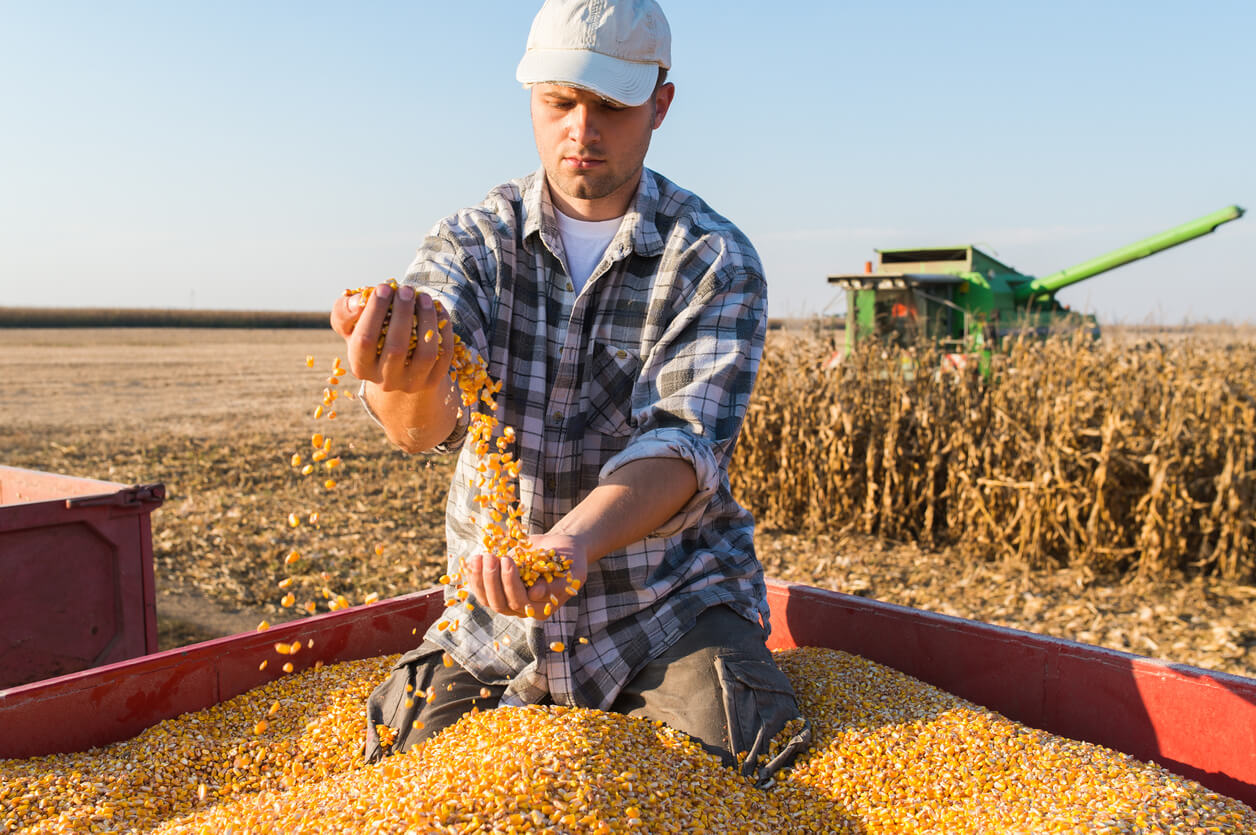
Corn Farmer

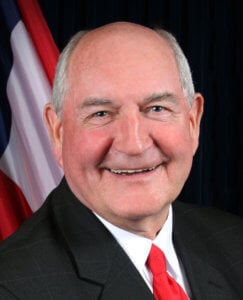
Editor’s note: Sonny Perdue is the US Secretary of Agriculture. He is a former farmer, agribusinessman, veterinarian, state legislator, and governor of Georgia.

Farmers, ranchers, foresters, and producers know that the overall economy is booming again, and for that we are thankful and optimistic. But it is clear when you drive through the byways, small towns, and farmlands of our nation that rural America has not kept pace.

Urban and suburban populations continue to climb across the country, while the population in rural areas has remained stagnant. Integrating technological innovation into American farms will enhance the quality of our agricultural output, increase sustainable use of precious natural resources and improve the efficiency of the American farmer.

f e image
Sonny Perdue

A task force created by President Trump has developed many recommendations for addressing this issue, but it has found one overarching challenge that we must overcome to ensure future rural prosperity.

We have a duty to harness technological innovation to improve the quality, nutritional value, and safety of American crops. An improved strategy for research and development of new agricultural technologies will be key, as will be a unified US approach toward convincing our trading partners of the value of safe biotech products.

Read full, original post: Perdue: Rural broadband is our duty to farmers

Can gene therapy reduce terminal cancers to minor chronic diseases that are ‘no different than high blood pressure’?

Screen Shot at AM

On Oct. 15 at 8 a.m., Andy Lindsay stood atop 21,247-foot Mera Peak in Nepal, a wildly improbable place for him to be both athletically and medically.

Andy, a veteran climber and a friend of mine, had been living with Stage IV lung cancer for three years. “To live one year was statistically unlikely, and two years looked like a miracle,” he said.

He was able to make the climb thanks to the success of a cutting-edge gene therapy clinical trial. It targeted his specific lung cancer mutation, shutting off the fuel to his tumor’s growth and shrinking the tumor. He wasn’t cured, but his scans were strikingly improved and he was almost symptom-free.

The trip illustrates a shifting landscape both for oncologists and cancer patients exploring a return to active lifestyles. Dr. Tomas Neilan, the director of the cardio-oncology program at Massachusetts General Hospital in Boston, and part of Andy’s medical team, said the recent success of these gene therapy treatments alters the way specialists like him view and treat advanced cancer patients.

“They’re taking Stage IV cancer and turning it into a chronic disease no different than high blood pressure,” he said.

Last month he was among several Stage IV cancer patients invited to a small gathering in Boston of top Massachusetts General researchers who outlined their thinking on future therapies.

Read full, original post: When the Lung Cancer Patient Climbs Mountains

Food Evolution director: Organic, natural food industries use misinformation and fear to sell products

Food Evolution Twitter

You’ve probably heard the same conversation, in one way or another, for years: Some say genetically modified organisms (GMO) are harmful, while others say they’ll help us feed the growing billions of humans that populate our planet. People’s positions on the subject seem cemented, bound by the hard stays of emotion, and nearly impossible to change. It’s even more resonant at this intractable moment in the United States, where the division between the two sides on issues from the economy, to gun control, to healthcare — really, just politics in general — seems insurmountable. The further we move from facts and the truth, the harder it is to come to rational conclusions on these subjects. 

But to Academy Award-nominated documentary director Scott Hamilton Kennedy, there’s a way to dislodge even the most dogged opponent in these conversations: with science.

Kennedy’s latest film, Food Evolution, revisits the GMO conversation, imbuing it with science and revealing the truth through a haze of propaganda and misinformation.

Futurism: What was one of the most surprising things you learned in the course of making this film?

Scott Hamilton Kennedy: I was very surprised to see how some in the organic and natural foods industries were very ruthless. They use miscommunication to foment fear to sell their products. That makes me very angry and very frustrated. As a parent, life is complicated enough, and fear-mongering does not help. Tell me the truth. Tell me the complicated truth, and then let me make decisions.

Read full, original post: Once And For All, Here’s What Science Says About GMOs

Iowa taxpayers to pay anti-GMO activists $50,000 to end First Amendment lawsuit

BakkenPipelineRally kk

Iowa taxpayers will pay a $50,000 settlement to end a lawsuit filed by anti-GMO activists who claim state officials violated their First Amendment rights.

The lawsuit was filed against the World Food Prize and state officials last year in light of limits Iowa placed upon demonstrators at an annual awards ceremony held at the Capitol.

Frank Cordaro, a peace activist and founder of the Catholic Worker in Des Moines, and other protesters have for years been confined to a sidewalk area that is about 110 yards from the Capitol’s west entrance at the foot of a steep hill — a location that makes them largely invisible to World Food Prize participants.

Since 2012, the protesters have used a megaphone to amplify their voices but have been drowned out by musical ensembles and marching bands that World Food Prize organizers have commissioned to perform while dignitaries enter the Capitol to participate in the event.

The protesters were generally expressing their concerns about the environment, biotechnology and the use of genetically modified organisms, or GMOs, in the fight to end world hunger.

During the 2016 ceremonies, Cordaro and Talen were arrested as they attempted to leave the designated protest area so they could approach the Capitol building and be seen and heard by event participants.

Read full, original post: Iowa to pay anti-GMO protesters $50,000

How Alzheimer’s kills: Protein tau spreads through the brain like an infectious disease

Boryszczuk k

For the first time, scientists have produced evidence in living humans that the protein tau, which mars the brain in Alzheimer’s disease, spreads from neuron to neuron.

Researchers at the University of Cambridge in the United Kingdom combined two brain imaging techniques, functional magnetic resonance imaging and positron emission tomography (PET) scanning, in 17 Alzheimer’s patients to map both the buildup of tau and their brains’ functional connectivity—that is, how spatially separated brain regions communicate with each other. Strikingly, they found the largest concentrations of the damaging tau protein in brain regions heavily wired to others, suggesting that tau may spread in a way analogous to influenza during an epidemic.

The research team says this pattern, described [January 5] in Brain, supports something known as the “transneuronal spread” hypothesis for Alzheimer’s disease, which had previously been demonstrated in mice but not people. “We come down quite strongly in favor of the idea that tau is starting in one place and moving across neurons and synapses to other places,” says clinical neurologist Thomas Cope.

The spread of tau could have implications for clinical care, he adds, if drugs can be developed that attack tau in synapses, outside of cells, locking it up inside affected cells early, before it can spread.

Read full, original post: Alzheimer’s protein may spread like an infection, human brain scans suggest

How living GMO algae could electrify rural Africa

biophotovoltaics alex driver carlos peralta

Fuel cells powered by living algae that are five times more efficient than current models, have been designed by scientists at the University of Cambridge.

It is thought they could one day be used to provide electricity to places where there is no existing electrical grid system, such as parts of rural Africa.

The new design makes use of genetically modified algae capable of efficiently carrying electric charge.

It uses the photosynthetic ability of plants and algae to convert sunlight into electric current.

Current algae-based fuel cells are a long way from being as efficient as their non-living counterparts, such as solar power, which has emerged in recent years as a green alternative to fossil fuels.

But the Cambridge scientists have developed a breakthrough technique that significantly improves on old models, which they describe in the journal Nature Energy.

The scientists … used “advanced algal cells where some genes were modified so they would have better performance,” said [the study’s co-author, Kadi Liis Saar, a chemistry PhD candidate at the university].

This alteration ensured the amount of electrical charge wasted during photosynthesis was minimal.

Read full, original post: Rural Africa could be powered using genetically modified algae, say scientists

Hunter-gatherer ‘paradise’? Stone Age settlement discovered in Israel

israel

Israeli archaeologists have uncovered next to one of the country’s busiest roads the site of an extraordinarily well preserved prehistoric “paradise” used by stone age hunter-gatherers over half a million years ago, who left behind evidence of hundreds of knapped flint hand-axes.

The discovery at about a five-metre depth at Jaljulia, near the town of Kfar Saba, suggests that an extinct species of early human – homo erectus – may have returned to the site repeatedly, perhaps attracted by a water source and abundant game, leaving behind evidence of their primitive stone tools.

Archaeologists believe the site, north-east of Tel Aviv, was regarded as a sort of “paradise” for prehistoric hunter-gatherers – with a stream, vegetation and an abundance of animals encouraging them to return.

The most striking find was evidence of a well-developed lithic industry – referring to elaborately worked stone tools – including hundreds of flint hand-axes typical of the ancient Acheulian culture that existed in the Lower Paleolithic era from about 1.5 million to 200,000 years ago.

The dating of finds of Acheulian hand-axes – which scientists now believe were used for a variety of purposes from butchering to digging – has been used to trace the early human migration out of Africa into Asia and Europe.

Read full, original post: Stone age hunter-gatherers’ ‘paradise’ discovered next to major Israeli road

US Farm Bureau opposes non-GMO labels on products without GMO alternatives

rP oW EL SX

An end to the use of non-GMO labels on products that do not have GMO alternatives, NAFTA modification to improve access to difficult Canada dairy markets, and American Farm Bureau Federation President Zippy Duvall will return for another term. Delegates to the American Farm Bureau Federation’s 2018 Annual Convention approved several measures Tuesday [Jan. 9] to help assure a prosperous agricultural and rural economy in the coming year and beyond.

Resolutions approved by farmer and rancher delegates from across the nation ran the gamut of issues, from trade to regulatory reform, crop insurance, biotechnology, and more.

Among other things, delegates approved measures supporting:

  • Support for the use of gene-editing techniques such as CRISPR, along with a voluntary and uniform labeling program for such products.

Read full, original post: Farm Bureau: Duvall wins, False non-GMO labels must go

Potential CRISPR setback jolts investors, but researchers say there’s no need to panic

CRISOR

On [January 8], the world of science awoke to news that suddenly cast uncomfortable doubt on many of the past five years’ major breakthroughs: A new paper had identified a possible barrier to using the revolutionary gene-editing tool CRISPR-Cas9 in humans. The news incited a temporary hysteria that sent the stocks of all three major CRISPR biotech firms tumbling in premarket trading, declining by as much as 11.9 percent.

But there’s no need to panic. This isn’t a death knell for the CRISPR—at least not yet.

“This isn’t a roadblock. I think it’s a bump,” Stanford’s Matthew Porteus, a senior author of the paper, told Gizmodo. “As far as how big a bump? It’s too early to tell.”

Scientists not involved with the study echoed Porteus’s comments, suggesting that the results were unlikely to hold back the fast-advancing field of gene editing.

“This was a fully expected observation, since we are all constantly exposed to many microbes,” said Harvard geneticist George Church.

Church said that there are plenty of potential workarounds to the problem, such as simply using other Cas9 proteins, perhaps those derived from bacteria less commonly encountered by humans.

The reaction might also be avoided by editing cells outside of the body, as is common for diseases that affect the blood.

Read full, original post: Biotech Stocks Drop After Troubling CRISPR Study, but Gene Editing Is Still the Future

Bangladesh develops country’s first GMO rice variety

biotech

Scientists in Bangladesh have developed the country’s first biotech rice variety giving farmers an answer to the difficulties they face in harvesting the staple with machines.

Stems of BRRIdhan-86, the variety that got release approval yesterday, are strong and stout and easy to reap by mechanical harvesters. This will come handy to farm owners, who have dearth of labourers and also find it difficult to use harvesters.

BRRI breeders told UNB that the new variety, with half a tonne of extra yield potential per hectare over the country’s most produced rice variety BRRIdhan-28, is derived from Iranian rice variety Niamat through application of a biotech tool called anther culture.

Anther culture, applied for the first time in rice science in Bangladesh, is a biotech plant culturing technique where immature pollens are made to divide and grow into tissues either on solid and liquid medium.

The scientists at the Bangladesh Rice Research Institute (BRRI) have also developed a new rice variety with the highest ever zinc (27.6 mg/kg) content. BRRIdhan-84 also got approval along with three more new rice varieties yesterday.

The prospect of higher rice yield through the release of the new varieties also comes against the backdrop of diminishing returns from the country’s rice fields.

Read full, original post: Country’s first biotech rice released

CRISPR setback? Our immune system may attack the treatment used with the popular gene editor

crispr

A new paper points to a previously unknown hurdle for scientists racing to develop therapies using the revolutionary genome-editing tool CRISPR-Cas9: the human immune system.

In a study posted [January 5] on the preprint site bioRxiv, researchers reported that many people have existing immune proteins and cells primed to target the Cas9 proteins included in CRISPR complexes. That means those patients might be immune to CRISPR-based therapies or vulnerable to dangerous side effects — the latter being especially concerning as CRISPR treatments move closer to clinical trials.

But researchers not involved with the study said its findings, if substantiated, could be worked around…They also noted that scientists are already studying other types of CRISPR that use different proteins, which could stave off the immune responses.

The new study should not put the brakes on developing CRISPR therapies, agreed Dr. Matthew Porteus of Stanford, a senior author of the paper.

For the study, the researchers decided to check for immune signals against two of the most common types of Cas9 proteins used, those from the bacteria S. aureus (called SaCas9) and those from S. pyogenes (called SpCas9). In their samples of blood from 22 newborns and 12 adults, the scientists found that 79 percent of donors had immune proteins, called antibodies, against SaCas9, and 65 percent had antibodies against SpCas9.

Read full, original post: CRISPR hits a snag: Our immune systems may attack the treatment

Sri Lankan tea farmers want glyphosate herbicide ban overturned

shutterstock small main

Tea farmers in Sri Lanka want their government to reauthorize the use of glyphosate for agriculture.

The country is one of only five in the world to ban the chemical, the active ingredient in Monsanto’s top-selling herbicide Roundup.

In the face of rising crop losses because of overgrowing weeds, the Planters’ Association of Ceylon is asking the government to either overturn the ban or provide an effective replacement for glyphosate.

“Unfortunately, the situation is becoming extremely dire for the tea sector,” association chairman Roshan Rajadurai said in a news release.

According to Rajadurai, crop loss in the first 18 months after the ban totaled to some $100 million.

Last month, Sri Lankan police seized 5,400 packets of illicit glyphosate. Investigators say the contraband is smuggled into the country on boats from India, where it is sold at four to five times the original cost.

“Time and again we have called on the government to at least give us an alternative to glyphosate, and unfortunately there has been no response whatsoever,” Rajadurai said.

Without an effective weed killer, Rajadurai said additional labor costs for manual weeding, as well as lost production, are giving an advantage to Sri Lanka’s main competitors in the tea sector, Kenya and India.

Read full, original post: Sri Lankan Tea Farmers Sense Trouble Brewing Over Glyphosate Ban

Designer proteins could help us fight flu, remove gluten from foods

protein
[Researchers have] been stumped by one great mystery: how the building blocks in a protein take their final shape. David Baker, 55, the director of the Institute for Protein Design at the University of Washington, has been investigating that enigma for a quarter-century.

In a series of papers published this year, Dr. Baker and his colleagues unveiled the results of this work. They have produced thousands of different kinds of proteins, which assume the shape the scientists had predicted.

This expertise has led to a profound scientific advance: cellular proteins designed by man, not by nature. “We can now build proteins from scratch from first principles to do what we want,” said Dr. Baker.

Scientists soon will be able to construct precise molecular tools for a vast range of tasks, he predicts. Already, his team has built proteins for purposes ranging from fighting flu viruses to breaking down gluten in food to detecting trace amounts of opioid drugs.

[T]echnology is improving so quickly that the team is now testing longer, bigger proteins that might do more complex jobs — among them fighting cancer.

“There’s a lot of things that nature has come up with just by randomly bumbling around,” he said. “As we understand more and more of the basic principles, we ought to be able to do far better.”

Read full, original post: Scientists Are Designing Artisanal Proteins for Your Body

Herbicides and fungicides could be key factors in bee health problems, study finds

agricultural

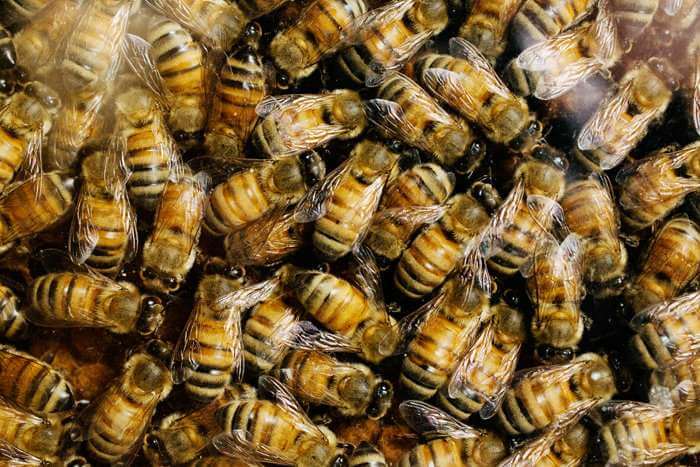
Honey bees might be drawn to the very chemicals that are endangering them, based on experiments in which they preferred drinking sugar water that had been mixed with the poisons rather than sugar water alone.

Evolution may explain why the bees are attracted to the chemicals that are potentially dangerous to their health. But the findings, published in the journal Scientific Reports, suggest herbicides and fungicides [used primarily to fight the Varroa destructor mite] pose a greater risk to honey bee populations than previously believed.

The nectar that forager bees bring back to the hive, where it is produced into honey, can have an effect on the health of the entire colony.

Even with chemicals that are known to have negative effects on bees, there is often still the question of how much exposure the insects are really getting, both in terms of how much the chemicals pervade the surrounding environment and how much bees come in contact with them. For the current study, the scientists found that forager bees were drawn to the fungicide chlorothalonil and the herbicide ingredient glyphosate, found in Monsanto’s Roundup, at certain concentrations.

Read full, original post: Honey Bees Love The Chemicals That Are Killing Them