Wouldn’t it be nice if our microbiomes could serve up diet advice—some science-based assurance that our food and medicines act in harmony with our resident microbes to keep us healthy? For that to happen, scientists will need to better understand how the interaction between food and microbes affects the chemical composition of our guts. Now, a team of researchers has developed an edible device that passes through the digestive tract…The 2.6-centimeter-long capsule contains sensors for hydrogen, oxygen, and carbon dioxide, which can spike and dip as microbes break down components of our meals and release various byproducts. In a pilot study published…in Nature Electronics, six volunteers experimented with high and low fiber diets while the pill transmitted signals to a pocket-size receiver every 5 minutes. Their preliminary tests showed that the pill’s readouts can reflect changing levels of fermentation in the gut and the speed of food’s transit through the body. Turning those data into specific recommendations will be much more complicated. But the researchers suggest these gas readouts could someday help design more healthful foods and possibly diagnose digestive problems.
Heading into the final days before Christmas, the Ugandan city of Kampala was busy with people from all walks of life crowding the markets to purchase food for holiday festivities.
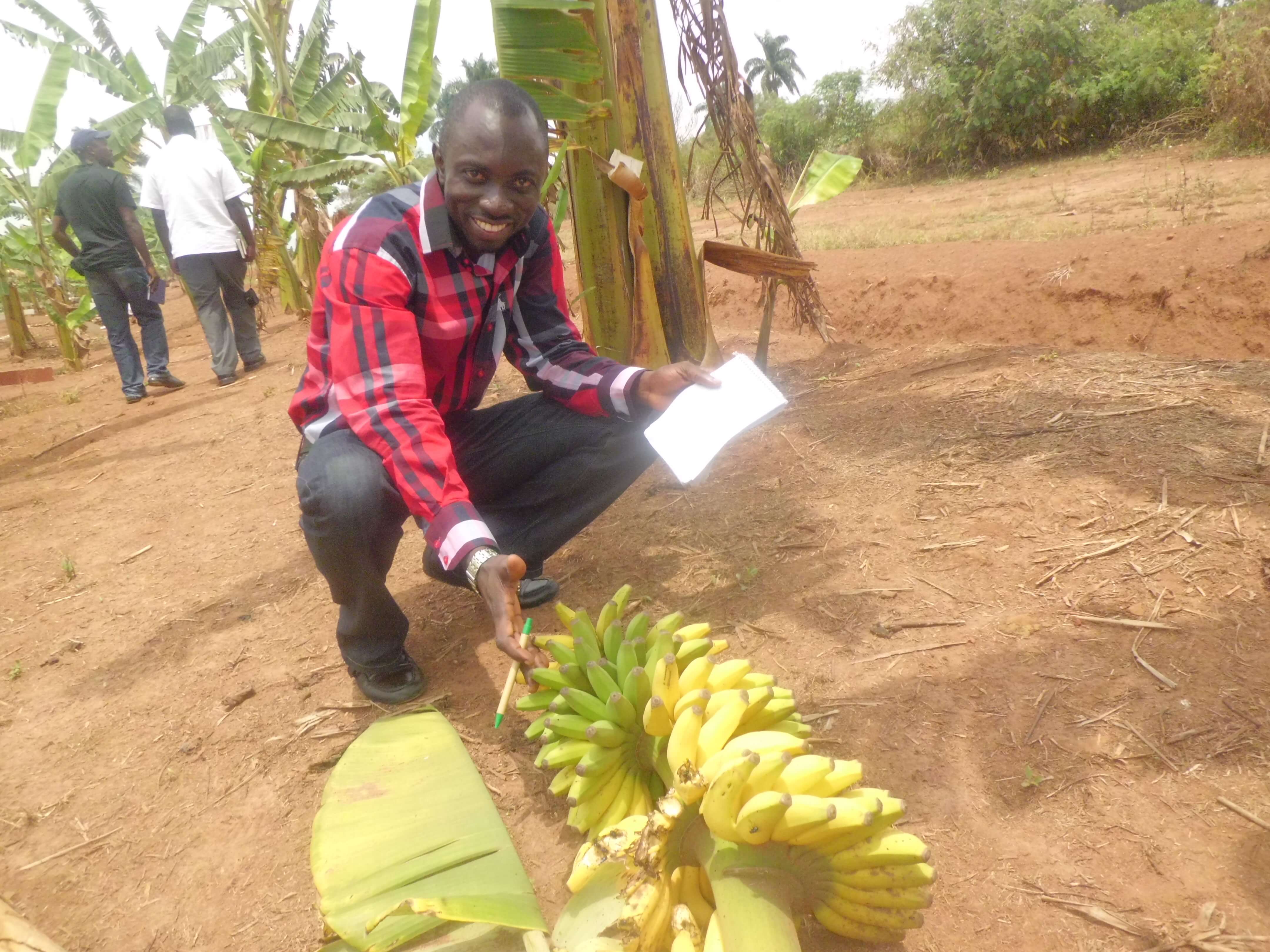
At the Nakawa market, a stall displays bunches of cooking bananas. And on this day, a woman named Nalongo Nakisseka stopped to criticize the offerings, accusing the vendor of “selling GMO bananas” from the National Agricultural Research Laboratories in Kawanda. The evidence? “The bunches are extra ordinary giant,” she said angrily.
Mary Nabukera, another shopper, joined in: “We are doomed; every food item sold in this market is GMO. Look at the size of tomatoes, onions, cabbages, Irish potato and oranges.”
Their criticisms drew the attention of bystander John Obuku, who pointed out that the various bananas on display were either conventional or hybrids, since Uganda doesn’t allow the sale of GMO bananas. In fact, no GMO crops are approved for sale in Uganda.
The exchange illustrates one of the problems facing Uganda as the nation considers whether to allow the cultivation of GMO crops. There is considerable confusion among the Ugandan public over the status of GMOs––with many people believing they’re already being grown and sold commercially, and many believing they are harmful.
Food insecurity
It’s unclear when or if Uganda will grow GMO bananas or any other genetically engineered comment. The nation’s president, Yoweri Museveni, is refusing to sign the recently-approved National Biotechnology and Biosafety Bill, which seeks to pave the way for GMOs.
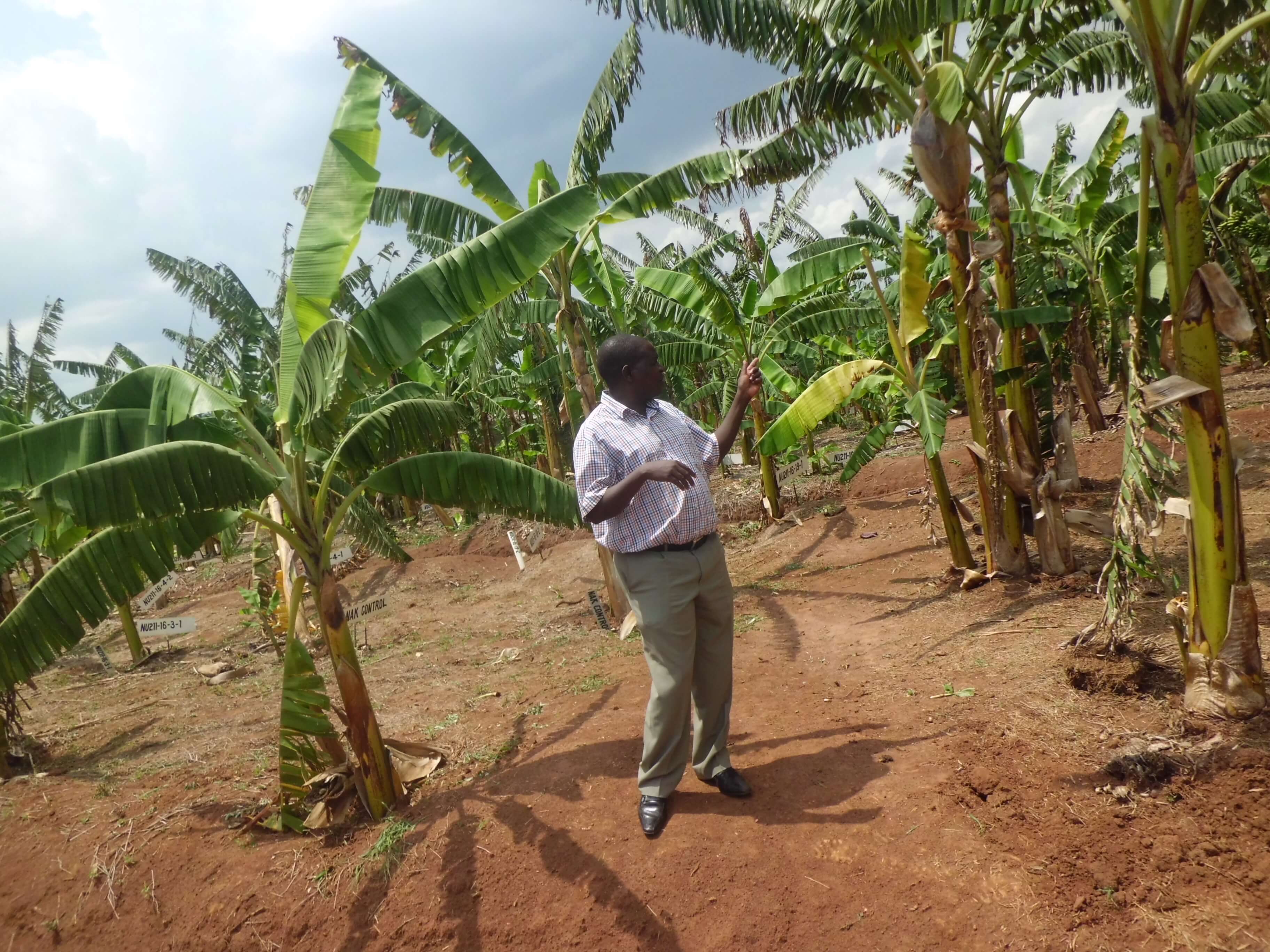
Scientists in Uganda, working under the National Agricultural Research Organization (NARO), are conducting trials with several major crops. Those include the East African highland banana, designed to resist the black sigatoka; a banana fortified with Vitamin A and iron nutrients; and cassava resistant to Cassava Mosaic Virus and Cassava Brown Streak Virus.
One of the scientists involved in breeding GMO bananas fortified with vitamin A and iron explains the breeding process. By Lominda Afedraru.
There are efforts underway to improve food security in countries throughout Africa. One of the international goals is for countries which are still food insecure, including Uganda, to end hunger by 2030. A key to reaching that goal is through improved and sustainable methods of agricultural practices of plant breeding, said Dr. Tituts Alicai, head of root crops at the National Crop Resources Research Institute.
A recent report from the World Food Programme noted that 795 million people in the world don’t have enough food to lead a healthy active life. Alicai argued that agricultural scientists around the world need to breed GMO crops if the planet’s food needs are going to be met.
Historically, GMO crops have been opposed in Africa, though countries such as South Africa and Sudan have commercialized cotton and corn. Others are conducting field trials––Ghana and Nigeria, for example, are testing cow peas designed to resist Maruca vitrata pest.
Over the years, African scientists have conducted field trials of a range of hybrids (including rice, bananas and cassava) but there have been no GMO crops put into farmers’ fields in Uganda.
Why the confusion?
As far as Alicai is concerned, the confusion is the result of a communication breakdown. The scientists carry out breeding at the research institutes and produce seeds that are distributed to farmers by the Ministry of Agriculture and its partners.
But as those seeds flow from the research stations to the farmers, they aren’t accompanied with enough educational information to help everyone understand exactly what’s being planted––and the key differences between GMO and hybrid crops. He worries that by the time GMO crops are ready for commercialization, they will struggle to gain acceptance by a confused public. Things aren’t helped by the presence of anti-GMO campaigns being waged by activists.
What the nation needs is a concerted effort to better educate the public, said Dr. David Kalule Okello who heads the program on groundnut improvement at the National Semi Arid Resources Research Institute (NaSARRI) in Eastern Uganda.
The effort should be far-reaching, with help from breeders, extension workers, civil society and seed companies. But it’s critical for scientists at the research institutes to set up demonstration farms in different ecological zones where hybrid plant varieties should be planted alongside GMO trials, he said.
These farms could act as education sites for farmers and those engaged in the agriculture supply chain. They could collect data about growth rates, yields and pest/disease concerns.
A visiting journalist from Ghana examines GMO bananas at a field trial site operated by the National Agricultural Research Laboratories (NaRL). By Lominda Afedraru.
The Ministry of Science, Technology and Innovations could also work to educate the general public about the Biosafety Law and what it could mean for the country. Okello said:
The law has been passed what next, when will it become operational and how soon can farmers access GMO crops whose trials have been concluded. If these questions are not availed to the public then the law will become idle. The public will continue to cause confusion in referring hybrid plants as GMO’s.
Why hybrids?
Agricultural experts usually encourage farmers to grow hybrids because of their higher yields. But this comes with higher purchasing costs.
Hybrid maize varieties have existed in the US since 1926 and in Africa since the 1960s, the year Ugandan scientists got involved in breeding, said Dr. Geoffrey Asea, director of the National Crop Resources Research Institute. Hybrids are a result of crossing parental traits of two individual plants using conventional breeding methods. It is advisable to make the crossing only once because the traits will disintegrate if done repeatedly.
A farmer who recycles hybrid maize seed could experience a 30 percent yield loss because of the disintegration in the parental make up. This does not occur to vegetative propagated plants such cassava and Banana.
What next?
While much of Uganda’s GMO research work is in its final stages, the release of these new seeds is expected to be a gradual process, said Alicai, from the National Crop Resources Research Institute.
The Biosafety Law, if approved, enables the assessment of which crops can be safely commercialized. Right now, it’s in limbo after the president, under intense pressure from anti-GMO activists and the skepticism of his wife, sent the bill back to legislators for ‘clarification.’ The final piece of the regulatory puzzle will be handled by a committee designed by the Ministry of Science, Technology and Innovations. It will be tasked with approving seeds for release and for drafting regulations surrounding their use.
Lominda Afedraru is a freelance science journalist in Uganda who specializes in agriculture, health, environment, climate change and marine science. Follow her on the Daily Monitor web site www.monitor.co.ug, Facebook or Twitter @lominda25.
Maxine Thompson is a trailblazer. With her education and profound interest in plant breeding, she defied a male-dominated establishment and became a plant breeder at a major university. She would establish a decades-long career in plant breeding at Oregon State University, traveling the world on collection missions and making critical selections that define the roots of the OSU Hazelnut Breeding Program, still thriving today. Now in retirement she continues to breed plants, namely the Haskap Berry (Lonicera caerulea), a flavorful fruit slightly different from the blue honeysuckle. We enjoy an inspirational discussion about her training, her career, and the tremendous barriers she faced as a woman in science. We also discuss her current plant breeding interests and the development of the Haskap Berry.
Buy ‘Japanese Haskap’ bushes at Spring Meadow Nursery!
To stay up to date on all the news in human and agricultural genetics, subscribe to our daily and weekly email newsletters, and follow us on Facebook and Twitter.
The architecture that beat humans at the notoriously CPU-impervious game Go, AlphaGo by Google Deep Mind, was converted to allow the machine to tackle other “closed-rules” games. Successively, the program was given the rules of chess, and a huge battery of Google’s GPUs to train itself on the game. Within four hours, the alien emerged. And it is indeed a new class of player.
The Alpha Zero neural network uses reinforcement learning to teach itself things from scratch. It does not rely on previous knowledge – which in the case of chess is surprising, as the mass of knowledge on the game accumulated in centuries of experimentation is hard to shrug off. Combined with a powerful search algorithm, the neural network is at present unbeatable. This was demonstrated in a 100-game match against the strongest chess program around, Stockfish 8.
What impressed me when I saw a few games from that match, which was concluded with 25 wins and 75 draws, no losses from Alpha Zero, is that the machine can display an evolved treatment of openings, is keen to sacrifice material for positional gains, and has no prejudices.
…
I await patiently for the time when somebody will publish the 100 games and comment them – I am sure there’s a treasure of things to learn there.
Karen Caplan is the CEO of Frieda’s Specialty Produce
Non-GMO vodka? Really?
When I saw this ad, I realized it’s finally time to blog about GMOs. I have been putting off writing this post for many years because GMOs are a controversial subject.
…
What bothers me most about the term GMO is that an entire industry has sprung up around the frenzy, such as the Non-GMO Project, which claims to verify products for being non-GMO even when, in fact, those products don’t include any of the 10 crops listed.
A prime example is the vodka shown above in the ad. While some vodka is distilled from potatoes, Ketel One is made with wheat. Oh, excuse me, it’s “non-GMO grain.” Since wheat is already a non-GMO crop, this really isn’t anything to write home about. Yet, the company decided to jump on the non-GMO bandwagon and make a claim that makes the consumer wonder about other brands of vodka.
I personally don’t think that’s right.
Even though our media seems to thrive on scaring viewers, or inciting worry and filling people with doubt, I get mildly annoyed when I see “Non-GMO Verified” on foods that are simply outside of that category.
The process of producing food, protecting the environment, and improving animal health is advancing at a seemingly breakneck pace.
These advancements are driven in part by new scientific discoveries, genetic research, data science, enhanced computational power, and the availability of new systems for precision breeding like CRISPR—an acronym for Clustered Regularly Interspaced Short Palindromic Repeats.
…
As history demonstrates, new advancements in breeding have almost always been controversial – even though safety or environmental risks have not been proven.
“It is critically important that everyone in agriculture becomes rapidly conversant in this technology, as it already has been a game changer,” notes Kevin Folta, who chairs the Horticultural Sciences Department at the University of Florida in Gainesville. “If these technologies are delayed because of misunderstanding, we will lose many opportunities to bring improved varieties to the field and better fruits and vegetables to consumers.”
…
[E. Charles Brummer, plant breeder at the University of California, Davis, and president of the Crop Science Society of America] says most breeders and agricultural professionals he knows, after decades of persistent popular suspicion and opposition to transgenic crops, see gene editing as potentially less objectionable [than GMOs].
He says they are “hopeful that regulatory concerns would be minimized and we could move forward. There are certainly a lot of positive things you could do with CRISPR.”
There was a time when one of the most dangerous crop diseases a wheat farmer could encounter in the field was stem rust. It is caused by a fungus, and its spores look like flecks of rust on metal — first red, later black in color. The fungus spreads along stems and leaves of cereal plants, consuming nutrients and causing the grains to shrivel.
Crops affected by stem rust are often entirely destroyed, and until the 1950s, the fungus was able to wreak havoc on agriculture across the globe — including in the United States. Researchers eventually managed to identify strong resistance genes against the fungus, and successfully bred those genes into new plant varieties beginning in the 1960s, leaving the fungus all but forgotten.
A generation later, however, a new strain of wheat stem rust appeared — this time in Uganda in 1998. This new strain, which scientists called Ug99 (Ug for the country where it was first discovered, 99 for the year when it was officially named), was immune to most of the known resistance genes — and it remains a threat today. It is more aggressive than most known stem rusts, and it evolves far more quickly. Indeed, where there was only one strain in 1999, there are now at least 13 new pathotypes of Ug99, and they are spreading fast.
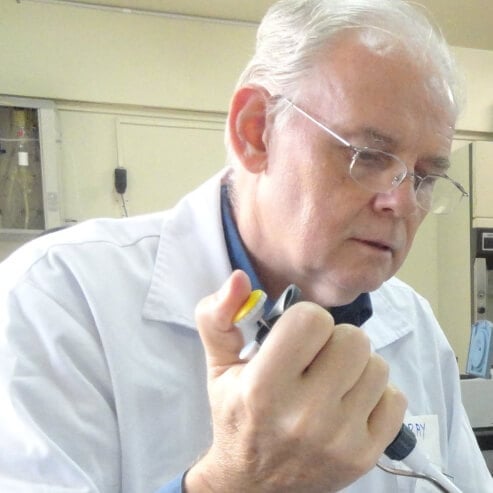
Ray Shillito is a scientist that spent the early part of his career in plant transformation, attempting novel approaches in the early 1980s. It was a time of rapid development of new techniques, and a race to move genes into plants with the goal of genetic improvement. Shillito shares his memories of that time and then touches on his recent passion – how to train scientists to prepare better presentations. In the second part of the podcast, I speak with Angie Adkin. Angie is a graduate student that hosts the All Creatures Podcast, and we discuss the value of creating new media and the associated career benefits and pitfalls.
In contrast to adults, acceptance of evolution in schoolchildren in the UK is linked to their scientific aptitude rather than conflicts with belief systems, say scientists at our Milner Centre for Evolution.
Previous studies in the USA have shown that adults that strongly reject evolution are often highly educated but reject the scientific consensus owing to conflicts with their belief systems.
…
Does the same clash of beliefs and evidence prevent effective learning in the classroom? Scientists at the Milner Centre for Evolution found that for UK schoolchildren, surprisingly this was not the case. They conducted a large controlled trial of 1,200 students aged 14-16 in 70 classes from secondary schools across the south and south west of the UK, in which students were tested for acceptance of evolution and understanding of evolution and, as a control subject, genetics.
…
The non-acceptor students had lower prior understanding of both evolution and genetics, and they responded poorly not only to the teaching of evolution, but, importantly, also to genetics. This indicates they were less likely to accept evolution because they struggled to understand science rather than due to psychological conflicts with their beliefs.
The researchers concluded that the current system of science teaching was not optimal for the lower aptitude students.
23andMe is kicking off a massive study into the genetics of weight loss that the company says will involve 100,000 people crowdsourced from its database of 1.3 million of its customers. It’s perhaps the most ambitious undertaking today date to discern the link between people’s DNA and their success at dieting.
…
[I]t’s unlikely that finding the perfect diet will be as easy as forking over $199 and spitting in a test tube—at least not any time soon.
“There have been a lot of claims floating around linking genetics to weight and your perfect diet,” Liana Del Gobbo, 23andMe’s lead scientist on the study, told Gizmodo. “That science is still in its infancy.”
…
23andMe will randomly assign people to one of three plans. In some cases, participants will be asked to avoid carbs like bread. Another group will try eating more fiber and less animal fat. A third will eat as they usually do but exercise more. Other factors besides genetics, of course, also influence diet success, so participants will report back on things like their levels of stress and whether they had “cravings,” along with whether or not they lost any weight.
…
You may one day be able to spit in a tube and get a customized weight-loss plan, but it’s not yet possible—so be wary of any company peddling genetically tailored diet advice.
Natural killer (NK) cells are lymphocytes, immune cells which have a powerful arsenal of cytotoxic weaponry that they can use against tumors.
Unfortunately, tumors protect themselves using a protective microenvironment that shields them from attack from NK cells. This microenvironment promotes tumor growth and survival and has an immunosuppressive effect that blunts the attempts of NK cells to infiltrate the tumor and destroy it. That was until now and this new discovery.
…
The new study shows that natural killer cells can be attracted to tumors to destroy cancer by switching the protective microenvironment with which the tumor shields itself from an immunosuppressive one to an immunosupportive one.
They discovered that if they blocked the intracellular garbage disposal process known as autophagy, it causes the tumor to produce cytokines (signals) that attract more NK cells to the location. This mass recruitment of NK cells all swarming to the tumor site allows for the destruction of cancerous cells and for the tumor to be reduced in size.
…
The potential for targeting autophagy in tumor cells is a promising approach for helping the immune system to combat cancer. This could pave the way for developing NK cell-based immunotherapies, as we now know how to disable the immunosuppressive tumor environment.
Read full, original post: Natural Killer Cells Swarm to Attack Cancer Thanks to New Immunotherapy
By mid-October, state departments of agriculture nationwide had received 2,708 complaints from soybean farmers who claimed their fields had been damaged by wayward dicamba. Some 3.6 million acres had been affected, an unprecedented case of herbicides gone rogue. The Missouri, Arkansas, and Tennessee agriculture departments all temporarily restricted or banned dicamba (severalmore states will do so in 2018), and farmers launched at least four class-action suits demanding restitution from dicamba-makers. The company at the center of the firestorm was Monsanto—which in October struck back with its own lawsuit, seeking to halt an Arkansas regulation that limits dicamba use.
…
In early November, Environmental Protection Agency officials warned in a meeting with herbicide-makers that they could lose dicamba approval if their products continued to damage crops. And [University of Missouri plant pathologist Kevin] Bradley says growers might spray less dicamba in 2018 to avoid trouble with their neighbors. But on the flip side, more farmers may buy the double-resistant seeds, to protect themselves from dicamba. Indeed, [Missouri soybean farmer Darvin] Bentlage says, one seed dealer recently hit him with this pitch: “You might as well buy some dicamba seeds. You know your neighbor’s gonna spray it—you might as well buy it, too, to keep from getting damaged.” In other words: Nice little soybean crop you have there; be a shame if something bad happened to it.
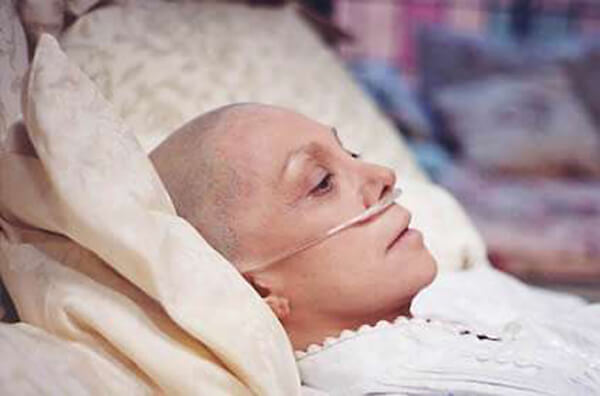
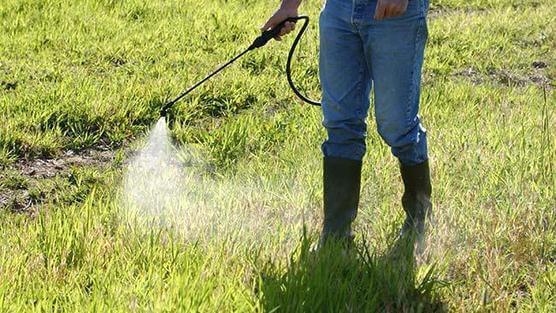
In October 2016, the U.S. Judicial Panel on Multidistrict Litigation (JPML) consolidated all federally-filed Roundup lawsuits into one court in the Northern District of California. These are all cases filed by plaintiffs who claim that after using the herbicide for an extended period of time, they developed non-Hodgkin’s lymphoma (NHL) or a similar type of cancer.
…
To help the cases proceed as efficiently as possible, [District Judge Vince] Chhabria previously bifurcated the proceedings, ordering the court to focus first on establishing a link between Roundup and its main herbicide, glyphosate, and cancer. The parties were told to address this issue first before considering any other issues of concern.
To that end, the court was supposed to proceed with Daubert hearings in December 2017. A Daubert hearing is one in which the judge determines the admissibility of expert or scientific testimony and evidence. The outcome determines which evidence or testimony will be presented to a jury in the future.
A recent scientific study, however, has caused the court to delay the Daubert hearing in this consolidated litigation.
They found that among over 54,000 applicators, nearly 45,000 used glyphosate, and 5,779 were diagnosed with cancer. Overall, however, glyphosate was not statistically associated with cancer.
Researchers at Instituto de Medicina Molecular (iMM) João Lobo Antunes have found that manipulating a single RNA molecule is enough to revert cellular ageing.
Throughout time all cells age gradually, contributing to the development of several diseases. Inducing cellular regeneration is one of the strategies used to fight diseases associated with cellular ageing. However, aged cells tend to be highly resistant to any type of manipulation intended to induce regeneration.
Ribonucleic acid, or RNA, is responsible for protein synthesis inside cells. However, a specific type of molecule named non-coding RNA is never translated into protein. In fact, since the mapping of the human genome in 2001 it is known that only about 2% is actually translated into proteins.
Now, the team led by Bruno de Jesus and Maria do Carmo-Fonseca, used a genetically modified mouse model to study cellular ageing and regeneration. They found that cells derived from the skin of old mice produced higher amounts of a long non-coding RNA molecule named Zeb2-NAT when compared to cells from young mice. By reducing the amount of this specific RNA molecule, it was possible to efficiently regenerate old cells.
“These results are an important step to be able to regenerate diseased tissues in older people,” said Bruno de Jesus.
After months of research, they faced a disappointing truth: There was no way around herbicides. “Turns out zapping weeds with electricity or hot liquid requires far more time and energy than chemicals—and it isn’t guaranteed to work,” [Jorge Heraud, CEO at Blue River Technology] says. Those methods might eliminate the visible part of a weed, but not the root. And pulling weeds with mechanical pincers is a far more time-intensive task for a robot than delivering microsquirts of poison. Their challenge became applying the chemicals with precision.
…
If robots can prevent herbicides from having any contact with crops, it means that 18 classes of chemicals previously considered too damaging to be widely sprayed suddenly become viable. “We’re both ratcheting down the volume of chemicals that need to be used, but also expanding how many types can be used,” Heraud says. In other words, Blue River’s success might be the worst thing that could happen to the herbicide industry, or it could open up an avenue to sell new products.
…
He estimates that Blue River will release its first See & Spray bots in the U.S. in early 2020 and in Europe in 2021—several years sooner and on a much larger scale than it could have without [John] Deere’s army of mechanical engineers, forge factories, and 10,000 dealers around the world.
…
“It’s not either/or—should we do technology or agro-ecology, sustainable farming or industrial farming,” [Heraud] says. “It’s both/and. We need all solutions.”
Critics and supporters of biotechnology are at odds over whether the world faces a genuine food shortage, and the role that genetically engineered crops could play in addressing future challenges.
Many genetic engineering advocates note that the world population is on course to exceed 9 billion by 2050. Most people agree that the rise in the sheer number of people along with the increased caloric demands of the developing world that is becoming more prosperous and more desirous of meat in their diet will stress the global food system. While not a silver bullet, GM foods are a key tool, argue most scientists and many science journalists, in helping to addressing this inevitable crisis.
If GM food becomes an economic nonstarter for growers and food companies, the world’s poorest will pay the highest price. GM crops that flourish in challenging environments without the aid of expensive pesticides or equipment can play an important role in alleviating hunger and food stress in the developing world — if researchers in developed countries are allowed to continue advancing the field.
Anti-GMO activists vigorously dispute this scenario. They argue, correctly, that there are currently enough calories created to go around: the issue they say, is waste. Distribute food more fairly and efficiently, and the problem goes away. GE crops will help already bloated agri-businesses but not the neediest, they say. Here is what an Environmental Working Group argues in a press release entitled “GMOs Won’t Help the World’s Hungry.”
The narrative that GMOs will help feed the world … ignores the fact that hunger is mostly the result of poverty. It’s true that about 70 percent of the world’s poor are farmers and that increasing their crop yields could help improve their lot, but what truly limits their productivity is the lack of basic resources such as fertilizer, water and the infrastructure to transport crops to market. …
When it comes to meeting the world’s future demands for food, GMOs are a red herring. They haven’t been shown to improve food security, and they distract from real solutions that can both lift people out of poverty and minimize the environmental impact of food production.
Biotech opponents are factually accurate in their claim that the world produces enough food to feed everyone. According to the United Nations and others, hunger that exists today—particularly in industrialized countries—isn’t due to an outright shortage of crops and animals, but distribution, storage, economic and political issues. So the problem could theoretically be solved—if we had a perfect distribution system, which we don’t and may be impossible to achieve.
So the real issue becomes: How do we produce more food in an environmentally sustainable way?
Knowing the limitations of farming
Is there a limit to how much we can farm? Are there lines in the loam beyond which the planet suffers, perhaps permanently? Backers of the idea of “planetary boundaries” say “yes,” but it’s not like falling off a cliff—not yet.
Johan Rockstrom, a Swedish environmental scientist who first introduced the idea of planetary boundaries, published a paper which argues that agricultural production must be intensified to produce more food. That intensification must also “deliver climate stabilization, food control, biodiversity enhancement, and so on,” said environmental activist, author, and former GMO opponent Mark Lynas in a review of Rockstrom’s paper:
Sustainable intensification…would put agriculture at the center of a positive transformation rather than simply trying to limit its negative impact while still production sufficient crops to feed humanity.
But what are these limits? Are they scientifically based? And what about the economic, logistical and political issues we see now that probably won’t go away in two decades?
Rockstrom introduced the idea of “planetary boundaries” in 2009. Much of the attention of “planetary boundary” devotees has focused on climate change. In that case, some real numbers appear (whether their goals will do what they’re supposed to is another topic): Carbon dioxide concentrations should be limited to 350 ppm to curb global warming to 1.5 degrees Celsius above temperatures 150 years ago.
Search for sustainability numbers
Rockstrom, Lynas and others say that agriculture can play a large role in controlling climate change. But other trends, such as those focused on biodiversity, land use, and chemicals, raise questions about the feasibility of planetary boundary goals:
Land use. Today, 40 percent of the earth’s surface is farmed. Using today’s methods, farmed land will “overshoot the preliminary estimate of the ‘safe operating’ space of 1,640 million hectares (6.3 million square miles) before 2050,” the paper’s authors write (citing a UNEP report).
Open space. A proposal in Rockstrom’s paper calls for more than 75 percent forest cover for critical forest systems on a global level, and 85 percent rainforest and temperate forest cover—currently, that number is 62 percent.
Water. Currently 2,600 cubic kilometers per year of freshwater is used, mostly for agriculture. The proposed planetary boundary limit is 4,000 cubic kilometers/year. This means that water productivity would have to increase 50 percent by 2030.
Genetic diversity. The paper calls for zero biodiversity loss in agricultural areas, and keeping extinction rates below 10 extinctions per million species-years (E/MSY). Currently, that level is 100-1,000 E/MSY.
Nitrogen/phosphorus. This paper proposed closing nutrient loops, and keeping overall phosphorus use flat, but raising nitrogen and phosphorus in developing countries. This, according to planetary boundary supporters, reduces phosphorus flow to the ocean, especially from fertilizers and eroding soil.
Some beg to differ
Not surprisingly, the idea of planetary boundaries has its detractors.
In a 2013 debate held by the Nature Conservancy, Erle Ellis, a geographer and environmental scientist at the University of Maryland, Baltimore County, compared local versus global issues:
The evidence is incontrovertible that there are local tipping points — for coral reefs, for instance — but not so for global ones. It’s not a runaway train. Ecosystems change, but it’s not a domino effect. You can change all the systems on the planet. But does that constitute a global tipping point?
And in a commentary in Nature, Simon Lewis, a scientist at University of College London, pointed to some confusion between “tipping point,” “global boundary,” and “safe operating space.” While “tipping point” implies a hard line, others offer some wiggle room, and it’s hard to calculate the relationship between global and local effects:
Some parameters are fixed limits, not boundaries. Take disruption of the phosphorus cycle: this is represented in the planetary boundaries concept as the quantity of phosphates flowing into the oceans from crop-fertilizer run-off, which can cause algal blooms and an oxygen deficit for marine life. Framed in this way — ‘don’t destroy the marine environment’ — the boundary makes sense. But more serious for humanity is that phosphorus is a key plant nutrient. Fertilizer is produced from rock phosphate, which forms on geological time scales. When it is gone, it is gone. This does not represent a threshold boundary: it is a depletion-limit. Humanity cannot use more rock phosphate than there is.
Meanwhile, however we proceed, we need to produce enough food to support our existing and growing population. A UN Sustainable Development Goal, developed in 2015, is to eliminate hunger and poverty by 2030. This means that food production needs to increase by 50 percent worldwide, preferably before that date.
Another issue is the role of the small farmer—most agriculture is practiced by small landholding farmers (about 2.5 billion running 500 million small farms, according to the UN FAO). Channelling the right innovations and technology to these poor farmers, remains a major challenge. Philip Pardey, a University of Minnesota applied economics director, and his colleagues commented in Nature that “Without efforts to improve the global spread and adaptation of locally relevant technologies, it is likely to get much harder for poor farmers to feed themselves, let alone their nations’ increasingly urbanized populations.”
What role does technology play in this? Both Lynas’ review and Rockstrom’s paper look at biotechnology and “GMOs” as part of making intensive agricultural production less environmentally harmful. A Genetic Literacy Project FAQ on sustainability reviewed the debate between organic and conventional, and the accusations by organic farmers (and anti-biotech advocates) that conventional farming pollutes, depletes and reduces diversity:
That’s changing as conventional farmers focus more on best practices. Multiple studies show that non-organic farming yields considerably more food with lower costs and in some cases lower inputs per acre. It often uses less water; and some GM crops, such as insect resistant Bt corn, soybean, cotton and eggplant, require less chemical pesticides than their organic counterparts.
The sustainability farming and food debate remains highly complex. Studies focusing on the plusses and minuses of intensive farming may finally give some analytical heft to the term “sustainability,” which many critics claim means whatever its users want it to mean.
Andrew Porterfield is a writer and editor, and has worked with numerous academic institutions, companies and non-profits in the life sciences. BIO. Follow him on Twitter @AMPorterfield.
When deprived of sleep, some people are able to cope and respond much better than others. Although scientists have identified genes associated with this phenomenon, it was still unknown why the effects of sleep deprivation tend to vary so widely across both individuals and cognitive tasks.
…
[I]n a new study published in the journal Scientific Reports, researchers at Washington State University have identified a genetic variation that significantly impacts how well sleep-deprived individuals perform mental tasks.
The findings show that people with a particular variation of the DRD2 gene are resilient to the effects of sleep deprivation when performing tasks that require cognitive flexibility, the ability to make appropriate decisions based on changing information.
However, sleep-deprived people with two other variations of this same gene tend to perform much more poorly on the same kinds of tasks.
…
The effects of sleep deprivation on cognitive flexibility can have serious consequences, particularly in high stakes, real-world situations like an emergency room or military operations where the ability to respond to changing circumstances is vital.
The researchers are currently applying what they’ve learned from their study to develop new ways to help surgeons, police officers, soldiers and other individuals who regularly deal with the effects of sleep deprivation in critical, ever-changing settings cope with the loss of cognitive flexibility.
Why does each human face look different from all others and yet is recognizable as the same face from infancy to old age?
This is a question for genetics, but also for computer algorithms that are growing ever more sophisticated. While the genetics of facial appearance is known to involve a host of genes (affecting details of skull shape plus control of facial muscles), computer algorithms are allowing researchers to explore what the various expressions mean in terms of how a person’s identity is perceived. Accumulating knowledge in this area has a range of applications, from predicting how a young person will look in old age to electronic enhancement and modification of the faces of actors on screen.
One computer technique maps 49 points on an individual’s face and monitors how those points change as facial expressions change. Why might this be useful? University of Washington computer engineering assistant professor Ira Kemelmacher-Shlizerman gave the explanation in a paper presented at the International Conference on Computer Vision in 2016.
“One of the applications is in augmented reality and virtual reality,” she said. “We not there yet, but what if [a video call could show] the person is in front of you in three dimensions, so you can see the actual expressions in detail?”
Facial features leave an impression
Hollywood is finding applications for the technology as well. In the 2008 film The Curious Case of Benjamin Button) Brad Pitt played a character who was aging backward, kind of like Merlin. After coding every detail of Pitt’s face, filmmakers were able to blend Pitt’s real face with various electronic modifications.
Potentially, the storytelling application of the technology can go beyond giving the impression of a single actor aging (forward or backward) over time. Details of facial expression also can be utilized to convey to the audience elements of a character’s personality. Particular facial features are associated with dominance, Working with capuchin monkeys, for instance, scientists have found that wider faces are associated with higher rank in group hierarchy, and there’s evidence that the same phenomenon extends to humans.
Working with soccer players at the University of Colorado at Boulder, a team led by Keith Welker found that facial width-to-height ratio actually predicts a midfielder’s number of fouls and a forward’s scoring rate. Certainly, there may be confounding factors related to health conditions connected with faces that are thin, or less plump, but regardless, the correlation between facial shape and performance on the pitch is real. People are drawn toward dominant faces in films.
From monkeys to politicians
Facial characteristics may also influence political races. “The idea is that our biology, like genes and hormone levels, influences our growth, and the same mechanisms will also shape our character,” said Northumbria University’s Carmen Lefevre who had volunteers rate former US presidents according to various psychological attributes. Based on the Lefevre’s studies, facial shape, the width-to-height ratio in particular, does appear to have some influence on electability.
One example is John F Kennedy. Generally, people agree that he was one of the more attractive presidents, plus there’s a phenomenon cited frequently by historians: the debate between JFK and Richard Nixon. In a polls taken after the debate, for those who had watched the debate on television a majority thought Kennedy had won, while Nixon won in the poll taken of people who had listened to the debate on the radio. It would seem that based on rhetoric Nixon won, but based on appearance JFK had.
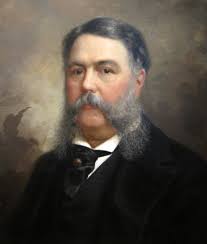
Chester A. Arthur
When looking specifically at the width-to-height ratio, Kennedy comes out a little better than Nixon, but notably better than Chester Arthur, a 19th century president who is typically rated by historians fairly low in the presidential ranking.
Important grains of salt
Whether involving athletes or politicians, anytime a single study in psychology makes the science news one needs to be very careful not to see the results as some major discovery that will change our view of nature. Alongside the shape of one’s face, other characteristics, an individual’s intelligence for example, or ability to cooperate also can have a major impact on his or her success.
In the case of politicians, political shrewdness and the mood of the electorate on various policy issues also makes an important difference. A case in point is Abraham Lincoln, who actually had a below average width-to-height facial ratio. Lincoln, however, was elected in an era before television. People knew of him based on his speeches that were published in newspapers, including speeches that he made during the famous Lincoln-Douglas debate. Also, the election of 1860 took place during a critical historical moment when voters were likely influence more by actual issues than personal aspects of particular politicians.
Predicting facial aging outside of Hollywood
Similarly, the ability to take apart details of a face and put them back together can be useful in predicting how people will look in the future when they’re old, or how they used to look as children. Several years ago, computer algorithm research led to a popular story featuring a picture of how teenage Holocaust victim Anne Frank would have looked at age 80 had she survived. That was just a simple 2-dimensional picture, however, and now looks crude when considering how advanced the technology has become today.
When considered in context of the growing understanding of facial genetics and advances in plastic/reconstructive surgery, the current computer algorithm capability raises the another interesting question: how far will people go to get a new face for themselves, or perhaps their offspring?
David Warmflash is an astrobiologist, physician and science writer. BIO. Follow him on Twitter @CosmicEvolution.




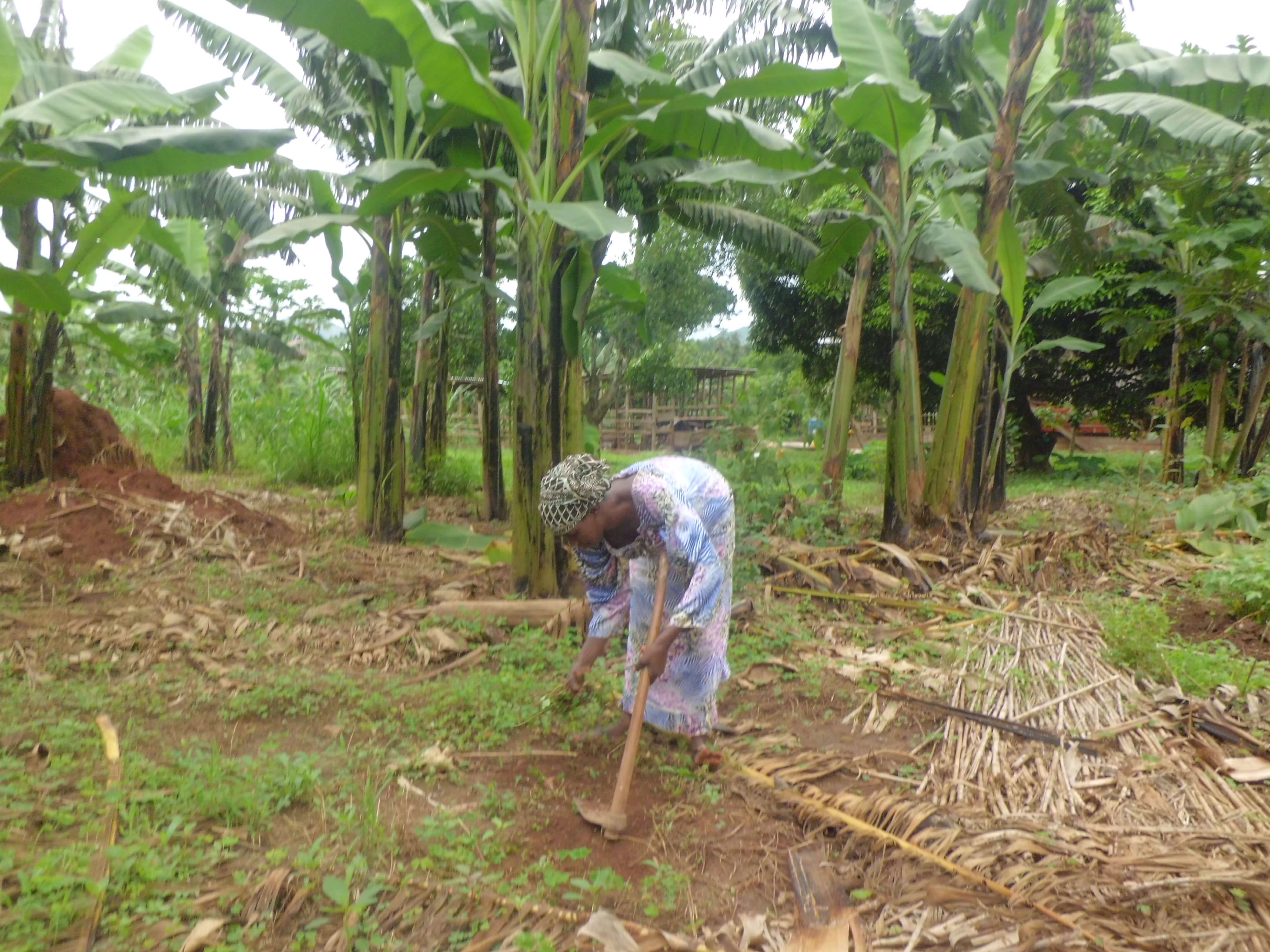











 Rockstrom, Lynas and others say that agriculture can play a large role in controlling climate change. But other trends, such as those focused on biodiversity, land use, and chemicals, raise questions about the feasibility of planetary boundary goals:
 Meanwhile, however we proceed, we need to produce enough food to support our existing and growing population. A UN Sustainable Development Goal, developed in 2015, is to eliminate hunger and poverty by 2030. This means that food production needs to increase by 50 percent worldwide, preferably before that date.