Studies of ancient DNA offer new insights into human migration between Siberia and North America

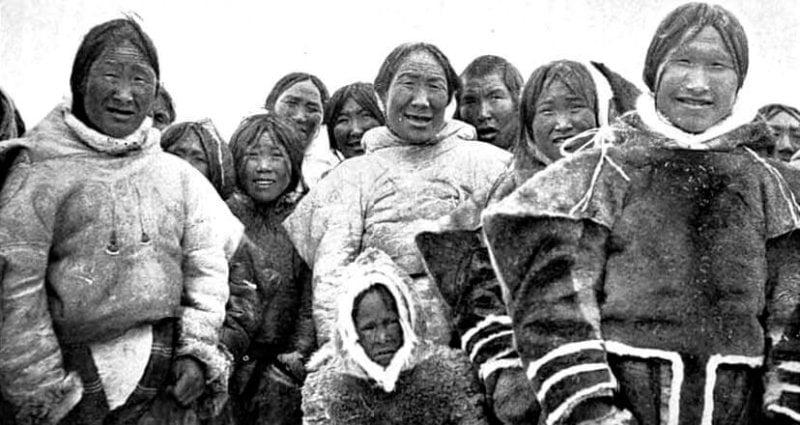
image from my life with the eskimo png x c
Image: John McDougall

There is plenty of evidence to suggest that humans migrated to the North American continent via Beringia, a land mass that once bridged the sea between what is now Siberia and Alaska. But exactly who crossed, or recrossed, and who survived as ancestors of today’s Native Americans has been a matter of long debate.

Two new DNA studies sourced from rare fossils on both sides of the Bering Strait help write new chapters in the stories of these prehistoric peoples. 

The first study delves into the genetics of North American peoples, the Paleo-Eskimos (some of the earliest people to populate the Arctic) and their descendants.

The findings reveal that both ancient and modern peoples in the American Arctic and Siberia inherited many of their genes from Paleo-Eskimos. Descendants of this ancient population include the Yup’ik, Inuit, Aleuts and Na-Dene language speakers.

The second study focused on Asian lineages.
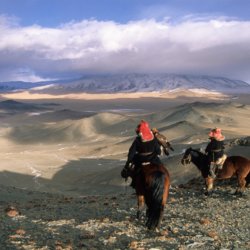
Researchers retrieved genetic samples for 34 individuals’ remains in Siberia, dating from 600 to 31,600 years old.

In this case, the Ancient North Siberians arrived in Beringia and likely mixed with migrating peoples from East Asia. Their population eventually gave rise to both the First Peoples of North America and other lineages that dispersed through Siberia.

Read full, original post: Ancient DNA Reveals Complex Story of Human Migration Between Siberia and North America


{{ reviewsTotal }}{{ options.labels.singularReviewCountLabel }}
{{ reviewsTotal }}{{ options.labels.pluralReviewCountLabel }}
{{ options.labels.newReviewButton }}
{{ userData.canReview.message }}

Related Articles

Infographic: Global regulatory and health research agencies on whether glyphosate causes cancer

Infographic: Global regulatory and health research agencies on whether glyphosate causes cancer

Does glyphosate—the world's most heavily-used herbicide—pose serious harm to humans? Is it carcinogenic? Those issues are of both legal and ...

Most Popular

Screenshot-2026-05-01-at-11.56.24-AM
‘Science moves forward when people are willing to think differently’: Memories of DNA maverick Craig Venter
Screenshot-2026-04-03-at-11.15.51-AM
Paraben panic: How a flawed study, media hype, and chemophobia convinced the public of the danger of one of the safest classes of preservatives
79d03212-2508-45d0-b427-8e9743ff6432
Viewpoint: The Casey Means hustle—Wellness woo opportunism dressed up as medical wisdom
Screenshot-PM-24
Viewpoint: The herbicide glyphosate isn’t perfect. Banning it would be far worse.
ChatGPT-Image-Mar-27-2026-11_27_05-AM
The myths of “process”: What science says about the “dangers’ of synthetic products and ultra-processed foods
ChatGPT-Image-Mar-10-2026-01_39_01-PM
Viewpoint—“Miracle molecule” debunked: Why acemannan supplements don’t work
ChatGPT-Image-Mar-3-2026-01_17_14-PM
MAHA wellness influencers deride proven anxiety medications, tout lifestyle fixes
ChatGPT-Image-Apr-30-2026-12_21_05-PM-2
The tech billionaires behind the immortality movement
ChatGPT Image Apr 30, 2026, 01_11_41 PM
Trump’s America First health aid cuts: Retrenchment has already hit global malaria, HIV, TB, and polio programs
ChatGPT-Image-May-1-2026-03_16_32-PM
Viewpoint: How ‘health care guru’ Joe Rogan circumvented the FDA’s skepticism on psychedelics
Screenshot-2026-04-12-135256
Bixonimania: The fake disease scam that AI swallowed whole
ChatGPT-Image-Apr-30-2026-05_00_48-PM
Wellness grifter physician turned wellness influencer out as surgeon general nominee
glp menu logo outlined

Get news on human & agricultural genetics and biotechnology delivered to your inbox.