No, plants don’t have ‘conscious awareness’, scientists argue

merlin b b a c d cc articlelarge
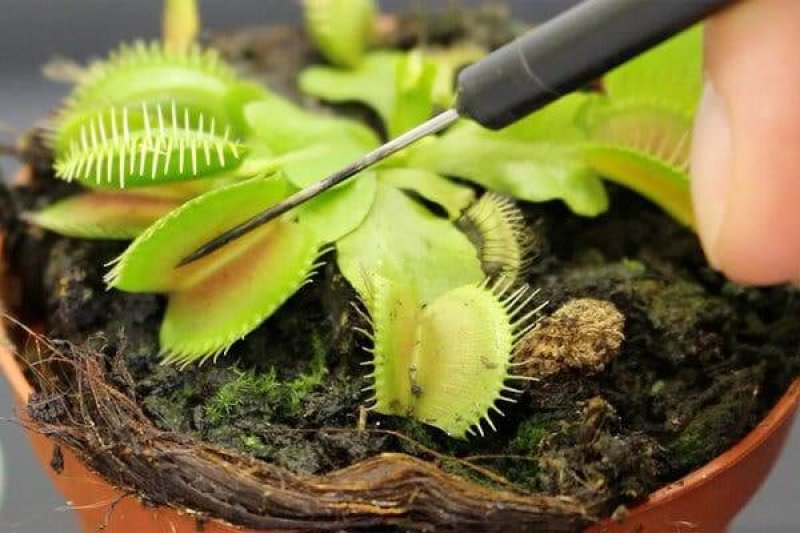
Image: Ken Yokawa et al.

The remarkable ability of plants to respond to their environment has led some scientists to believe it’s a sign of conscious awareness. A new opinion paper argues against this position, saying plants “neither possess nor require consciousness.”

Many of us take it for granted that plants, which lack a brain or central nervous system, wouldn’t have the capacity for conscious awareness. That’s not to suggest, however, that plants don’t exhibit intelligence. Plants seem to demonstrate a startling array of abilities, such as computation, communication, recognizing overcrowding, and mobilizing defenses.

“There is no evidence that plants require, and thus have evolved, energy-expensive mental faculties, such as consciousness, feelings, and intentionality, to survive or to reproduce,” the authors write in the study. “Plant development and behavior can be regarded as a series of [unintentional] consequences emerging from internal and external signaling networks that have evolved through natural selection.”

Nature has value, whether it’s a mammal, fish, bug, plant, or even a river. Just because something is not conscious doesn’t mean we’re justified in treating it poorly. At the same time, however, we need to recognize actual consciousness because it enables us to recognize the presence of pain, discomfort, and anguish. 

Read full, original post: Plants Are Definitely Not Conscious, Researchers Argue

{{ reviewsTotal }}{{ options.labels.singularReviewCountLabel }}
{{ reviewsTotal }}{{ options.labels.pluralReviewCountLabel }}
{{ options.labels.newReviewButton }}
{{ userData.canReview.message }}

Related Articles

Infographic: Global regulatory and health research agencies on whether glyphosate causes cancer

Infographic: Global regulatory and health research agencies on whether glyphosate causes cancer

Does glyphosate—the world's most heavily-used herbicide—pose serious harm to humans? Is it carcinogenic? Those issues are of both legal and ...

Most Popular

79d03212-2508-45d0-b427-8e9743ff6432
Viewpoint: The Casey Means hustle—Wellness woo opportunism dressed up as medical wisdom
Screenshot-PM-24
Viewpoint: The herbicide glyphosate isn’t perfect. Banning it would be far worse.
Screenshot-2026-05-01-at-11.56.24-AM
‘Science moves forward when people are willing to think differently’: Memories of DNA maverick Craig Venter
ChatGPT-Image-Mar-27-2026-11_27_05-AM
The myths of “process”: What science says about the “dangers’ of synthetic products and ultra-processed foods
Screenshot-2026-04-03-at-11.15.51-AM
Paraben panic: How a flawed study, media hype, and chemophobia convinced the public of the danger of one of the safest classes of preservatives
ChatGPT-Image-Mar-10-2026-01_39_01-PM
Viewpoint—“Miracle molecule” debunked: Why acemannan supplements don’t work
ChatGPT-Image-Mar-3-2026-01_17_14-PM
MAHA wellness influencers deride proven anxiety medications, tout lifestyle fixes
ChatGPT-Image-Apr-30-2026-12_21_05-PM-2
The tech billionaires behind the immortality movement
ChatGPT-Image-Apr-30-2026-05_00_48-PM
Wellness grifter physician turned wellness influencer out as surgeon general nominee
d-b
Blocked arteries, kidney stones, nausea, constipation, fatigue: Long list of health problems caused by too much vitamin D 
ChatGPT Image Apr 30, 2026, 01_11_41 PM
Trump’s America First health aid cuts: Retrenchment has already hit global malaria, HIV, TB, and polio programs
glp menu logo outlined

Get news on human & agricultural genetics and biotechnology delivered to your inbox.