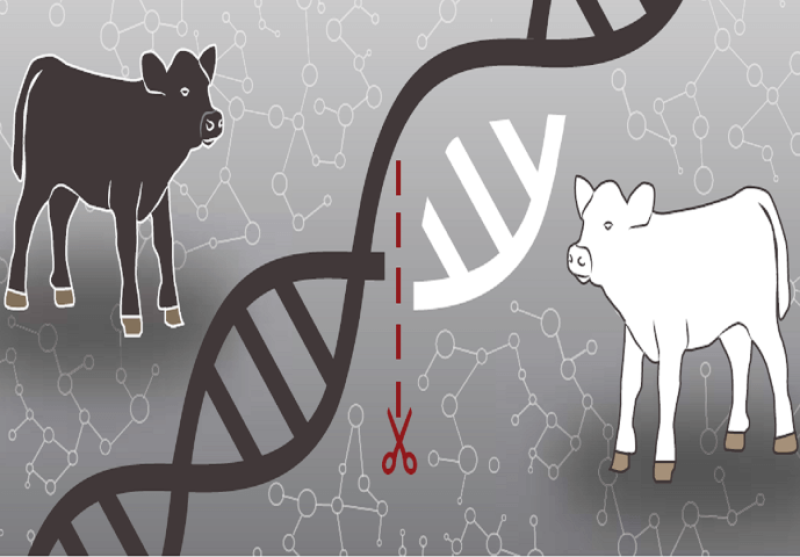
Bipartisan congressional group urges FDA to develop ‘workable’ GMO, CRISPR-edited animal rules

Gene Editing streched
Credit: Lori Hays

More than 20 House Energy & Commerce Committee members sent a letter to acting FDA Commissioner Ned Sharpless on [July 26] urging the agency to “develop a more appropriate, workable approach” to regulating animal biotech. The bipartisan group said the FDA’s regulatory framework threatens farmers and consumers’ access to such advances, while driving research “into the hands of foreign competitors.”

…. Under the current system, the agency regulates the DNA of intentionally altered animals as an “animal drug,” even if the genetic variations could have occurred naturally. The regulatory process can drag on for years, and it leaves the door open for other countries to impose trade barriers on U.S. livestock products.

“This burden is deterring many academics and developers from conducting research and will likely consolidate the industry to only the largest companies,” the lawmakers wrote in the letter. They cited potential benefits of animal gene-editing like limiting the spread of African swine fever or allowing livestock producers to curb their use of animal antibiotics.

The latest call for changing the GE rules comes amid a broader regulatory turf war: Farm groups have pushed for USDA to play a bigger role in regulating the burgeoning biotechnology ….
Read full, original article: Budget deal, interest rates on the move (Behind Paywall)

 

Related Articles

Infographic: Global regulatory and health research agencies on whether glyphosate causes cancer

Infographic: Global regulatory and health research agencies on whether glyphosate causes cancer

Does glyphosate—the world's most heavily-used herbicide—pose serious harm to humans? Is it carcinogenic? Those issues are of both legal and ...

Most Popular

ChatGPT-Image-Mar-10-2026-01_39_01-PM
Viewpoint—“Miracle molecule” debunked: Why acemannan supplements don’t work
ChatGPT-Image-Sep-10-2026-10_36_07-AM
Viewpoint: Even lousy scientific articles can shield authors when they hype dubious health claims and products
sorghum farmers in kenya FARMERS TREND
Here are all the ways CRISPR gene editing is transforming Africa’s staple crops—and there’s a lot more innovation to come
Screenshot-2026-10-01-at-11.21.27-AM
Vaccine hesitancy, like malaria, surges globally, topping 35% in some countries
ChatGPT-Image-Sep-30-2026-01_11_07-PM
How U.S. teamed with Russia to block global human AI weapons oversight
ChatGPT-Image-Sep-21-2026-03_15_09-PM
Viewpoint: Chipotle-inspired lesson: 10,000 sick customers suggest that processed foods can be safer than fresh ones
ChatGPT-Image-Sep-30-2026-01_25_34-PM
Blood tests for Alzheimer’s? The latest grifter, social media scam.
ChatGPT-Image-Sep-29-2026-12_16_42-PM
Social media influencers are driving food misinformation across Europe
generated-1790707585414
Facts & Fallacies podcast: America's health care system is broken. A doctor explains how to fix it
Screenshot-2026-09-28-at-1.16.38-PM
Defying public perceptions, U.S. cancer deaths plunged 35% since 1991
ChatGPT-Image-Sep-30-2026-01_38_36-PM
Viewpoint: Died “with measles” vs. died “from measles”: RFK, Jr.’s dangerously subversive word games
glp menu logo outlined

Get news on human & agricultural genetics and biotechnology delivered to your inbox.