Brexit could lead Britain to ‘ditching EU’s mindless precaution and innovation-crushing rules on GMO crops’

screen shot at pm

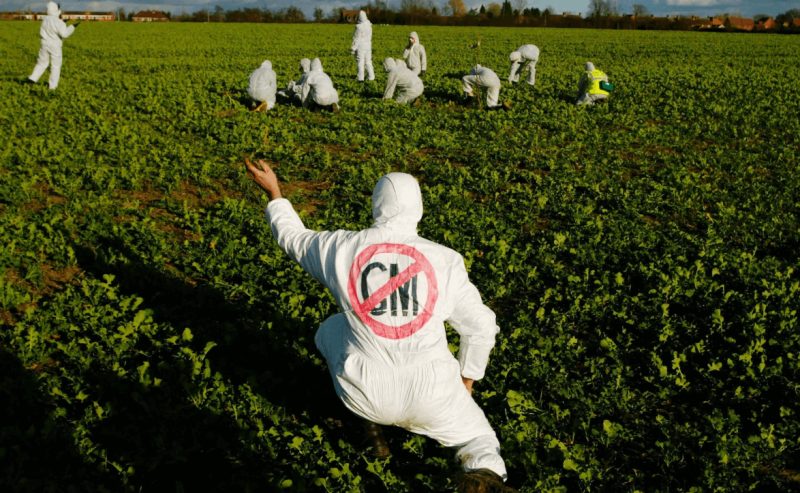
Britain was once the world leader in biotechnology for agriculture, but that all changed 20 years ago when the environmental movement led a successful campaign to scare people about it. The EU enthusiastically joined in the opposition to biotech crops, not by banning them but by strangling them in red tape. Since 2005, the EU has approved just one transgenic variety of crop for commercial use, a process that took 13 years, by which time the crop was outdated. Canada has approved 70 in that time.

In the CRISPR gene editing technique, the US has 872 patents, China 858 and the EU just 194.
The root of this Luddism is that … the EU adopted an extreme version of the “precautionary principle”, effectively stating that a new technique must prove itself to be safe, whereas the old technique it displaces need not do so. Thus organic farmers are free to use copper sulphate as an insecticide, even though it is described by the European Chemical Agency as “very toxic to aquatic life with long lasting effects, may cause cancer, may damage fertility or the unborn child… may cause damage to organs through prolonged or repeated exposure.” Why? Because it was invented in the 1930s. But they are not free to use the insect-killing Bt gene, even though this has proven harmless to human beings all over the rest of the world in nearly three decades of use.

Read full, original article: One of the biggest Brexit prizes will be ditching the EU’s mindless precaution and innovation-crushing rules


{{ reviewsTotal }}{{ options.labels.singularReviewCountLabel }}
{{ reviewsTotal }}{{ options.labels.pluralReviewCountLabel }}
{{ options.labels.newReviewButton }}
{{ userData.canReview.message }}

Related Articles

Infographic: Global regulatory and health research agencies on whether glyphosate causes cancer

Infographic: Global regulatory and health research agencies on whether glyphosate causes cancer

Does glyphosate—the world's most heavily-used herbicide—pose serious harm to humans? Is it carcinogenic? Those issues are of both legal and ...

Most Popular

Picture1
The FDA couldn’t find a vaccine safety crisis, so it buried its own research
Screenshot-2026-04-22-at-12.21.32-PM
Viewpoint: Why the retracted Monsanto glyphosate study doesn’t change the science—the world’s most popular herbicide is safe 
ChatGPT-Image-May-7-2026-12_32_36-PM
Viewpoint: The state of U.S. vaccine policy? Dismal nationally, but some states are stepping up.
placebo
Viewpoint — Alternative medicine and the placebo effect: Selling a reassuring illusion of health
_20250221_nib_rfk_trump
Viewpoint: 'Crisis of public trust': Autism support community shocked RFK continues to peddle false claims about the danger of vaccines
ChatGPT-Image-May-18-2026-01_45_05-PM-2
Newest hantavirus conspiracy: Online disinformation turns outbreak into latest ivermectin grift
Screenshot-2026-04-13-at-1.39.26-PM
Viewpoint: ‘Safer for children?’ Stonyfield yogurt under fire for deceptive organic marketing
Screenshot-2026-04-22-at-10.46.29-AM
Viewpoint: How to counter science disinformation? Science journalist offers 12 practical tips
the magic of mRNA
Viewpoint: Anti-vax fake ‘turbo cancer’ claims threaten cancer treatment breakthroughs
ChatGPT-Image-May-18-2026-12_06_18-PM-2
Defying death: The immortality movement goes mainstream
ChatGPT-Image-May-7-2026-12_16_37-PM-2
Viewpoint: Are cancer rates ‘skyrocketing’ as RFK, Jr. and MAHA claim? The evidence says mostly the opposite
artificial intelligence brain think illustration md
Viewpoint — Digital gods and human extinction: Will we be the first species ever to design our own descendants?
glp menu logo outlined

Get news on human & agricultural genetics and biotechnology delivered to your inbox.