Biotech industry fears Canada’s uncertain CRISPR crop rules will slow farming innovation

regulation
Credit: Shutterstock

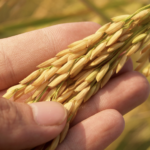
Canada is falling behind other jurisdictions in providing clarity on how it will regulate new crop varieties developed through gene editing techniques such as CRISPR, says CropLife Canada.

Japan’s consumer affairs agency recently decided it will not require special labelling for products created through the new breeding technique because it does not require the introduction of foreign DNA.

Japan joins a growing list of countries such as the United States, Australia, Argentina and Chile that do not plan to give any extra scrutiny to new traits resulting from gene editing.

Ian Affleck, vice-president of plant biotechnology with CropLife Canada, said crop developers and farmers are waiting for the Canadian government to provide guidance on how it will regulate what is rapidly becoming the backbone of plant breeding.

“There is a distinct need for that clarity in Canada right now so Canadian farmers don’t get disadvantaged,” he said.

Affleck said the government has indicated that Canada’s Plant with Novel Traits (PNT) regulations need to be renewed to encourage innovation in the sector.

Read full, original article: CropLife calls for clarity on gene-editing regulations

{{ reviewsTotal }}{{ options.labels.singularReviewCountLabel }}
{{ reviewsTotal }}{{ options.labels.pluralReviewCountLabel }}
{{ options.labels.noReviewsLabel }}
{{ options.labels.newReviewButton }}
{{ userData.canReview.message }}

Related Articles

Infographic: Global regulatory and health research agencies on whether glyphosate causes cancer

Infographic: Global regulatory and health research agencies on whether glyphosate causes cancer

Does glyphosate—the world's most heavily-used herbicide—pose serious harm to humans? Is it carcinogenic? Those issues are of both legal and ...

Most Popular

Picture1
Hiroshima at 81: America’s new nuclear bomb, a buried Iranian target, and a question no one wants to ask
ChatGPT Image Jul 29, 2026, 10_14_27 PM
After muzzling RFK, Jr. over autism-vaccine conspiracy theories, Trump defies aides to push scares again
ChatGPT Image Jul 29, 2026, 05_50_04 PM
Fear, science, and the law: If talc powder is unlikely to cause cancer and J&J was winning in court, why did it pay more than $5.5 billion to settle?
Screenshot 2026-07-29 at 1.03
Two food fads that have some merit: Chia seeds in almost everything and protein added to water
ChatGPT Image Jul 29, 2026, 06_26_01 PM 2
Facts & Fallacies podcast: Organic food myths make a comeback on Instagram, with Dr. Kevin Folta
ChatGPT-Image-Mar-10-2026-01_39_01-PM
Viewpoint—“Miracle molecule” debunked: Why acemannan supplements don’t work
Screenshot-2026-07-09-at-1.09.25-PM
Anti-vaccine myths rattle health care
Screenshot 2026-07-28 at 3.22
Hidden hunger: Climate change is speeding up the decline of important nutrients in our food
Screenshot 2026-07-28 at 3.43
Fat cat? GLP-1 weight loss drugs for animals are on the horizon
ChatGPT Image Jul 29, 2026, 10_31_48 PM
Bowing to Congressional pressure, Kennedy reverses himself and releases $600 million that helps developing countries buy and distribute vaccines
Screenshot 2026-07-22 at 1.38
Viewpoint: Are the U.S. and Europe headed towards a repudiation of agricultural biotechnology red tape?
organic scaled
Facts & Fallacies podcast: Organic food cuts pesticide exposure? A response to Dr. Rhonda Patrick
ChatGPT-Image-Jul-10-2026-09_42_12-AM-1
Peptides, patient autonomy, and the limits of medical freedom
glp menu logo outlined

Get news on human & agricultural genetics and biotechnology delivered to your inbox.