Though the election debate has centered around immigration, security and healthcare, the question of what direction the UK should take in terms of science policy persists. Will the UK manage to unleash the potential of its biotechnological sector and become a global advocate for innovation and consumer choice, or will it retain the EU’s antiquated approach?
In a manifesto released in November, the Conservatives pledged to take the path of “science-led, evidence-based policy” to improve the quality of food, agriculture and land management. Previously, Johnson had promised to liberate the UK’s biotech sector from the EU’s anti-genetic modification rules.

The laws that concern genetically modified organisms in the UK are primarily based on European Union regulations. For years, the EU has backpedaled on agricultural innovation, preventing European consumers from accessing biologically enhanced food. This can be seen in the very limited number of genetically modified crops authorized for cultivation in the EU, and a very cumbersome and expensive process of importing genetically modified crops from other countries. In July 2018, the European Court of Justice (ECJ) decided that gene-edited plants should be regulated the same way that genetically modified organisms are regulated, rendering them practically illegal and hindering innovation even further.
If the UK chooses to move away from these EU-based regulations as a consequence of Brexit, it could become a forward-looking global biotech powerhouse.
The first step would be to replace fear-based skepticism of genetic modification with an evidence-based, pro-innovation approach. Despite popular rhetoric, there is no substantial scientific evidence behind the alleged health and environmental risks ascribed to GM products. Abandoning these baseless assertions and creating and sustaining the conditions under which UK farmers could innovate, lower their production costs, and use fewer chemicals would be an enterprising move on the part of the UK government.
Approving GM pest-resistant crops, for instance, could save about £60 million ($79 million) a year in pesticide use in the UK. Moreover, £60 million in savings would mean more leeway for competitive food pricing in a country where prices at the grocery store are rising 2 percent annually.

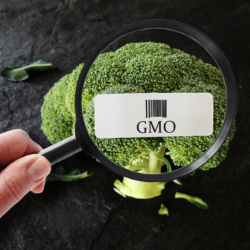


Once restrictive genetic modification laws are relaxed, it would be necessary to enable easy market access for GM foods. Under current EU legislation, products containing GMOs need to be labeled as such, and the requirements also apply to non-prepacked foods. It is legally established that such products (soy, for example) not only require written documentation but also should have an easily readable notice about their origin. No such rule exists with regards to foods that are 100% GMO-free, meaning there is explicit discrimination in place giving GMO-free food an unfair advantage on the market.
The EU’s strict regulations on the use of GM technology have been, first and foremost, harmful to consumers, depriving them access to innovative options such as Impossible Foods’ plant-based burger, which so closely mimics meat thanks to an ingredient produced with the help of genetically engineered yeast. Vastly popular in the US and now expanding to Asia, vegan burgers using plant-based substitutes for meat and dairy products, are absent from the European market due to backwards-looking anti-GM rules.
The United Kingdom should strive for the smartest regulation in the field of approval and market access to GMOs. Relaxed regulations on gene-editing methods like CRISPR-Cas9 could also attract massive investment and lead to wide-reaching biotech innovation in the UK.
Enabling gene-editing is an essential part of unleashing scientific innovation in the United Kingdom after Brexit. Skepticism of gene-editing centers around the potential but largely exaggerated adverse effects of the technology and ignores the astonishing benefits that could accrue to both farmers and consumers.
If the UK manages to replace the EU’s overly cautious biotech rules with a pro-innovation and prosperity-fostering regulatory scheme, it could become a true global biotech powerhouse. This is an ambitious, exciting, and above all, achievable future.
Maria Chaplia is a European Affairs Associate at the Consumer Choice Center. Visit her website and follow her on Twitter @mchapliaa