Video: Placebo effect or powerful antidepressant? Understanding the science of psychedelic microdosing

psillow header x microdosing x
Image: Oliver Swinburne

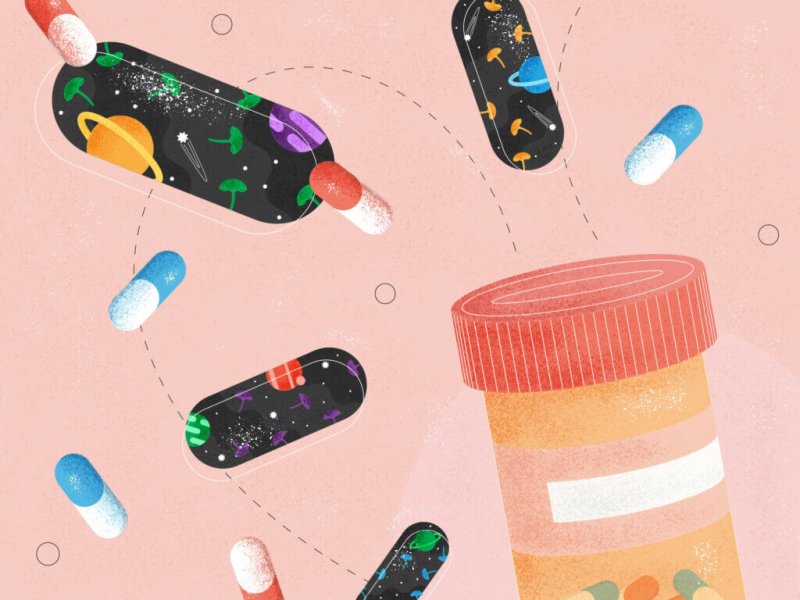
Individuals who microdose mushrooms, or those who microdose LSD, claim to experience an elevated mood, increased productivity, and a greater capacity for creativity – without suffering the hallucinogenic effects that many would consider debilitating during the normal course of a work day or a day of parenting.

There’s not just anecdotal evidence. Although more extensive studies are needed, some early research into the effects of microdosing on intelligence and creativity are demonstrating positive results, too.

On psychedelics, the brain’s synapses and neurons fire at a heightened rate. During this process, the brain forms new neurons and dendrites, creating newly formed pathways. In other words, psychedelics literally change the way you think, as they alter the structure of the brain’s synapses.

In patients suffering from mental illnesses like depression or anxiety disorders, psychedelics’ ability to form new neurons, dendrites, and synapses could potentially repair areas of the brain which might be damaged. As a result, patients might be able to achieve a more desirable state of consciousness by creating a new pattern or structure of thought.

Only research and time will tell if the reported benefits of microdosing are genuine or simply a product of the placebo effect and the innate power of the mind.


Read the original post

{{ reviewsTotal }}{{ options.labels.singularReviewCountLabel }}
{{ reviewsTotal }}{{ options.labels.pluralReviewCountLabel }}
{{ options.labels.newReviewButton }}
{{ userData.canReview.message }}

Related Articles

Infographic: Global regulatory and health research agencies on whether glyphosate causes cancer

Infographic: Global regulatory and health research agencies on whether glyphosate causes cancer

Does glyphosate—the world's most heavily-used herbicide—pose serious harm to humans? Is it carcinogenic? Those issues are of both legal and ...

Most Popular

Screenshot-2026-03-13-at-12.14.04-PM
The FDA wants to make many popular prescription drugs OTC—a great idea. Here’s why it’s unlikely to happen
Screenshot-2026-05-04-at-12.54.32-PM
How Utah became the country’s supplement capital  — and a haven for unregulated, ineffective and fake products
Screenshot-2026-04-20-at-2.26.27-PM
Viewpoint — Food-fear world: The latest activist scientists campaign: Cancer-causing additives
Screenshot-PM-24
Viewpoint: The herbicide glyphosate isn’t perfect. Banning it would be far worse.
images
The never-ending GMO debate: Pros and cons
Screenshot-2026-05-01-at-11.56.24-AM
‘Science moves forward when people are willing to think differently’: Memories of DNA maverick Craig Venter
ChatGPT-Image-May-1-2026-02_20_13-PM
How RFK, Jr.’s false vaccine claims are holding up $600 million to fight diseases in poor countries
Screenshot-2026-04-03-at-11.15.51-AM
Paraben panic: How a flawed study, media hype, and chemophobia convinced the public of the danger of one of the safest classes of preservatives
Screenshot-2026-04-12-135256
Bixonimania: The fake disease scam that AI swallowed whole
Screenshot-2026-04-30-at-2.19.37-PM
5 myths about summer dehydration that could damage your health — or even kill you
glp menu logo outlined

Get news on human & agricultural genetics and biotechnology delivered to your inbox.