States want tighter EPA restrictions on dicamba weedkillers after another year of ‘skyrocketing’ crop damage

unnamed file
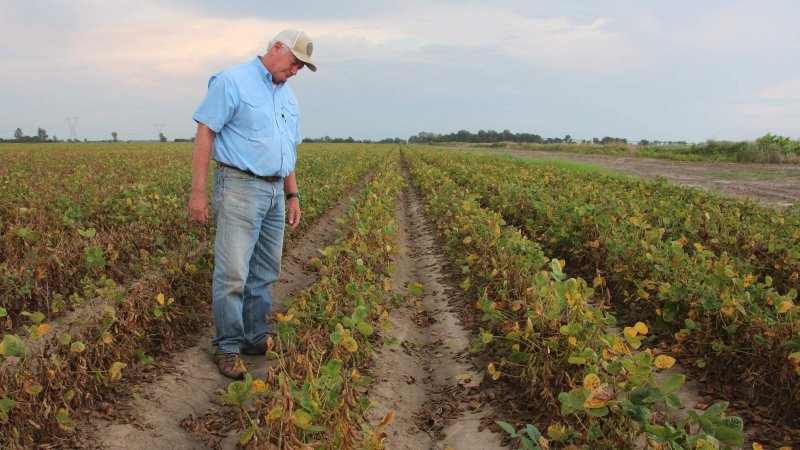
Arkansas farmer David Wildy inspects a field of soybeans that were damaged by dicamba in 2017. Credit: Dan Charles / NPR

On April 28, the Association of American Pesticide Control Officials (AAPCO) sent EPA a letter asking that the agency consider banning postemergence use of four dicamba herbicides — XtendiMax (Bayer), Engenia (BASF), FeXapan (Corteva) and Tavium (Syngenta) — when it makes its decision on their current registrations, set to expire in December 2020.

“…. [P]rohibiting OTT [over-the-top] applications could greatly reduce dicamba complaint investigations,” the letter stated.

Leo Reed, an Indiana pesticide regulator who serves as president of AAPCO, said the letter echoes one sent back in 2018 when EPA was mulling its first registration renewal of dicamba herbicides.

“I felt it incumbent upon the organization that EPA be aware of what our position is, and it’s not really changed much since 2018,” Reed told DTN. “Although our circumstances have — we’ve been hit with hundreds and hundreds more [dicamba] investigations and millions of dollars’ worth of expenses conducting those investigations.”

Injury complaints skyrocketed in the soybean-heavy states of Indiana and Illinois in 2019. Illinois is investigating an unprecedented 724 cases of alleged off-target injury, and Indiana also set a record with 178 complaints. Other states, such as Arkansas, Kansas, Iowa and Nebraska investigated similar levels of damage in both 2018 and 2019, despite dicamba label changes made by EPA in 2018.


Read the original post

{{ reviewsTotal }}{{ options.labels.singularReviewCountLabel }}
{{ reviewsTotal }}{{ options.labels.pluralReviewCountLabel }}
{{ options.labels.newReviewButton }}
{{ userData.canReview.message }}

Related Articles

Infographic: Global regulatory and health research agencies on whether glyphosate causes cancer

Infographic: Global regulatory and health research agencies on whether glyphosate causes cancer

Does glyphosate—the world's most heavily-used herbicide—pose serious harm to humans? Is it carcinogenic? Those issues are of both legal and ...

Most Popular

Screenshot-2026-05-01-at-11.56.24-AM
‘Science moves forward when people are willing to think differently’: Memories of DNA maverick Craig Venter
79d03212-2508-45d0-b427-8e9743ff6432
Viewpoint: The Casey Means hustle—Wellness woo opportunism dressed up as medical wisdom
Screenshot-2026-04-03-at-11.15.51-AM
Paraben panic: How a flawed study, media hype, and chemophobia convinced the public of the danger of one of the safest classes of preservatives
Screenshot-PM-24
Viewpoint: The herbicide glyphosate isn’t perfect. Banning it would be far worse.
ChatGPT-Image-Mar-27-2026-11_27_05-AM
The myths of “process”: What science says about the “dangers’ of synthetic products and ultra-processed foods
ChatGPT-Image-Mar-10-2026-01_39_01-PM
Viewpoint—“Miracle molecule” debunked: Why acemannan supplements don’t work
ChatGPT-Image-Mar-3-2026-01_17_14-PM
MAHA wellness influencers deride proven anxiety medications, tout lifestyle fixes
ChatGPT-Image-Apr-30-2026-12_21_05-PM-2
The tech billionaires behind the immortality movement
ChatGPT Image Apr 30, 2026, 01_11_41 PM
Trump’s America First health aid cuts: Retrenchment has already hit global malaria, HIV, TB, and polio programs
d-b
Blocked arteries, kidney stones, nausea, constipation, fatigue: Long list of health problems caused by too much vitamin D 
ChatGPT-Image-Apr-30-2026-05_00_48-PM
Wellness grifter physician turned wellness influencer out as surgeon general nominee
glp menu logo outlined

Get news on human & agricultural genetics and biotechnology delivered to your inbox.