Infographic: No more shots? Next-gen vaccine ‘sheets’ melt on the tongue

htb smqhlpxxxxbqxvxxq xxfxxxa

Two issues influencing the accessibility of many vaccines are their needs for constant refrigeration from production until use and for trained personnel to administer injections.

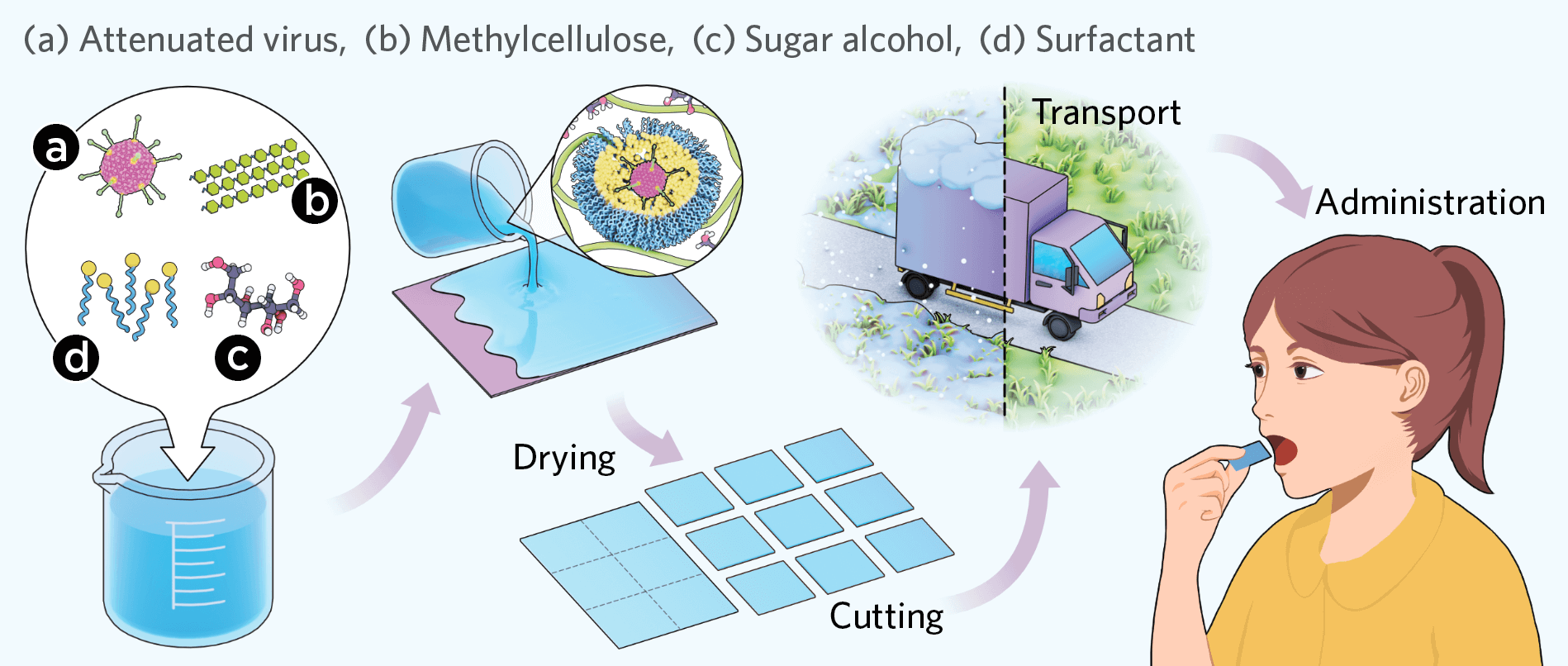
To overcome the issue of temperature sensitivity, some vaccines are freeze-dried, a process known as lyophilization, and transported as powders. But, says Maria Croyle, a pharmacologist at the University of Texas at Austin, in some instances the stability of lyophilized vaccines is less than idealโ€ฆ To avoid these barriers, Croyle and her team have developed a vaccine preparation technique that both imparts temperature stability and allows easy administration. The vaccineโ€”which for testing purposes is a live virusโ€”is first added to a thick mixture of methylcellulose, sugar alcohol, and a surfactant. Then, under sterile conditions, the mixture is poured into thin layers and air-dried. โ€œItโ€™s like how you would make taffy,โ€ Croyle says.

โ€ฆ

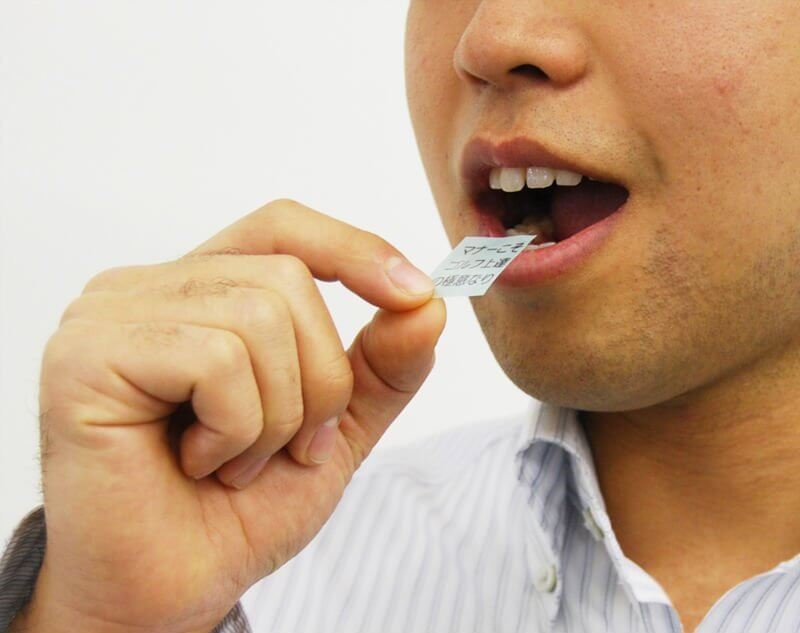
The result is a thin, peelable film containing live virus that can be stored at room temperature for up to three years and can maintain viability through repeated cycles of freezing and thawing. Subjects would then take the vaccine by allowing a small square of it to dissolve in their cheek or under the tongue.

In proof-of-principle experiments, Croyleโ€™s team prepared H1N1 influenza virus as a film and showed that its administration to the oral mucosa of mice induced antibody titers comparable to those obtained with standard intramuscular injection.

mo info image

Read the original post

{{ reviewsTotal }}{{ options.labels.singularReviewCountLabel }}
{{ reviewsTotal }}{{ options.labels.pluralReviewCountLabel }}
{{ options.labels.newReviewButton }}
{{ userData.canReview.message }}

Related Articles

Infographic: Global regulatory and health research agencies on whether glyphosate causes cancer

Infographic: Global regulatory and health research agencies on whether glyphosate causes cancer

Does glyphosateโ€”the world's most heavily-used herbicideโ€”pose serious harm to humans? Is it carcinogenic? Those issues are of both legal and ...

Most Popular

Screenshot-2026-04-13-at-1.39.26-PM
Viewpoint: โ€˜Safer for children?โ€™ Stonyfield yogurt under fire for deceptive organic marketing
Screenshot-2026-04-22-at-10.46.29-AM
Viewpoint: How to counter science disinformation? Science journalist offers 12 practical tips
ChatGPT-Image-May-7-2026-12_16_37-PM-2
Viewpoint: Are cancer rates โ€˜skyrocketingโ€™ as RFK, Jr. and MAHA claim? The evidence says mostly the opposite
Picture1-14
When superbugs threaten vulnerable children: Can AI help solve antibiotic resistance?
Screenshot-2026-04-23-at-11.00.36-AM
Regulators' dilemma: Thalidomide, Metformin, and the cost of getting drug approvals wrong
ChatGPT-Image-May-12-2026-08_39_41-PM
GLP podcast: Big Pharma, Big Ag, Big Foodโ€”health harming industries or life-saving innovators?
Picture1-1
Cooling the planet with balloons: Could a geoengineering gamble slow global warming?
png-pill-omega-Supp-fish-oil
Millions take omega-3 fish oil for brain health. New research suggests it may do the opposite.
glp menu logo outlined

Get news on human & agricultural genetics and biotechnology delivered to your inbox.