Coronavirus mortality rate averages around 1 percent

im
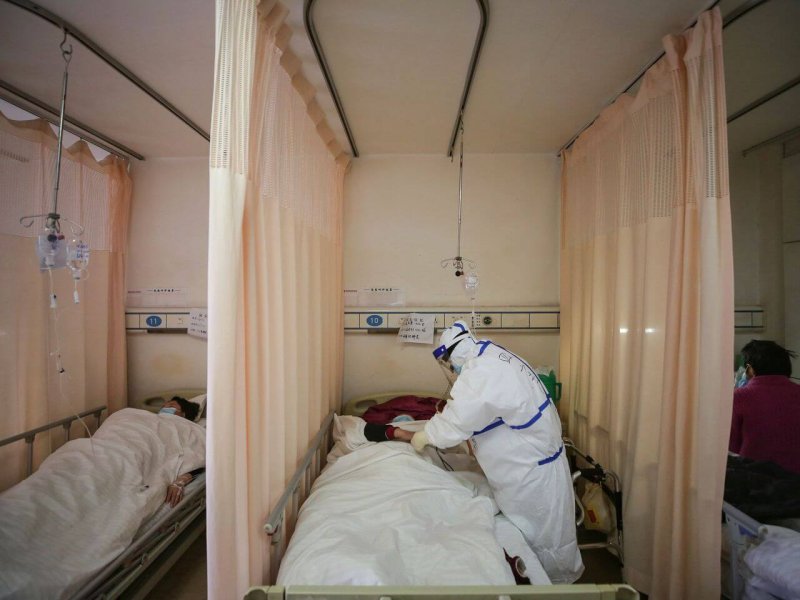
Credit: Agence France-Presse/Getty Images

Researchers, initially analyzing data from outbreaks on cruise ships and more recently from surveys of thousands of people in virus hot spots, have now conducted dozens of studies to calculate the infection fatality rate of Covid-19.

That research—examining deaths out of the total number of infections, which includes unreported cases—suggests that Covid-19 kills from around 0.3% to 1.5% of people infected. Most studies put the rate between 0.5% and 1.0%, meaning that for every 1,000 people who get infected, from five to 10 would die on average.

The estimates suggest the new coronavirus is deadlier than the seasonal flu, though not as lethal as Ebola and other infectious diseases that have emerged in recent years. The coronavirus is killing more people than the deadlier diseases, however, in part because it is more infectious.

Follow the latest news and policy debates on sustainable agriculture, biomedicine, and other ‘disruptive’ innovations. Subscribe to our newsletter.

More than 14.7 million people have been infected with SARS-CoV-2 across the globe, and over 609,000 people have died, with nearly a quarter of the fatalities in the U.S., according to data compiled by Johns Hopkins University. That means that among confirmed global cases, roughly 4.2% of those people died.

The percentage of deaths among people with confirmed infections is higher than the percentage of deaths among infections overall, researchers say, because so many milder and asymptomatic Covid-19 cases go missed.
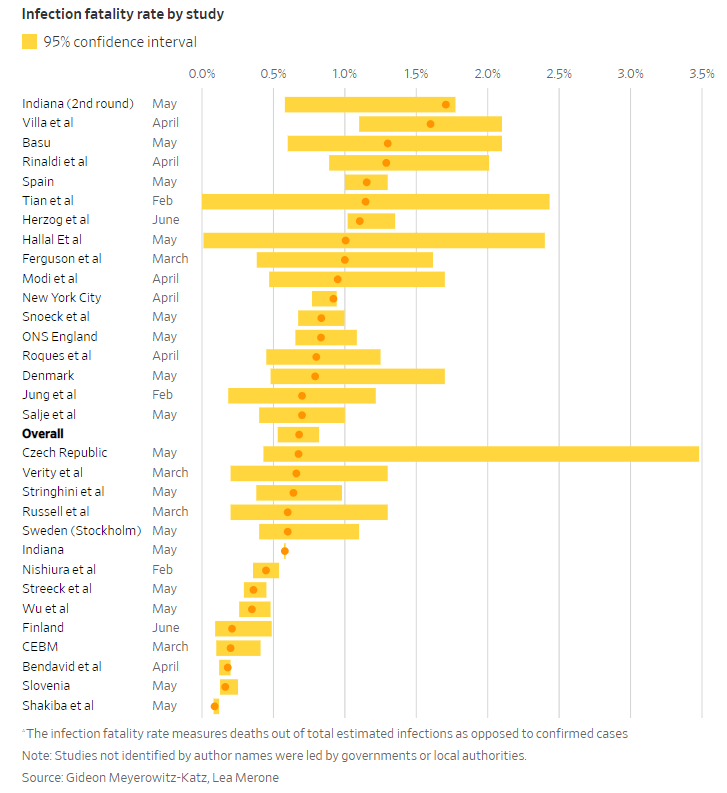

infection fatality rate

Read the original post

{{ reviewsTotal }}{{ options.labels.singularReviewCountLabel }}
{{ reviewsTotal }}{{ options.labels.pluralReviewCountLabel }}
{{ options.labels.newReviewButton }}
{{ userData.canReview.message }}

Related Articles

Infographic: Global regulatory and health research agencies on whether glyphosate causes cancer

Infographic: Global regulatory and health research agencies on whether glyphosate causes cancer

Does glyphosate—the world's most heavily-used herbicide—pose serious harm to humans? Is it carcinogenic? Those issues are of both legal and ...

Most Popular

Screenshot-PM-24
Viewpoint: The herbicide glyphosate isn’t perfect. Banning it would be far worse.
ChatGPT-Image-Mar-27-2026-11_27_05-AM
The myths of “process”: What science says about the “dangers’ of synthetic products and ultra-processed foods
ChatGPT-Image-Mar-3-2026-01_17_14-PM
MAHA wellness influencers deride proven anxiety medications, tout lifestyle fixes
d-b
Blocked arteries, kidney stones, nausea, constipation, fatigue: Long list of health problems caused by too much vitamin D 
Screenshot-2026-04-29-at-11.31.42-AM
Dad brains: Only women undergo bodily changes during and after childbirth? Think again.
ChatGPT-Image-Apr-28-2026-12_46_14-PM-2
Kennedy has quietly stopped touting problematic raw milk. Health concerns aren’t why
circular-bioeconomy-should-focus-on-sustainable-wellbeing
GLP podcast: What's wrong with 'doomsday' environmentalism? It's false.
ChatGPT-Image-Apr-29-2026-11_04_44-AM-2
Anti-vaccine activists are now the majority in RFK, Jr.’s CDC Vaccine Panel
glp menu logo outlined

Get news on human & agricultural genetics and biotechnology delivered to your inbox.