“The COVID situation is significantly different and more complex than anything that we have had to deal with in the past,” says Kris Ehresmann, an infectious-disease director at the Minnesota Department of Health.
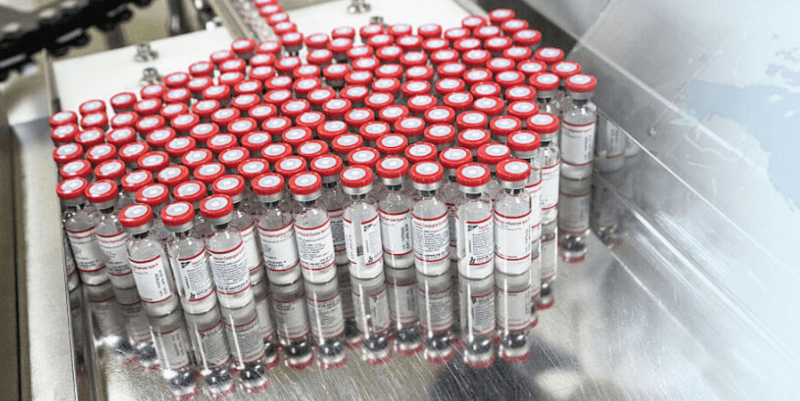
The two leading vaccine candidates in the U.S.—one developed by Moderna, the other by a collaboration between Pfizer and the German company BioNTech—have progressed so quickly to clinical trials precisely because they are the fastest to make and manufacture. They rely on a novel vaccine technology whose advantage is speed, but whose downside is extreme physical fragility. These vaccines have to be frozen—in Pfizer/BioNTech’s case, at an ultracold –94 degrees Fahrenheit, colder than most freezers—which will limit how and where they can be shipped.
The ways these vaccines are formulated (without added preservatives) and packaged (in vials that hold doses for multiple people) also make them easier to develop and manufacture quickly but harder to administer on the ground.

In other words, speed is coming at the expense of convenience. “For this first generation of vaccines, we won’t trade off safety. We don’t want to trade off effectiveness,” says Kelly Moore, the associate director of immunization education at the Immunization Action Coalition. So instead, the U.S. is planning for a vaccine that requires brutally complicated logistics.