Reliable, at-home, 11 minute COVID test green lighted by FDA, available within months

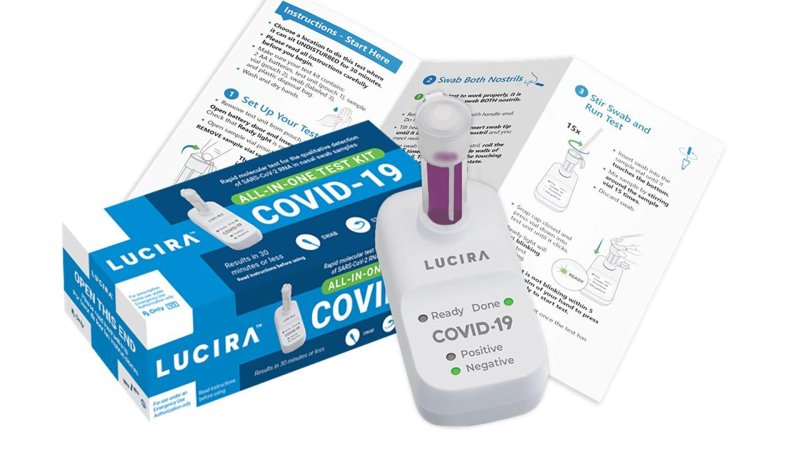
Credit: Lucira Health

Many tests take days to produce results, require leaving quarantine to visit a medical professional, or — most likely — both.

That could change with Lucira Health’s “All-In-One” test kit, which on [November 17] became the first rapid, at-home test authorized by the Food and Drug Administration.

The California biotechnology company’s single-use home test kit, which it expects to sell for less than $50, requires a prescription from a doctor. As winter approaches and infections have surged in most states, the at-home test will allow people who are possibly infected to not have to go into clinics or hospitals to get tested.

Follow the latest news and policy debates on sustainable agriculture, biomedicine, and other ‘disruptive’ innovations. Subscribe to our newsletter.

Unlike rapid antigen tests, which experts warn can be unreliable, the kit will test genetic material in a method similar to the laboratory tests that have become the standard for detecting the virus. After swirling the nasal specimen into a solution, home-testers plug the vial into a portable, battery-operated device, which uses a light to indicate the test result within 30 minutes. A positive test result can be generated in as few as 11 minutes.

The test is expected to be available to patients of Northern California’s Sutter Health and South Florida’s Cleveland Clinic “in the near future” but not reach the national market until early spring 2021.


Read the original post

{{ reviewsTotal }}{{ options.labels.singularReviewCountLabel }}
{{ reviewsTotal }}{{ options.labels.pluralReviewCountLabel }}
{{ options.labels.newReviewButton }}
{{ userData.canReview.message }}

Related Articles

Infographic: Global regulatory and health research agencies on whether glyphosate causes cancer

Infographic: Global regulatory and health research agencies on whether glyphosate causes cancer

Does glyphosate—the world's most heavily-used herbicide—pose serious harm to humans? Is it carcinogenic? Those issues are of both legal and ...

Most Popular

Screenshot-2026-03-13-at-12.14.04-PM
The FDA wants to make many popular prescription drugs OTC—a great idea. Here’s why it’s unlikely to happen
Screenshot-2026-04-20-at-2.26.27-PM
Viewpoint — Food-fear world: The latest activist scientists campaign: Cancer-causing additives
Screenshot-2026-05-04-at-12.54.32-PM
How Utah became the country’s supplement capital  — and a haven for unregulated, ineffective and fake products
Screenshot-PM-24
Viewpoint: The herbicide glyphosate isn’t perfect. Banning it would be far worse.
images
The never-ending GMO debate: Pros and cons
Screenshot-2026-05-01-at-11.56.24-AM
‘Science moves forward when people are willing to think differently’: Memories of DNA maverick Craig Venter
Screenshot-2026-04-30-at-2.19.37-PM
5 myths about summer dehydration that could damage your health — or even kill you
Screenshot-2026-04-03-at-11.15.51-AM
Paraben panic: How a flawed study, media hype, and chemophobia convinced the public of the danger of one of the safest classes of preservatives
79d03212-2508-45d0-b427-8e9743ff6432
Viewpoint: The Casey Means hustle—Wellness woo opportunism dressed up as medical wisdom
bigstock opioids on chalkboard with rol
GLP podcast: 'Safe injection sites': enabling drug addiction or saving lives?
glp menu logo outlined

Get news on human & agricultural genetics and biotechnology delivered to your inbox.