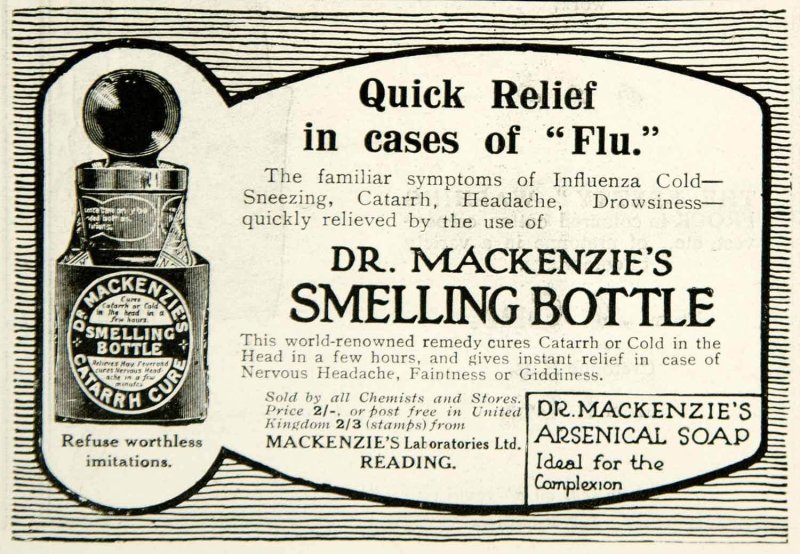

More than a century [after the Spanish influenza outbreak of 1918], not much has changed. Ads promoting unproven miracle cures — including intravenous drips, ozone therapy and immunity-boosting music — have targeted people trying to avoid the coronavirus pandemic.
“History is repeating itself,” said Roi Mandel, the head of research at the ancestry website MyHeritage, which recently unearthed and compared pandemic ads published generations apart. “So many things are exactly the same, even 102 years later, even after science has made such huge progress.”
This year, a company with a California address peddled products containing kratom, an herbal extract that has drawn concern from regulators and health experts, with the promise that it might “keep the coronavirus at bay.” The Food and Drug Administration sent the company a warning in May.
The claims are an echo from 1918, when an ad for Dr. Pierce’s Pleasant Pellets promised that the pills — made from “May-apple, leaves of aloe, jalap” — offered protection “against the deadly attack of the Spanish Influenza.”



“Human beings haven’t changed all that much,” said Jason P. Chambers, an associate professor of advertising at the University of Illinois. “We’d like to believe we’re smarter, that we’d be able to spot the lies, but the ability of advertising to maintain its veneer of believability has only become more sophisticated over time.”