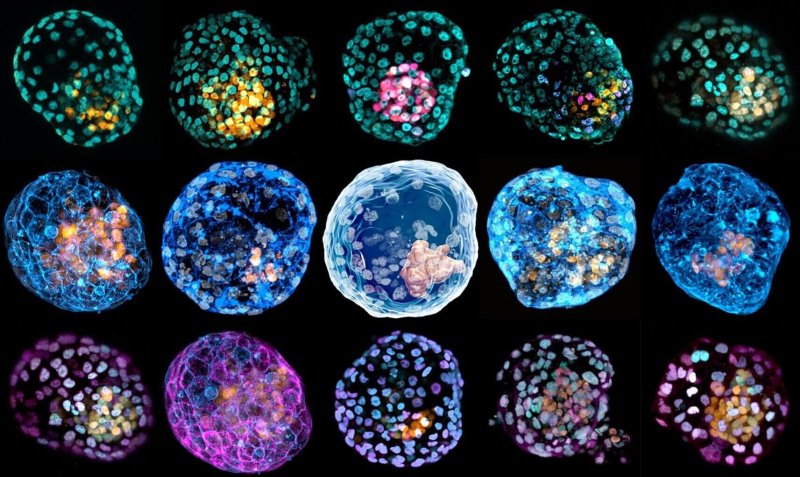
Opening the door to understanding infertility: Skin cells reprogrammed into a model human embryo

Credit: Monash University

[Scientists have made a] significant breakthrough for the future study of early human development and infertility. To date, the only way to study these first days has been through the use of difficult to obtain, and scarce, blastocysts obtained from IVF procedures.

The [Jose] Polo Lab succeeded in generating the iBlastoids using a technique called “nuclear reprogramming” which allowed them to change the cellular identity of human skin cells that – when placed in a 3D ‘jelly’ scaffold known as an extracellular matrix – organized into blastocyst-like structures which they named iBlastoids.

Mis- and disinformation are distorting science and public policy. Subscribe to our Daily and Weekly Digests for incisive coverage of ‘disruptive’ innovations in AI, agricultural biotechnology, food, chemicals, nuclear energy, vaccines, and other disruptive innovations.

Infertility and miscarriage can be caused by early-stage human embryos failing to implant or failing to progress at the time of implantation… These ‘silent’ miscarriages are likely to represent a significant proportion of the total number of miscarriages that occur and, according to Professor Polo, the generation of iBlastoids provides a model system that will enable insights into this early stage of pregnancy.
Professor Ross Coppel, the Deputy Dean Research of the Faculty of Medicine at Monash University, noted that this discovery will allow the development of improved methods for IVF, the development of protocols for gene therapy of embryos and better and more informative screening methods for new drugs.


Read the original post

Related Articles

Infographic: Global regulatory and health research agencies on whether glyphosate causes cancer

Infographic: Global regulatory and health research agencies on whether glyphosate causes cancer

Does glyphosate—the world's most heavily-used herbicide—pose serious harm to humans? Is it carcinogenic? Those issues are of both legal and ...

Most Popular

ChatGPT-Image-Mar-10-2026-01_39_01-PM
Viewpoint—“Miracle molecule” debunked: Why acemannan supplements don’t work
Screenshot-2026-09-17-at-1.07.08-PM
'We are dangerously addicted to antidepressants': Should we heed RFK Jr.’s sobering warning?
ChatGPT-Image-Sep-2-2026-02_03_32-PM
How much of a problem is AI’s water use?
ChatGPT-Image-Sep-22-2026-10_32_46-AM
There has been a slew of recent reports of food recalls and foodborne outbreaks. Do we face an escalating problem?
Screenshot-2026-09-03-at-10.51.20-AM
Viewpoint: Why do online health lies outlive the evidence that debunks them? Read "Everyone Else Is Lying to You"
Screenshot-2026-09-10-at-12.20.19-PM
'Jet fuel didn't melt the steel': 9/11 conspiracy theories debunked
ChatGPT-Image-Sep-10-2026-01_44_53-PM
Viewpoint: Why medical and health nonsense spreads so casually on pop culture media
eaeb d b
Viewpoint: The organic food industry is a $180 billion marketing fraud
Screenshot-2026-09-22-at-11.40.28-AM
After Idaho criminalized abortion providers in 2022, one-third of obstetricians fled. Health care advocates are making rural health the case for repealing the ban
glp menu logo outlined

Get news on human & agricultural genetics and biotechnology delivered to your inbox.