
When irrigation water is introduced to a field, plants absorb the water, or it evaporates into the atmosphere. But the solutes in the water (like salt) remain in the soil. Year after year, the solids continue to build up.
But saltification can also happen naturally, and due to climate change. Events like storm surges, natural disasters, a rising water table, and sea-level rise can cause salt to contaminate coastal areas, as salt water enters the fields.
…
A small but growing group of people believe that the problem of hyper-salty lands can be solved with more salt — or rather, more saltwater — a practically infinite resource. With floating farms, genetically modified crops, and introducing new crops as edibles, we may have a chance at turning the problem into an opportunity.



…
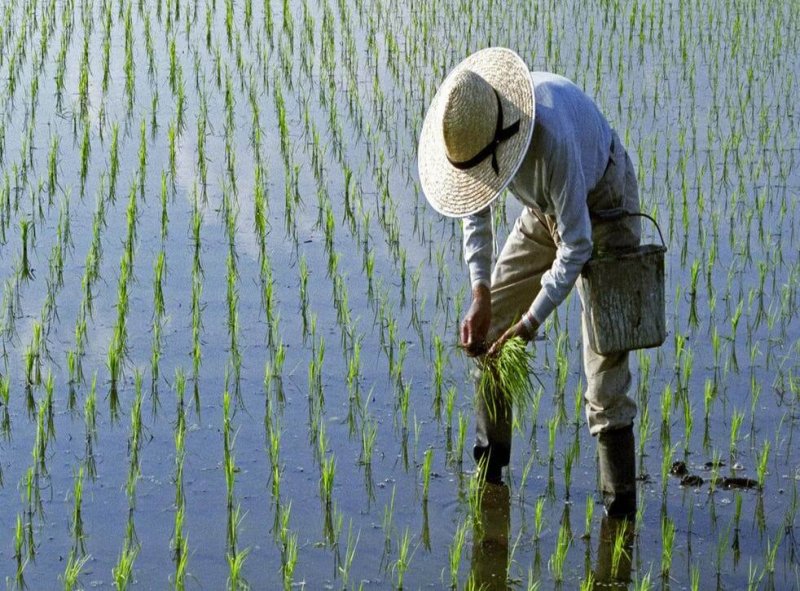
[Researcher Luke] Young says that many freshwater crops, like rice, hint at a salty evolutionary history. They contain a common set of eight genes that enable many plants to thrive in saline environments. Plants like seagrass or mangroves have these genes — and so does rice. Only, in rice, the genes are “turned off.” Young and [Rory] Hornby plan to use CRISPR to turn them on.