Viewpoint: USDA poised to spend $300 million to help farmers transition to organic to shore up supply chains. Here’s why that’s a bad idea for food security and the environment

Credit: Foundation for Economic Education
[The USDA] plans on spending $300 million to help farmers transition to organic production.

What??

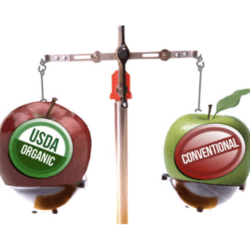
USDA Secretary Tom Vilsack defended this funding for organic farmers by suggesting it would somehow make farmers more profitable. In theory, organic products sell for a higher price. Vilsack believes that means farmers will see a larger portion of the sale price.

Mis- and disinformation are distorting science and public policy. Subscribe to our Daily and Weekly Digests for incisive coverage of ‘disruptive’ innovations in AI, agricultural biotechnology, food, chemicals, nuclear energy, vaccines, and other disruptive innovations.

That’s a mighty big assumption that, to my knowledge, isn’t supported by any research or other evidence. Even if organic products fetch a higher retail price, organic yields are significantly lower than conventionally grown food. If you have less to sell, the price has to be higher to make the same money. And if the USDA successfully adds hundreds of millions of dollars in support, all those new organic farms will flood the market and drive prices down anyway.

…
Instead we need a food system that is abundant, adaptive, responsive, and progressive. Not one stuck in a marketing scheme that arbitrarily decides what’s “synthetic” and what’s “natural.” We can achieve that by opening up new markets, reducing the cost of modern equipment and technology, stabilizing our supplies of pesticides and fertilizers, and investing in new research.

Funding transitioning farmers doesn’t invest in the right things. In fact, it’s so wildly random that it seems more like a pay off to special interests than a solution to our challenges.


This is an excerpt. Read the original post here

Related Articles

Infographic: Global regulatory and health research agencies on whether glyphosate causes cancer

Infographic: Global regulatory and health research agencies on whether glyphosate causes cancer

Does glyphosate—the world's most heavily-used herbicide—pose serious harm to humans? Is it carcinogenic? Those issues are of both legal and ...

Most Popular

Glossy Plastic Bag of Tokens and Labels
Viewpoint: How CNN got played by environmental activists pushing a plastics scare and litigation agenda
Neon Syringe Portrait with BPC-157
Viewpoint: Peptides and medical freedom: The MAHA obsession that can damage your health
Screenshot-2026-10-21-at-11.30.51-AM
Viewpoint: Yes, our food system stinks, but the attack of ultra-processed foods is often misplaced
Screenshot-2026-10-30-at-11.36.40-AM
An Earth-saving benefit of global warming?: How fossil fuel-burning humans stopped the looming Ice Age
ChatGPT-Image-Mar-10-2026-01_39_01-PM
Viewpoint—“Miracle molecule” debunked: Why acemannan supplements don’t work
Robots in a Futuristic Conference Meeting
Helpful until we’re helpless? Researchers warn AI is gradually eroding human control
Screenshot 2026-07-29 at 10.40
The COVID vaccine turbo cancer scare is back. Science still proves it’s wrong.
Screenshot-2026-10-30-at-11.20.30-AM
‘Silent killer’: Hepatitis B could surge under Trump–RFK Jr. rollback of newborn vaccine recommendations
Screenshot 2026-10-27 at 10.32
“Do your own research”: What Medicare’s annual open enrollment circus teaches us about the seductive trap of DIY health and science
Patriotic Flag in a Glass Flask
Viewpoint: America Last: From the Pentagon to universities, Trump’s corruption of science could inflict lasting, irreversible damage on U.S. research
Screenshot-2026-10-29-at-10.31.49-AM
Solar engineering to cool the planet might well work. Could it touch off a geoengineering arms race?
Screenshot 2026-10-20 at 1.37
Race against food rot: How AI and gene editing could slash fruit and vegetable waste
glp menu logo outlined

Get news on human & agricultural genetics and biotechnology delivered to your inbox.