
Viewpoint: Will Biden and the ‘progressive left’ muster independence to embrace agricultural gene editing and its carbon-capture potential?

Credit: Elcano
Credit: Elcano

Carbon capture has often been touted as an alternative to dealing with climate change that does not involve laying waste to the fossil fuels industry with the attendant misery inflicted on consumers. Whether it is developing power plants that capture carbon dioxide instead of belching it into the atmosphere or finding ways to suck carbon dioxide out of the air, such as by planting trees or through more exotic methods such as Project Vesta’s “green sand” approach , carbon capture holds a great deal of promise.

MIT Technology Review recently related another carbon capture project that recruits agriculture for the task of fighting climate change.

Follow the latest news and policy debates on sustainable agriculture, biomedicine, and other ‘disruptive’ innovations. Subscribe to our newsletter.

In 2023, seeing many of his liberal allies involuntarily retired to the private sector, Biden could declare, “The era of the Green New Deal is over.” Then he could rescind his executive orders that have placed a boot on the neck of the fossil fuel companies and pivot toward encouraging carbon capture, including the idea of turning food crops into carbon sinks.

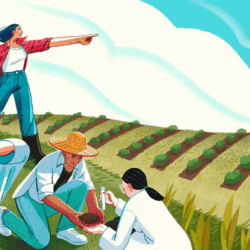
The progressive Left will not be happy with anything that does not destroy the fossil fuel industry. The anti-GMO crowd will be especially irate. But Biden, because of his advanced age, is not likely to run for president successfully again. That fact will be oddly liberating to a man who has sought the presidency for decades only to acquire it in the winter of his life.


This is an excerpt. Read the original post here

{{ reviewsTotal }}{{ options.labels.singularReviewCountLabel }}
{{ reviewsTotal }}{{ options.labels.pluralReviewCountLabel }}
{{ options.labels.newReviewButton }}
{{ userData.canReview.message }}

Related Articles

Infographic: Global regulatory and health research agencies on whether glyphosate causes cancer

Infographic: Global regulatory and health research agencies on whether glyphosate causes cancer

Does glyphosate—the world's most heavily-used herbicide—pose serious harm to humans? Is it carcinogenic? Those issues are of both legal and ...

Most Popular

ChatGPT-Image-Apr-20-2026-11_17_18-AM-2
10,000 scientists gone: Trump’s cuts create an unprecedented brain drain
ChatGPT-Image-Apr-23-2026-09_20_20-PM
Kennedy’s CDC blocks publication of study that shows vaccines reduce hospitalizations by 50%, then misrepresents why
Screenshot-2026-04-13-at-3.54.04-PM
AI disinformation stress test: Challenges and response strategies
ChatGPT-Image-Feb-16-2026-01_04_32-PM
Raw milk myth wake-up call
ChatGPT-Image-Apr-22-2026-04_31_20-PM
‘Irresponsible decision’? On mandatory military flu shots, Hegseth chooses ‘freedom’ over health
images
The never-ending GMO debate: Pros and cons
ChatGPT-Image-Mar-11-2026-11_58_46-AM
The Trump administration has run out more than 4,000 National Institutes of Health employees. Here are the consequences
Screenshot-2026-04-22-at-4.10.32-PM
Viewpoint — ‘Completely unethical’: RFK, Jr.’s medical ignorance deprives melanoma cancer-sufferers of a life-saving therapy
ChatGPT-Image-Apr-17-2026-03_30_52-PM
Food labels, decoded: What they really mean
Screenshot-2026-04-15-at-1.22.58-PM
Anti-biotechnology activists smear hybrid wheat breakthrough that could surge yields in poorer countries
glp menu logo outlined

Get news on human & agricultural genetics and biotechnology delivered to your inbox.