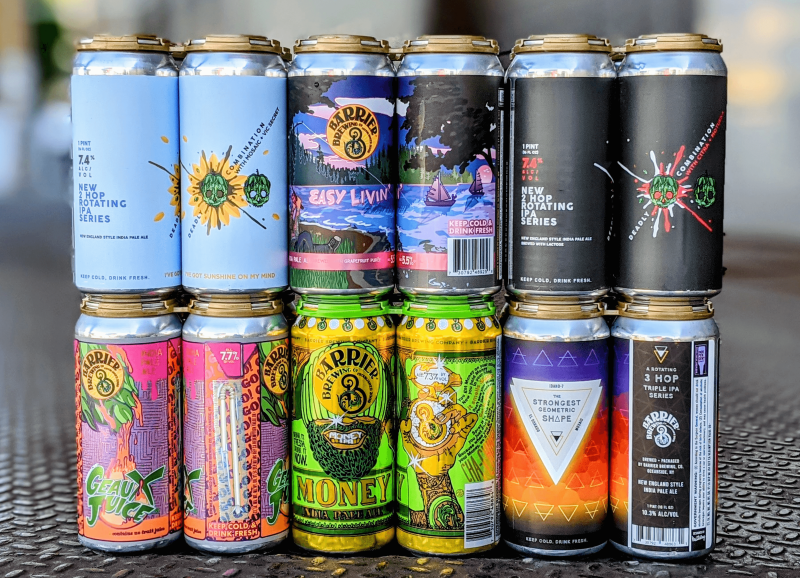
‘Mind-boggling’ fruity craft beers produced with GMO yeast finds rapturous fans

Credit: Day One Distribution

In the world of craft brewing, as in many other food and drink sectors, genetically modified organisms tend to engender fierce debate, and many brewers remain reluctant to use the strains from the 4-year-old startup called Berkeley Yeast. But about 250 breweries throughout the country have used the company’s genetically modified strains, and some insiders herald its scientific breakthroughs as game changers for the beer industry.

Follow the latest news and policy debates on sustainable agriculture, biomedicine, and other ‘disruptive’ innovations. Subscribe to our newsletter.

The company sells a range of yeast strains, each offering a different outcome. One strain results in beers with citrusy and floral notes. Another eliminates diacetyl, a pesky off flavor that plagues some hoppy beers. Another can produce a sour beer in a fraction of the time it normally takes.

By far the most popular product is Tropics, whose passion fruit and guava notes have entranced legions of brewers, including those at local favorites like Temescal Brewing, Alvarado Street Brewing and Cellarmaker Brewing. The strain is becoming some breweries’ house yeast; Tropics-fermented beers are winning awards in competitions such as the Great American Beer Festival.


The flavors produced by Tropics are “just on a whole new level,” said Alvarado Street brewing director J.C. Hill. “It’s mind-boggling how these flavors could be created with no fruit.”


This is an excerpt. Read the original post here

{{ reviewsTotal }}{{ options.labels.singularReviewCountLabel }}
{{ reviewsTotal }}{{ options.labels.pluralReviewCountLabel }}
{{ options.labels.newReviewButton }}
{{ userData.canReview.message }}

Related Articles

Infographic: Global regulatory and health research agencies on whether glyphosate causes cancer

Infographic: Global regulatory and health research agencies on whether glyphosate causes cancer

Does glyphosate—the world's most heavily-used herbicide—pose serious harm to humans? Is it carcinogenic? Those issues are of both legal and ...

Most Popular

Screenshot-2026-04-22-at-12.21.32-PM
Viewpoint: Why the retracted Monsanto glyphosate study doesn’t change the science—the world’s most popular herbicide is safe 
ChatGPT-Image-Apr-16-2026-02_56_53-PM
Financial incentives, over diagnosis, and weak oversight: Autism claims are driving up Medicare costs
Picture1
The FDA couldn’t find a vaccine safety crisis, so it buried its own research
global warming
‘Implausible’: Top climate scientists reject worst-case scenario—soaring temperatures and fast-rising sea levels
ChatGPT-Image-May-1-2026-11_42_59-AM-2
Viewpoint: NAD is the wellness grifters latest evidence-lite longevity fad. At least the mice are impressed.

Sorry. No data so far.

glp menu logo outlined

Get news on human & agricultural genetics and biotechnology delivered to your inbox.