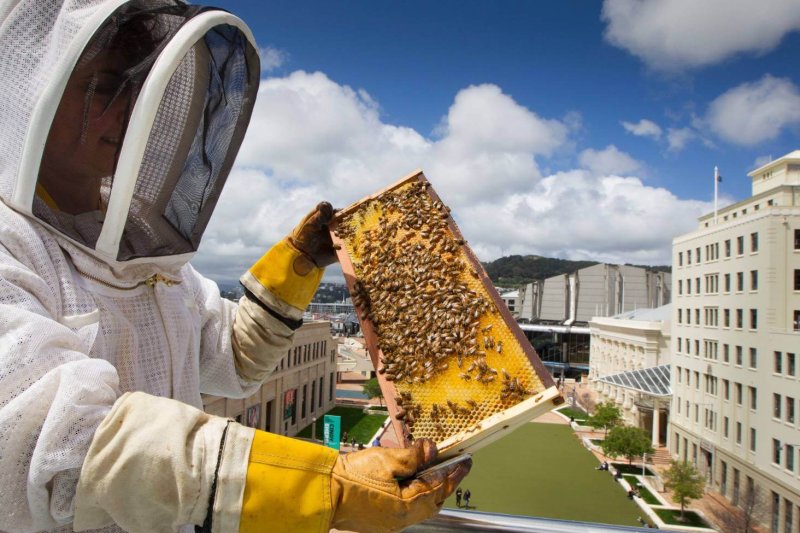
That knowledge has led [researcher Thomas] Seeley, along with Kiessling and other researchers and amateur beekeepers, to embrace Darwinian beekeeping over the past decade. Once a niche practice, it is becoming more popular with hobbyists. It focuses on creating optimal conditions for bees to make honey, while also mimicking how Apis mellifera lives in the wild.
That means housing colonies in small hives that replicate the size of a natural nest cavity, spacing hives far apart to prevent the spread of parasites from one colony to another, and positioning them far from areas treated with insecticides.
“If you let an animal live naturally, it is able to use its full toolbox and set of skills to survive and reproduce,” says Seeley, who has been studying honeybees in the wild in the Arnot Forest outside of Ithaca, N.Y. “But when you take any kind of animal and you force it to live in a different way, those tools aren’t allowed to function very well.”































 Viewpoint: There are more than 1,000 chemicals in a cup of coffee—including many substances that can cause cancer. Why isn’t it banned?
  Psychological inoculation: With a vaccine to prevent HIV on the horizon, misinformation is soaring. What can be done.
  Can ‘Social Stress Indicators’ help contain social media misfluencers?
  Viewpoint: Scientists recently revised downward the likelihood of catastrophic global warming. Reassured? You shouldn’t be.
  RFK, Jr.’s delusion: Anti-depressants are not harder to quit than heroin—but that does not mean tapering off is easy
  Viewpoint: Is Trump ‘vice-signaling’ to gain the support of vape users?