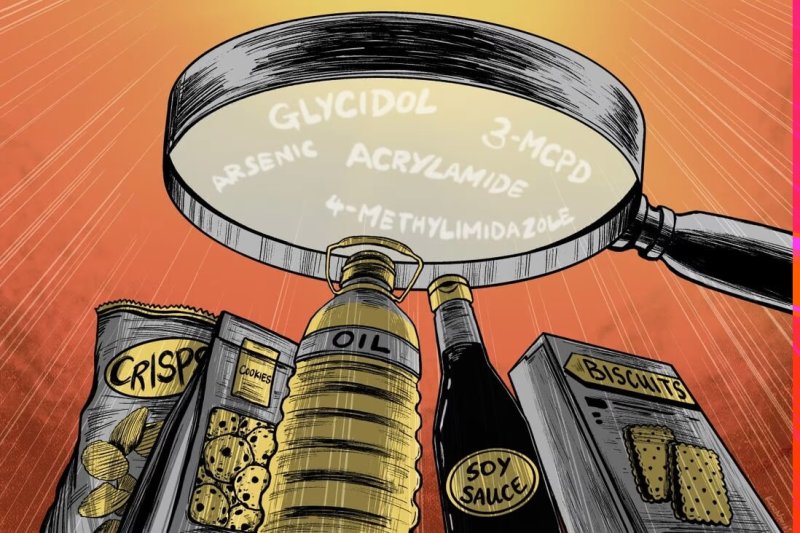
Viewpoint: IARC has labeled cell phones, night shifts and coffee as likely carcinogens — but we’re not doomed. Here’s why we don’t need to panic

The IARC Monograph program needs to have a conversation about making its pronouncements more useful. The upcoming IARC Scientific Workshop on Bias Assessment in Cancer Hazard Identification in October 2022 would be a good place to start this conversation. Credit: Lau Ka-kuen

Over the years IARC has labeled red meat, pickled foods and salted fish, carpentry, working at night, using cell phones, and, just recently, firefighting as possible, probable or definitely carcinogenic. How are we to respond to these pronouncements in an appropriate way? Stop using my cell phone? Quit my job? Give up meat? If so, you’d also have to give up bread and many fruits and vegetables, as they contain substances that are considered carcinogenic under IARC’s system.

Mis- and disinformation are distorting science and public policy. Subscribe to our Daily and Weekly Digests for incisive coverage of ‘disruptive’ innovations in AI, agricultural biotechnology, food, chemicals, nuclear energy, vaccines, and other disruptive innovations.

It wouldn’t be strange to start feeling anxious about all this and wondering if, we’re all, in fact, doomed. But as another famous line from the Hitchhiker’s Guide to the Galaxy tells us, “Don’t Panic.”

The IARC monograph program was set up in the early 1970s when our understanding of cancer and its causes was developing. At the time it was assumed that carcinogenicity was a fairly straight-forward, binary issue — either a substance caused cancer, or it did not – and that the number of cancer-causing agents was relatively limited.

Not surprisingly, the IARC Monograph program consistently finds just about everything can cause cancer. Of the 1,000 or so substances and life-style hazards they have evaluated, they have only found one (1) that definitely did not cause cancer.
Maybe [the] IARC Monograph program needs to get more specific with its questions and the context of those questions. Instead of the simplistic question, “Does a substance cause cancer?” they should ask questions like: “At what dose does it cause cancer? (in other words, how potent is it?) Is anyone, ever, likely to be exposed at that dose?


This is an excerpt. Read the original post here

Related Articles

Infographic: Global regulatory and health research agencies on whether glyphosate causes cancer

Infographic: Global regulatory and health research agencies on whether glyphosate causes cancer

Does glyphosate—the world's most heavily-used herbicide—pose serious harm to humans? Is it carcinogenic? Those issues are of both legal and ...

Most Popular

ChatGPT-Image-Mar-10-2026-01_39_01-PM
Viewpoint—“Miracle molecule” debunked: Why acemannan supplements don’t work
ChatGPT-Image-Sep-17-2026-12_28_43-PM
Vitamin D, omega-3 fish oil and glucosamine supplements could cause brain damage 
ChatGPT-Image-Sep-17-2026-10_17_15-AM
Viewpoint: Why are the less intelligent more likely to be conservative—and smarter people more socially liberal?
Screenshot-2026-09-10-at-12.20.19-PM
'Jet fuel didn't melt the steel': 9/11 conspiracy theories debunked
Screenshot-2026-09-10-at-11.50.46-AM
Did COVID vaccines kill 2,500 service members? RFK Jr. hires an investigator who compares vaccine promoters to Nazi doctors
ChatGPT-Image-Aug-28-2026-03_33_46-PM
Viewpoint: Bad science—Five bogus Trump administration claims about vaccines and autism
Screenshot 2026-07-29 at 10.40
The COVID vaccine turbo cancer scare is back. Science still proves it’s wrong.
Screenshot-2026-09-16-at-12.07.47-PM
The heated debate over trans athletes in the WNBA
glp menu logo outlined

Get news on human & agricultural genetics and biotechnology delivered to your inbox.