Does aspartame, used in thousands of products, from Diet Coke to Trident Gum to Log Cabin Sugar Free Syrup, cause cancer?
In 2023 two United Nations-affiliated organizations released assessments evaluating the carcinogenicity of the world’s most popular artificial sweetener. The two agencies arrived at starkly different conclusions. One was largely ignored by the media; the other ignited a media storm, social media blew up, and many environmental groups called for tighter restrictions or even bans on aspartame and other sweeteners long-judged safe by global science agencies. And within days, tort lawyer ambulance-chasing TV and internet ads seeking ‘victims’ of the sweetener begin appearing.
The consequences of this fracas? The public yet again questioned whether it should put its trust in government oversight agencies or rather with activists who disparaged regulators, claiming only they have the public’s best interests at heart.
We’ve seen this script play out before: in disputes over chromium-6 ‘exposed’ by Erin Brockovich and the weedkiller glyphosate and the plastic additive BPA or talcum powder or the use of anti-depressants like Prozac. All were the subject of massive enviornmental activist activist-led media campaigns which helped spur billions of dollars of multi-district litigtion and class action suits.
How should we, the public, weigh the benefits and potential dangers of substances that are added to our land, food or medicines? Do environmental groups have it right that government oversight agencies around the world ar ‘bought-and-sold’, regularly approving not-fully-tested or dangerous chemical?
This 2023 brouhaha was anything but a routine dispute over the safety of one chemical or another. There is a backstory that is far more confounding and consequential. What follows is the largely unreported account of the tension between advocacy and science: how environmgental and health crises are often manufactured and who are the losers and winners in the tension between safety and the effectiveness of products.
This is a ‘follow the money’ story with tens of billions of dollars at stake. The cast of characters includes two once-obscure European cancer agencies; high-profile environmental groups in the United States and Europe; university-based advocacy scientists on a mission; the conspiratorial obsessions of Robert F. Kennedy, Jr.; the Church of Scientology; and thousands of lawyers across the country poised to exploit fears about how chemicals work. In the end, the biggest victim may be science itself.
The MAHA-environmental activist script: The nuts and bolts of generating chemical scares
The most explosive environmental story in the summer of 2023 focused on the release of a report by the United Nations-affiliated International Agency for Research on Cancer (IARC), on whetther aspartame, the most popular sugar substitue in the world, is cancer-causing. IARC is what’s called a hazard agency, which is distinguished from the Evironmental Prottection Agency, the Food and Drug Administration, Health Canada, European Food Safety Authority, European Chemical Health Association, and a dozen or so similar government-associated agencies around the world that provide regulatory guidance to chemical regulators.sugar substitutes, among the most scrutinized of chemicals.
The IARC assessment, surreptitously leaked to the media and environmental groups by IARC two weeks before the actual announcement that July, generated the biggest media storm in decades. After all, we weren’t talking about a barely-used chemical; the sweetener is used in more than 5,000 products and consumed by some 250 million people worldwide each year. This scary conclusion, if accurate, was a big deal.
Within hours, the internet was flooded with more than 10,000 articles. Google search interest on aspartame jumped more than 490,000 in a few days. Not one to miss an opportunity, Russian disinformation and state news sources leveraged the leak through its global network of news and social media fronts to undermine public trust in Western health institutions. Many activists that re-posted the Russian propaganda.
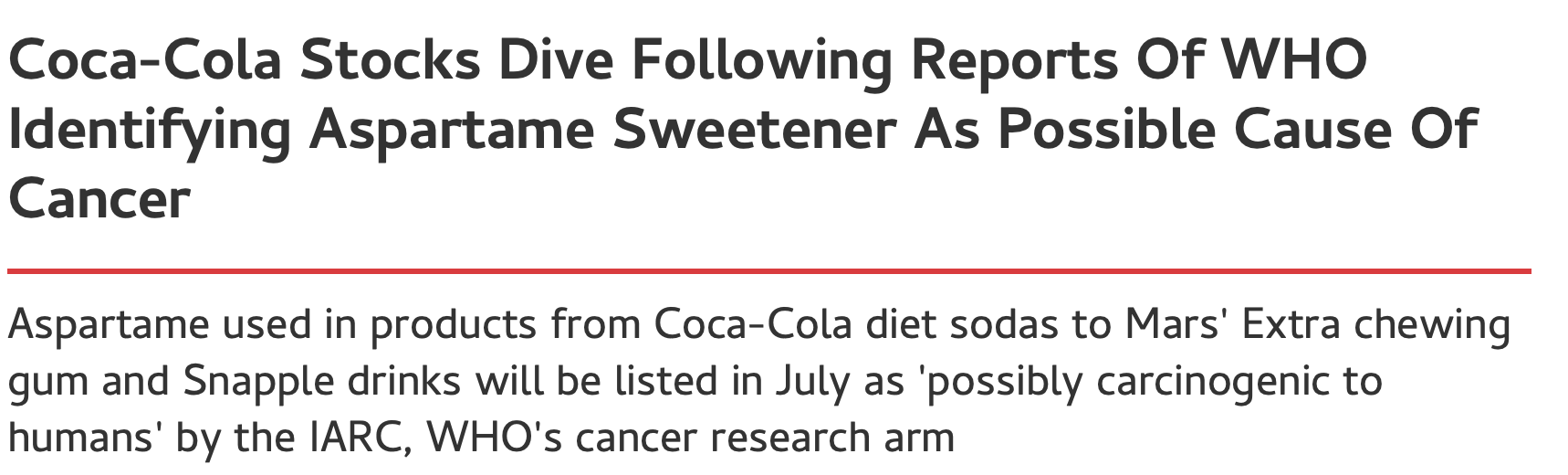
Activists and journalists alike hyped the fact that the IARC report was endorsed by the World Health Organization Many news organizations, like Fortune, went so far as to call it “WHO’s decision”, characterizing it as “a move that could shake the food and beverage industry to its core.”Almost immediately, stocks linked to artificial sweeteners tanked.
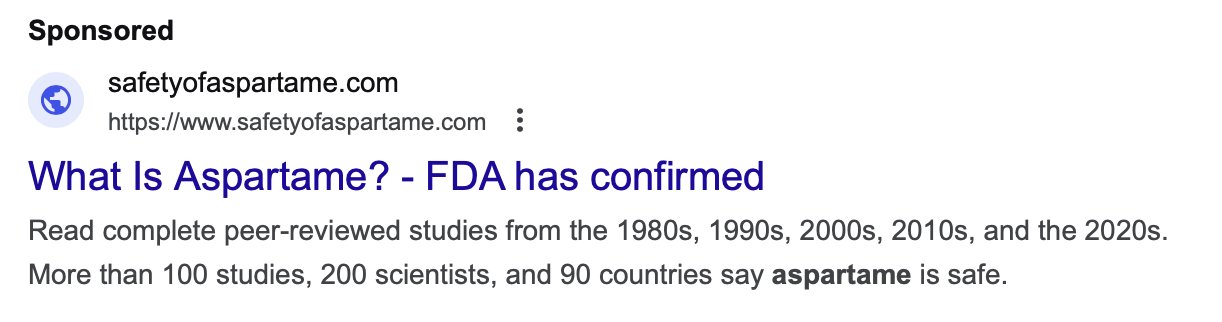
On the defensive, the food industry haplessly aunched a multi-million-dollar defense, sponsoring a linked story defending the sweetener to appear at the top of every Google search that contained the word “aspartame.” Predictably, overwhelmed by the news onslought, it had no impact.
The roots of the scare
IARC’s conclusion was curious. No country has ever banned or restricted its consumption. It was approved for use in the U.S. in 1981 and is used in two-thirds of the artificial sweetener market. But many environmental groups who don’t put much faith in government agencies have long maintained that artificial sweeteners are cancer-causing. What sparked IARC’s assessment of a chemical universally beliieved to be safe? IARC’s alliance with the hazard assessment agency, the Ramazzini Institute.
With broad support from the budding MAHA community, environmental campaigners have long based their campaigns, and activistg litigators have grounded their tort cases, on controversial research by the Italian-based agency. Ramazzini’s animal research-based findings over the past twenty-five years had been reviewed by dozens of agencies, including the precautionaary-biased European Food Safety Authority (EFSA) , in 2006, 2009 and most recently 2017, when EFSA “once again confirmed the safety of aspartame”. Prior the 2023 IARC report, it alone among dozens of independent cancer assessment groups claimed the sweetener is linked to cancer. Based almost exclusively on cell and rodent studies, IARC judged aspartame to be a “grave concern to public health,” particularly for “women and children”.
Its rodent studies were largely ignored by regulators until 2021. The controversy had seemed dead — settled science even among most skeptics — until 2021 when Ramazzini mounted a bizarre public counterattack. It reasserted in a news release that its quarter-century-old studies, dimissed by global regulators as flawed, were suddnely “groundbreaking,” blaming their rejection by EFSA, FDA and other espected independent agencies as a conspiracy between the “chemical manufacturing and processed food industries and by their allies in regulatory agencies.” Its new evidence? A re-analysis of the original data by—the Ramazzini Institute itself. That report sparked the elaluation by IARC that led to the explosive 2023 assessment..
Environmental advocacy organizations like Environmental Working Group, which gets significant funding for the product tort industry, and U.S. Right to Know, an organic-industry funded group known for its opposition to genetically-modified crops and herbicides and its skepticism of vaccines, claim even today, without supporting evidence, that “decades of science point to serious health risks” from aspartame. Dozens of other environmental NGOs in the U.S. and around the world concur.
The excavated data presented to the media in new wrapping paper sparked an alliance with another controversial research group that has worked closely with Ramazzini on chemical issues for decades—based in France, and operating under the umbrella of the United Nations as an advisory agency. IARC is what’s called a hazard agency, which is distinguished from the EPA, FDA, Health Canada, European Food Safety Authority, European Chemical Health Association, and the dozen or so similar government-associated agencies around the world that provide regulatory guidance to chemical regulators.
While these agencies focus on actual real-life dangers, Ramazzini and IARC do not take into account how much of a chemical a person would need to consume or be exposed to before there could be health consequences. For decades, the FDA has set the danger consumption levels at 36 cans of diet soda a day for the rest of your life ; the EFSA had estimated the safe level was than 16 per day. The same week in 2023 that IARC released its alleged bombshell evaluation, the Joint Committee on Food Additives (JECFA), based in Geneva, reaffirmed that aspartame was perfectly safe as used. Unlike IARC, which is loosely affiliated with the UN, JECFA is the UN’s formal chemical risk advisory group, depended upon by FDA, Food Safety Commission of Japan, ANSES in France, and a dozen others.
IARC and JEFC have starkly different responsibilities, or they are supposed to. IARC assesses “hazard” — whether a substance like aspartame could under any circumstances or length of exposure cause cancer. Over its history, IARC has reviewed more than 900 substances or processes, from drinking coffee to eating hamburgers to going to the barber, as well as hundreds of chemicals; in only one instance was no cancer link found.
JECFA and dozens of assessment organizations like EFSA, FDA, and Health Canada, assess ‘dose’ and ‘exposure duration’, evaluating each chemical as it is used in the real world — what’s called a “risk” analysis. None has concluded aspartame poses a cancer risk—unless you consume 75 packets of Equal daily for the rest of your life. The U.S. Food and Drug Administration concurs. This was posted on its website as the global furor escalated—and remains there today:
The FDA disagrees with IARC’s conclusion that these studies support classifying aspartame as a possible carcinogen to humans. FDA scientists reviewed the scientific information included in IARC’s review in 2021 when it was first made available and identified significant shortcomings in the studies on which IARC relied. … Scientific evidence has continued to support the FDA’s conclusion that aspartame is safe for the general population when made under good manufacturing practices and used under the approved conditions of use.
Chemophobia and the preda-tort industry
Note that this pattern—IARC and Rammazini concluding a chemical could potentially be positive while every major risk agency in the world believes otherwise—glyphosate is the most high-profile example—has fueled confusion among the public and politicans for decades. Many environmeantal activists exploit this confusion of hazard vs. risk to generate campaigns, which as in the case of aspartame, lead to multi-billion dollar tort filings.
The increasingly litigious-linked U.S. environmental movement predictably ignored the risk evaluations of aspartame’s safety when IARC released its 2023 evaluation. Anti-chemical NGOs began hyping the allegledy new, scary findings. Even the mainstream Center for Science in the Public Interest offered an endorsement of Ramazzini’s dated rodent research and the widely-mocked IARC assessment.
The only group more pleased than IARC and Ramazzini about the leaked release were attorneys in the multi-billion-dollar chemical tort industry. Within hours, advertisements began popping up on the internet trolling for potential clients.
Current HHS Secretary Robert F. Kennedy, Jr., then practing tort law in tandem with the California-based mass litigation firm Baum Headlund, who has made tens of millions of dollars over the past two decades suing ‘greedy chemical-making corporations’ was immediately persuaded of its danger, posting an inflammatory “information” page on Kennedy’s crusading, controversial anti-vaxx website, Environmental Health Defense.
We’ve seen this scenario play out numerous times in recent decades—Prozac and anti-depressants in the 1990s (led by Baum Hedlund); cell phones and brain cancer in the early 2000s; talcum powder since 2009; the plastic ingredient known as BPA used in water bottles, toys and medical tubing; the herbicide glyphosate (targeted by Kennedy and Baum Hedlund). Consensus science andf global risk agencies have all concluded these products are safe as used. Many enviornmentalist, litigators, and easily-persusadable juries often disagreed.In each case, IARC or Ramazzini’s cancer assessments directly contradicted the global science consensus. In each case, law firms that leverage threats of class action suits when a chemical is in the crosshairs squeezed out billion-dollar settlements or jury verdicts.
The US government estimates that malpractice and product-related tort cases costs the economy about $40-$50 billion annually. The dollar figure has been inflated over the last two decades by “litigation financiers” — a controversial, fast-growing $18-$25 billion industry in which capital firms pool investors to provide seed capital to sue vulnerable corporations. They then fund law firms and individual lawyers whose business model consists of filing class action suits against corporations, aiming for pre-court settlements and sometimes collecting billion-dollar judgments. When they collect, investors and lawyers win big.
Risk vs. hazard: Why the media get cancer assessments so wrong
Here’s how the process works. Reports and monographs issued by Ramazzini and IARC have enormous influence in the media, often eclipsing the findings of long-standing independent regulatory agencies specifically skilled in making cancer risk judgements. In recent years, one or both of the agencies have issued cancer assessments on cell phones and radio frequencies from 5G and other wireless networks; aspartame; and the herbicide glyphosate. Not one independent global agency agreed with their assessment.
(Click to read how independent organizations have assessed them.)
Let’s examine what the cancer reports and monographs issued by Ramazzini and IARC have in common and why their conclusions so often differ from the world’s independent chemical evaluation agencies.
1. Neither Ramazzini nor IARC assesses the danger of a substance or process as we encounter it in everyday life — that’s what’s known as “risk”. Rather, they assess “hazard”. Here’s the difference:
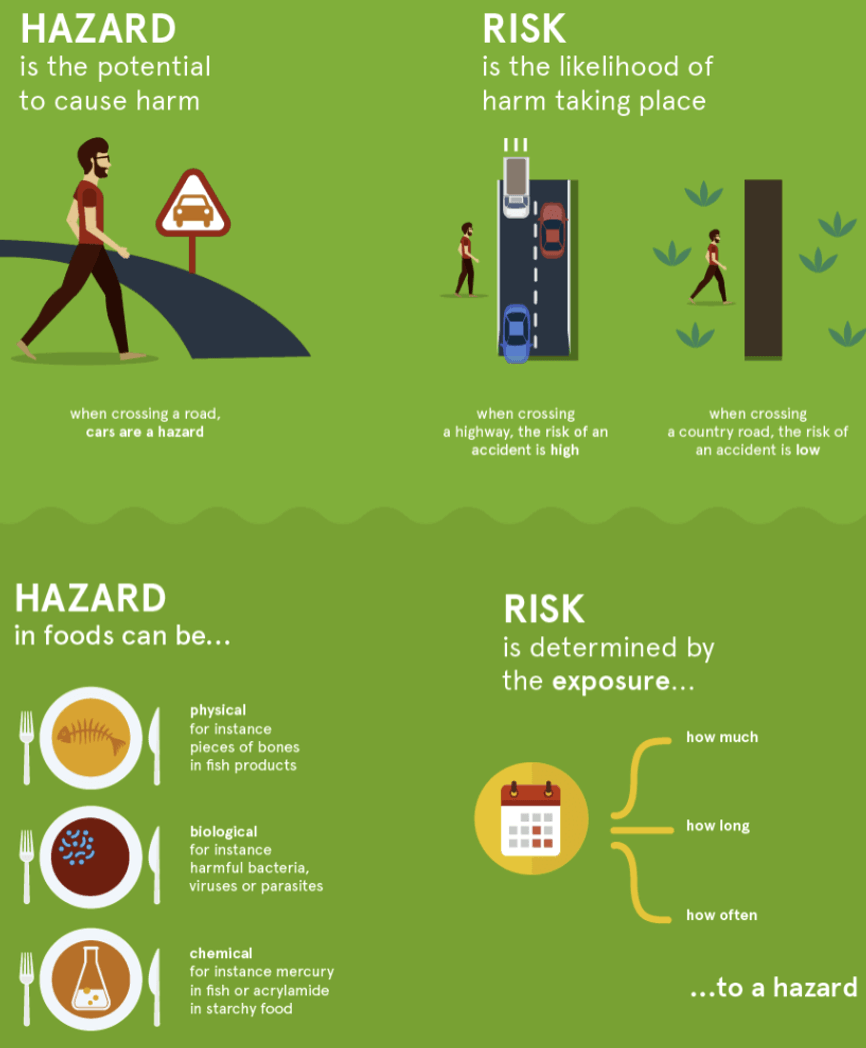
2. Ramazzini’s and IARC’s hazard conclusions are based on what the press sometimes reports as “links to” cancer. It’s a fuzzy concept that often leads to scary headlines.

To scientists, “linked” designates a statistical correlation. Just because two things occur at the same time does not mean they cause each other; associations are often misleading or wrong, as this Harvard Center for Risk Analysis article explains. But the media and public do not often grasp this distinction.
3. Most of Ramazzini’s studies and ones that IARC reviews for its monographs are based on statistical extrapolations from rodent studies. Ramazzini uses Sprague-Dawley rats in many of its experiments, including in its aspartame research. This type of rat spontaneously produces cancers as much as 80 percent of the time. This breed was used in 2012 in Gilles-Éric Séralini‘s study claiming that GMO corn and glyphosate cause cancer momentarily rocked the science establishment; it was retracted in 2013. As Scientific American reported:
[T]he small number and type of animals used in the study mean that “no definitive conclusions can be reached.” The known high incidence of tumors in the Sprague-Dawley strain of rat “cannot be excluded as the cause of the higher mortality and incidence observed in the treated groups. For that reason, other agencies generally don’t put much weight on cancer research using this type of rat because of false positives.
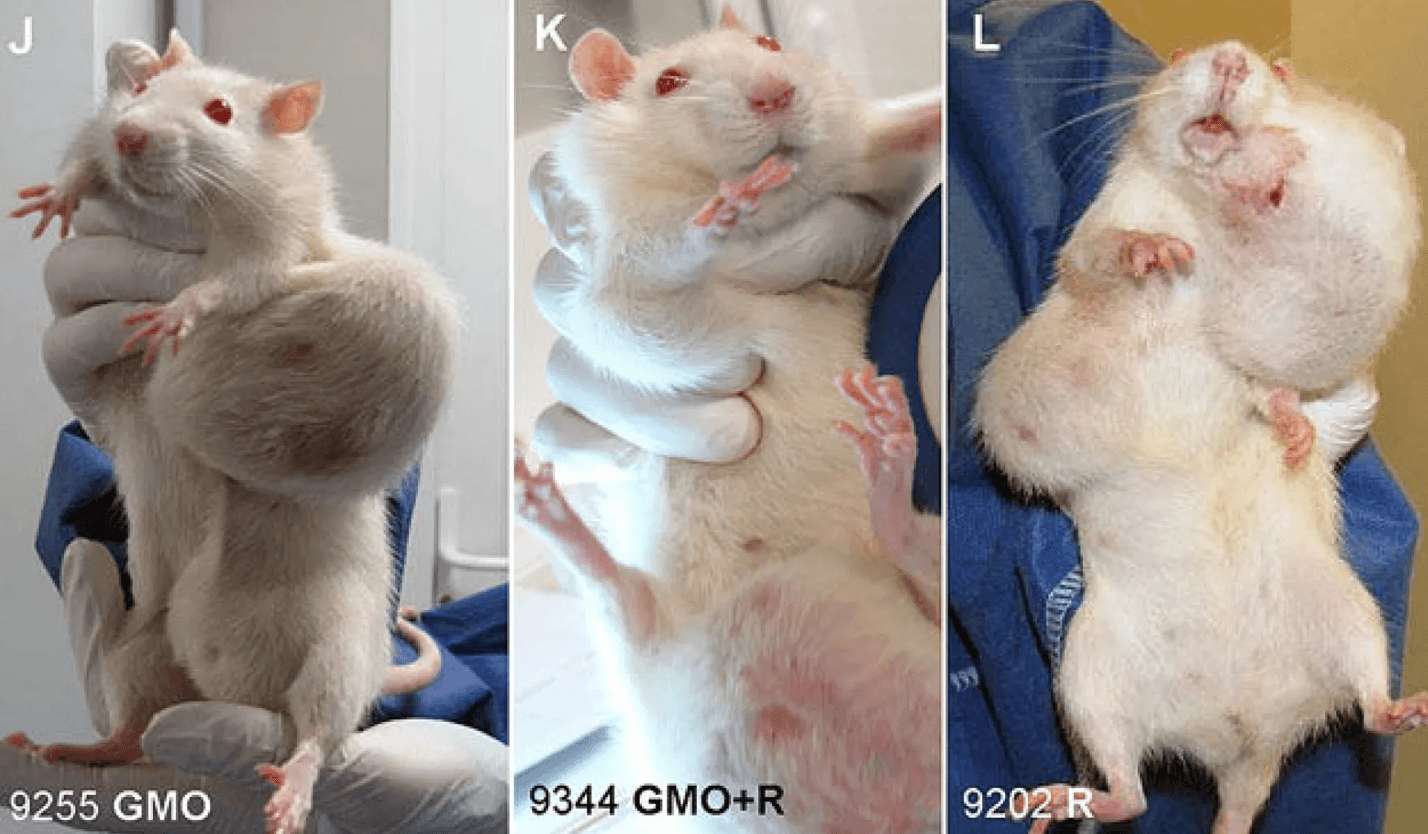
4. Ramazzini and IARC findings are published or echoed most often in two journals linked to them. Environmental Health and Environmental Sciences Europe are open-source (sometimes referred to as “pay to play”) publications that often run articles by researchers with undisclosed conflicts of interest. Séralini’s retracted rat study was subsequently reprinted in Environmental Sciences Europe without peer review. Environmental Health is a Ramazzini creation; its senior editors, David Ozonoff and Philippe Grandjean, deputy editor Ruth Etzel, and associate editor Valentini Forastieri are Ramazzini fellows.
5. Linda Birnbaum is often featured in articles about the danger of chemicals (here, here) and sometimes co-authors studies with Ramazzini scientists. The former director of the National Institute for Environmental Health Sciences is a member of the Collegium Ramazzini; she directed more than $90 million in taxpayer funds to her Ramazzini colleagues while at the NIEHS. Birnbaum’s endorsements of Ramazzini studies are often used as evidence by tort lawyers in class action suits. (Here she endorses contested claims about the alleged cancer-causing dangers of cell phones and radio-frequency radiation). Birnbaum has complained publicly that she was censored by the NIEH during her years there because she was mandated to use the word “association” when discussing association studies.
Ramazzini—IARC cancer connection
Most people, some scientists included, have never heard of the Ramazzini Institute. Formed in 1982, Ramazzini has had more than 300 “fellows” in its Collegium (currently 180), including Linda Birnbaum. The Collegium is guided by Fiorella Belpoggi, Head of Research and Director of Ramazzini’s Cesare Maltoni Cancer Research Centre, which she joined 40 years ago. Dr. Belpoggi’s has taken public positions well outside science mainstream, and sometimes in embarrassing fashion. In 2014, she was the only scientist on a three-person oversight board for an anti-biotechnology Russian-based initiative called Factor GMO
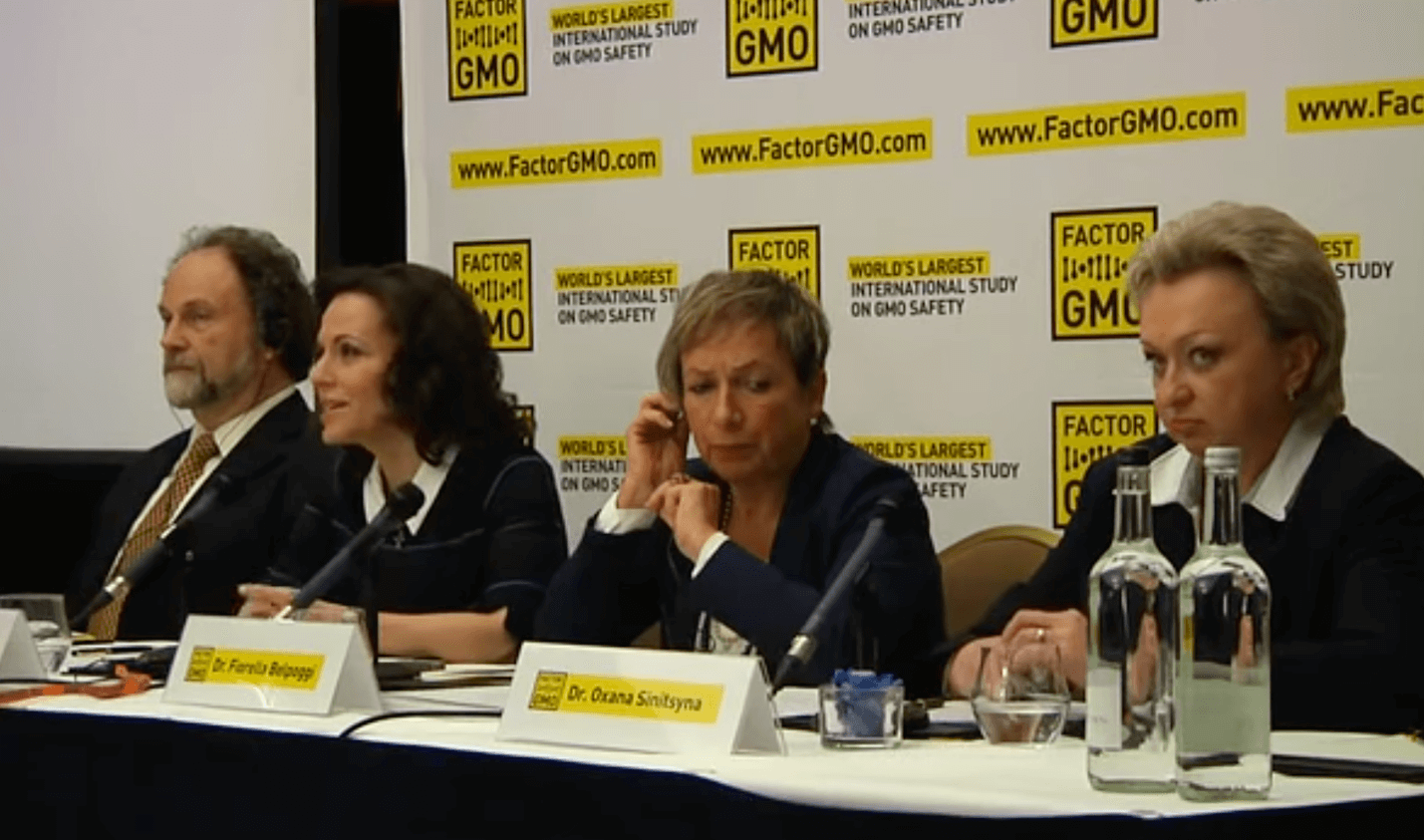
Factor GMO claimed it would conduct the world’s largest, most transparent study into the alleged cancer-causing properties of GMOs and glyphosate. After pointing a high-profile media blitz, Belpoggi went silent. No report was ever issued and the campaign was subsequently exposed as a Kremlin disinformation operation that never performed any research. The website still remains, pleading for donations. Belpoggi’s position on the board is now held by an Egyptian actor.
IARC also has a controversial history. According to its website, and like the Ramazzini Collegium, IARC operates in part as a research institute, training fellows in its unique form of hazard analysis. Shortly after its official organization in 1965, 10 years after JECFA became WHO’s official chemical assessment agency, IARC now utilizes four categories to assess cancer hazards:
Group 1: Carcinogenic to humans. This includes getting a suntan, drinking alcohol, or eating bacon or Chinese salted fish.
Group 2A: Probably carcinogenic to humans. This group includes hot drinks, steak and other red meat, oral contraceptives, frying food, working the night shift, styling hair — and the herbicide glyphosate.
Group 2B: Possibly carcinogenic to humans. This group includes eating pickled vegetables or coming in contact with Aloe cream or Ginkgo balboa — and aspartame. (Imagine the limp public reaction if the media had accurately reported that IAARC, in its leaked report, had found “aspartame is as potentially cancer-causing as eating pickled vegetables”.)
Group 3: Carcinogenicity cannot be determined or does not cause cancer.
IARC alone in assessing glyphosate as cancer-causing
IARC flew well below the public radar until 2015, when it released its controversial monograph classifying glyphosate, the key ingredient in Monsanto’s Roundup weedkiller, as “probably carcinogenic”. The herbicide had been the subject of hundreds of studies since its development in the 1970s. It was thought of as close to a miracle chemical: its toxicity was lower than salt or caffeine; it was incredibly efficient and low cost; and risk studies had shown it was not harmful even to farmers who used it regularly. That’s why the IARC report landed like a bombshell, generating headlines around the world.
 Ramazzini — The backstory of the ‘independent’ Italian organization that partners with IARC, the multi-billion dollar ‘toxic predatort’ industry, and anti-chemical environmental groups
 Predatort Part II: How predatory lawyers, activist scientists hijacked IARC—International Agency for Research on Cancer—for personal profit and ideological vanity
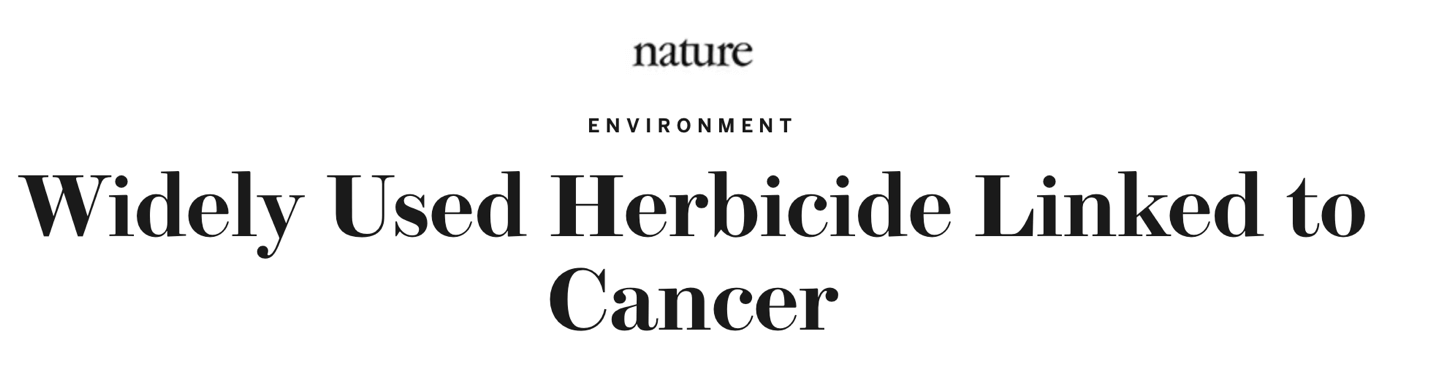
The IARC glyphosate study is credited with reviving the anti-GMO industry, which was fading by 2015 in the wake of the Séralini fiasco. IARC placed glyphosate in the same category as working as a barber or eating steak, but it was assessed as less worrisome than drinking wine or frying chicken. Obviously, that’s not how the media and environmental groups framed IARC’s monograph. The ensuing media blitz set off a chain reaction of events that has resulted in bans and restrictions in many countries, and more than $10 billion in out-of-court settlements.
Curiously and controversially, IARC excluded human research from its assessment although a gold standard review was available: a 25-year tracking USDA Agricultural Health Study. The AHS focused on 54,000 farm applicators who used the herbicide almost every workday. It found “no association was apparent between glyphosate and any solid tumors or lymphoid malignancies overall, including non-Hodgkin’s lymphoma and its subtypes…”
IARC’s cancer hazard conclusion was subsequently reviewed and rejected in more than 20 independent assessments including by the WHO’s JECFA. The global scientific consensus: glyphosate is a comparatively mild herbicide that poses no cancer risk, including from residues in our food. Health Canada twice reviewed the IARC’s hazard data, concluding: “No pesticide regulatory authority in the world currently considers glyphosate to be a cancer risk to humans at the levels at which humans are exposed.”
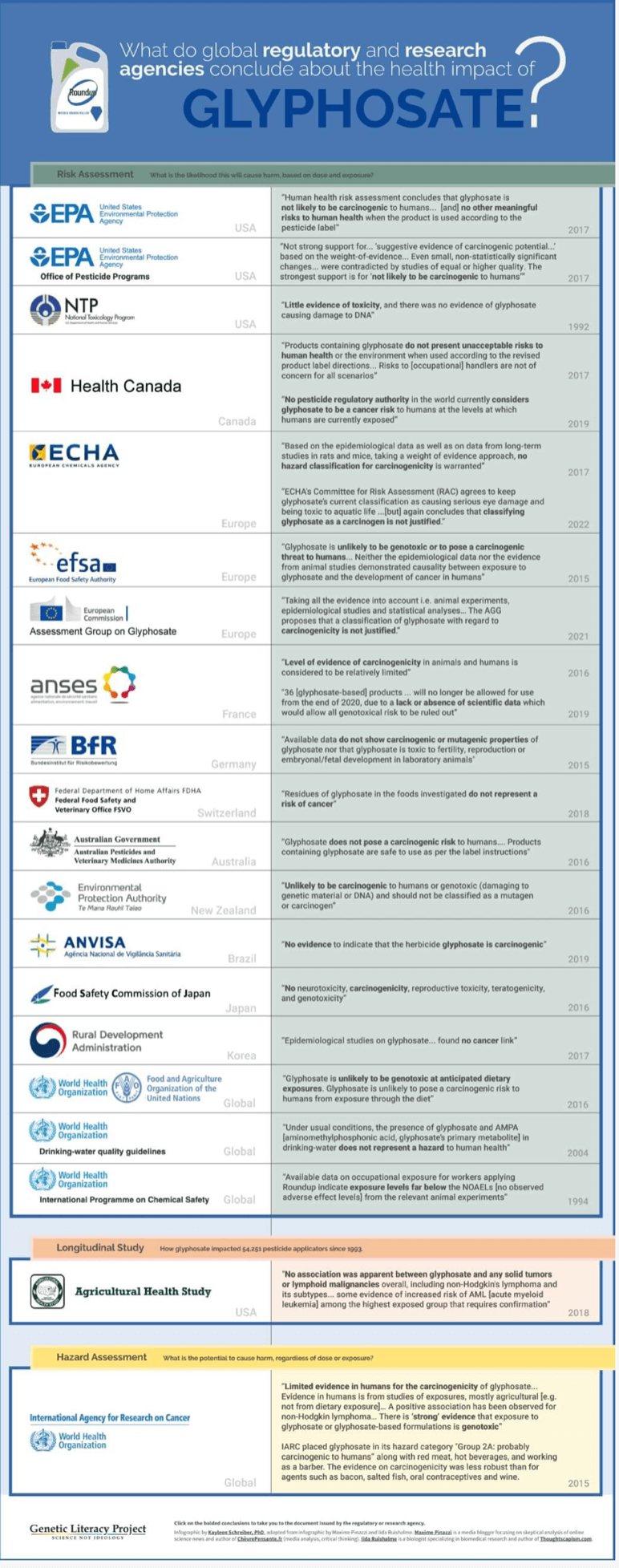
[click here to review full pdf]
In early July, the EFSA completed its second formal review, calling it “the most comprehensive and robust assessment this agency has ever issued”. Its conclusion: “The assessment of the impact of glyphosate on the health of humans, animals and the environment did not identify critical areas of concern.
Within days, IARC placed what appeared to be a counter “original paper” in an open-access, non-peer-reviewed journal, claiming that glyphosate and other pesticides “may increase the risk of certain lymphoid malignancies”. It was a bizarre conclusion; the paper noted, “We did not observe statistically significant associations for any of the active ingredients or chemical groups studied.
Many scientists believe that IARC’s hazard studies serve a useful purpose by flagging products or processes that might be subsequently reviewed by risk-assessing agencies. Other researchers, including at WHO itself, say reports from hazard agencies often confuse scientists and the public. In a series of peer-reviewed articles, several public health, toxicology, and former government regulatory experts have warned that the Ramazzini and IARC approach is “outmoded and serve neither science nor society.”
Did IARC originally conclude that glyphosate was not cancer-causing?
The IARC’s 2015 review board for glyphosate included numerous Ramazzini fellows, notably scientist Christopher Portier, a Ramazzini fellow, who had never before studied glyphosate. According to Reuters reporter Kate Kelland, a draft had been prepared by the IARC team that concluded that glyphosate was “non carcinogenic”. But before it was released, and for reasons still unknown, it was mysteriously pulled and replaced by a different document with the exact opposite conclusion. Kelland was leaked the unreleased version:
Reuters found 10 significant changes that were made between the draft chapter on animal studies and the published version of IARC’s glyphosate assessment. In each case, a negative conclusion about glyphosate leading to tumors was either deleted or replaced with a neutral or positive one. … In one instance, a fresh statistical analysis was inserted — effectively reversing the original finding of a study being reviewed by IARC.
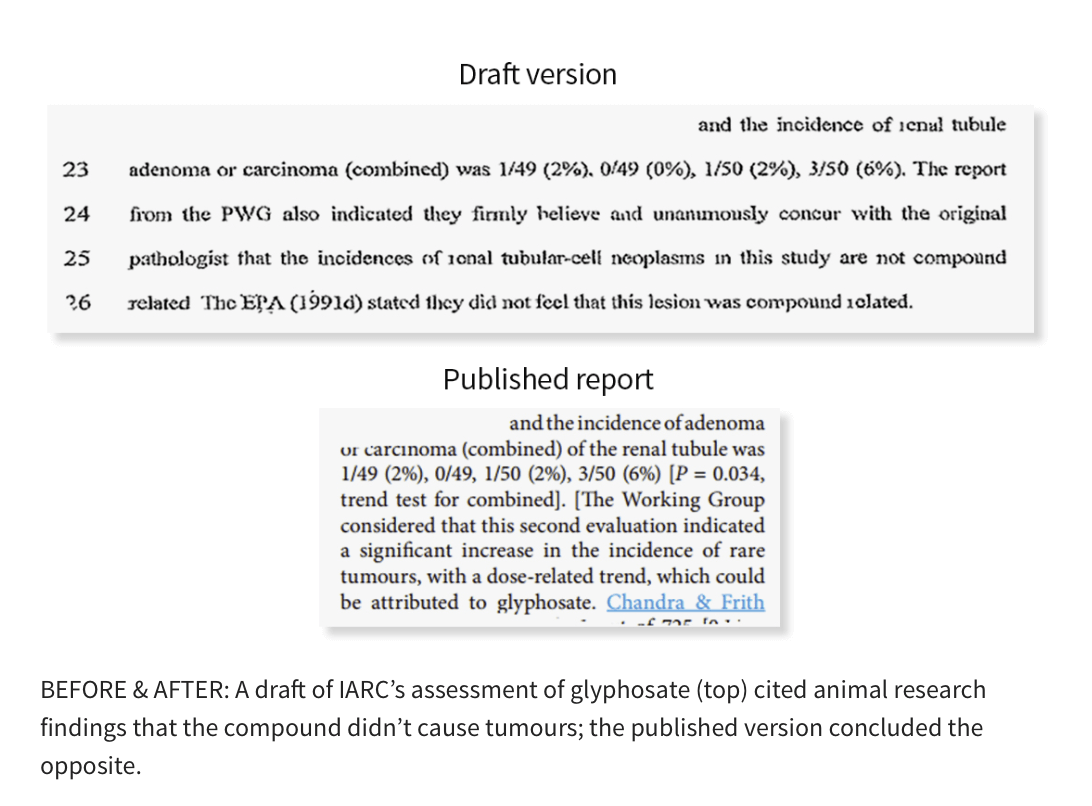
Reuters did not name who at IARC oversaw the 11th-hour defenestration of the almost-released monograph. Subsequent unconfirmed news reports pointed to Portier as the force behind the reversal, which he denies. The last-minute changes have so far generated well more than 130,000 suits and more than $10 billion in glyphosate settlements.
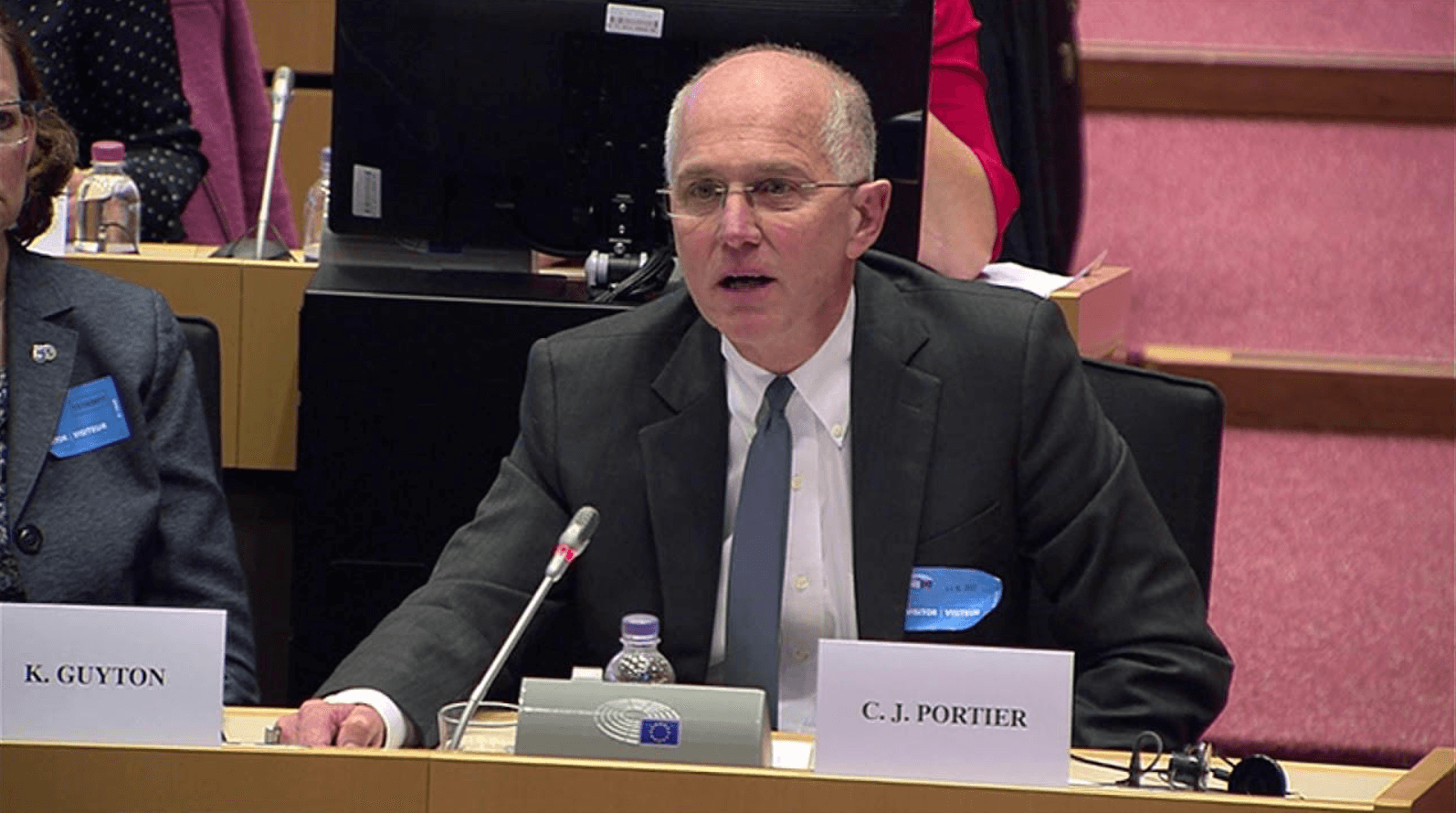
According to The Times of London, during the same week in March 2015 in which IARC published its glyphosate opinion, Portier signed a lucrative contract to act as a litigation consultant for Baum Hedlund, a law firm that was then preparing what would be the first case against Monsanto and glyphosate.
Portier has since served as an expert witness, traveling the world, testifying in court cases and at global panels and events. According to testimony, Baum Hedlund paid him $450 an hour to provide depositions, write briefs, and appear in court as an expert witness.
Preda-tort racket? The Church of Scientology—RFK, Jr.—IARC—Ramazzini connection
Wisner Baum (formerly Baum Hedland, but renamed earlier this year), has been the most lucrative beneficiary of the IARC cancer finding. The Los Angeles-based law firm is known in the industry as an “ambulance chaser”, and a very good one (Their motto: “Client focused. Trial Ready. Billions Won.”).
Baum Hedlund is also the “Church of Scientology law firm.” Its founding partner, Michael Baum, was a former staffer with the Church’s Guardian Office in the 1970s, responsible for guarding Scientology secrets. He was listed by the US government as an unindicted co-conspirator and operative in the infamous 1973 Operation Snow White case, a criminal conspiracy to illegally attempt to purge unfavorable government records about the Church that sent eleven Scientologists to prison and led to founder L. Ron Hubbard’s disappearance.
Baum Hedland helped rescue the Church from near bankruptcy in the 1990s by overseeing suits against Eli Lilly, the makers of Prozac, claiming that anti-depressant drugs could cause serious harm and provoke violence. Scientists considered the suits frivolous, but fearing a forced bankruptcy from court judgments, Lilly and others paid out billions of dollars to settle the cases. A former employee at the firm who I spoke with said Baum Hedlund lawyers viewed the glyphosate case as “another Prozac.”
RFK, Jr., who has been attacking pharmaceutical giants since the 2000s, has been a long-time Baum Hedlund consultant. Among his many conspiratorial views, he claims that Prozac and other anti-depressants are behind some of the mass school shootings. Shortly after the release of the IARC report, he became a key member of the plaintiffs group. Here is RFK, Jr. bragging in a commercial for Baum Hedlund after they won the first glyphosate case against Monsanto.
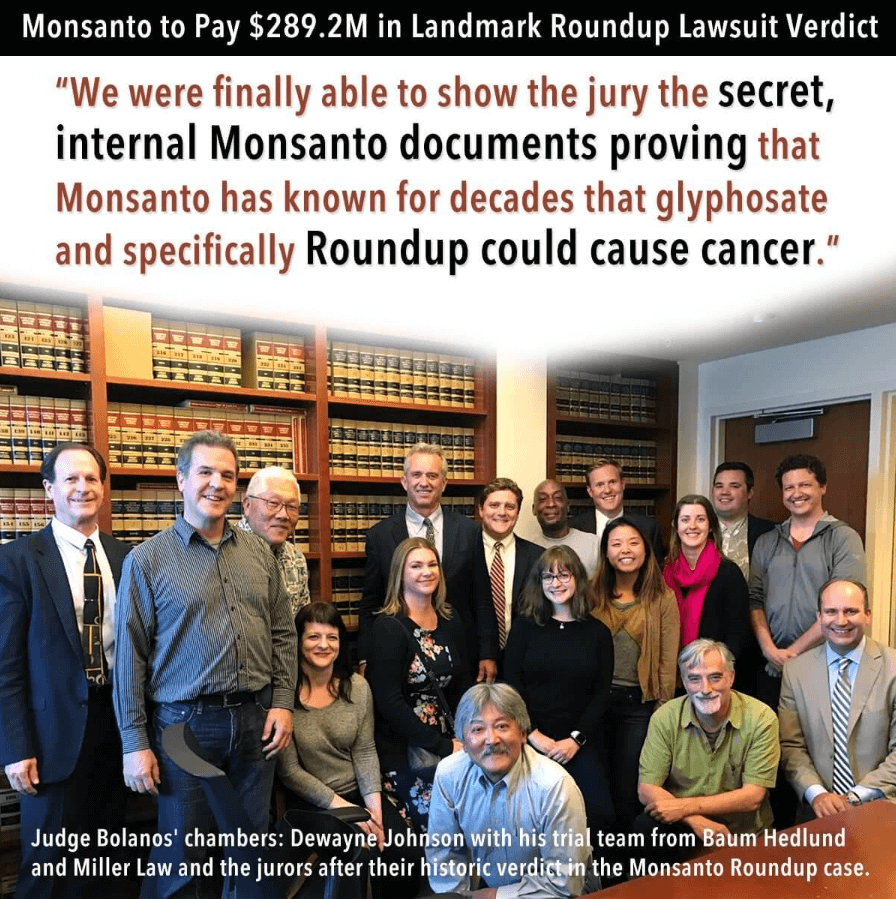
Ten glyphosate cases have gone to juries. The plaintiffs won the first three, all handled in part by Baum Hedlund, but have lost the last seven. Monsanto, acquired by Bayer in 2019, has reached out-of-court settlements with more than 100,000 plaintiffs. More than 30,000 cases remain unresolved.
Winners and losers
The surge in glyphosate cases helped jumpstart the number of class-action lawsuits since 2015 from 75 to more than 300 annually; 90% are mass tort cases. The number of plaintiffs per case has increased from a few hundred to tens of thousands. Firms leverage the media, using TV, radio, and internet ads to generate plaintiffs.
Settlements can be in the billions of dollars. Where does the money go? Attorneys in the glyphosate settlement took home in total more than $800 million in fees. The average class action victim payment: $60,000.
Numerous Ramazzini fellows and chemical skeptics, like Christopher Portier, have signed on with firms as consultants. Many believe that global risk agencies are hopelessly compromised. In January of this year, more than 50 skeptics released a set of recommended reforms, which more-or-less reflect the guiding principles of IARC and Ramazzini. Some are wise, such as not relying too much on in vitro or computer analyses.
Other recommendations are outside the global mainstream. They reject the bedrock principle of epidemiology that “the dose makes the poison.” Rather, they believe that there is not necessarily any “safe” or “no risk” level of chemical exposure. 36 cans of Diet Coke a day for the rest of your life? The government should consider banning it. While the US EPA and the EU’s EFSA will not adopt these recommendations, they are nuclear weapons in the hands of plaintiff lawyers.
Where else does the billion-dollar settlement money go? In some cases, litigators directly fund and coordinate studies with university faculty via front groups with only thinly veiled facades of independence, with the research sometimes funded by litigation finance investors (with the relationships almost never disclosed).
The best example is the Heartland Research Alliance. HRA was launched in 2018 by economist Charles Benbrook to, in his words, study “how food and farming impacts the health of people and the planet”. According to Wikipedia, by 2011, Benbrook had already served as an expert witness in more than a dozen lawsuits involving GMOs and pesticides; since 2014 he has been a paid litigation consultant for numerous mass tort pesticide cases including glyphosate, Benbrook has worked with Baum Hedlund and his critical statements about glyphosate are regularly posted on RFK, Jr’s Environmental Health News website. In the tort industry, Benbook is known as a pesticide litigation consultant.
Under Benbrook, HHRA partnered with various universities and hospital systems to conduct correlation studies “linking” herbicides, particularly glyphosate, to cancers and other health risks. These studies became the foundation for class action lawsuits. In addition to funding HHRA, Benbrook and his family reported receiving more than $500,000 in fees from mass tort lawyers while coordinating these studies.
HHRA’s donors and board members include plaintiffs’ litigators and their paid expert witnesses. According to a 2019 post on its website that was removed but recovered with Wayback Machine, HHRA received donations from both RFK, Jr. and Michael Baum. Most of its larger donations are disguised as “anonymous.”
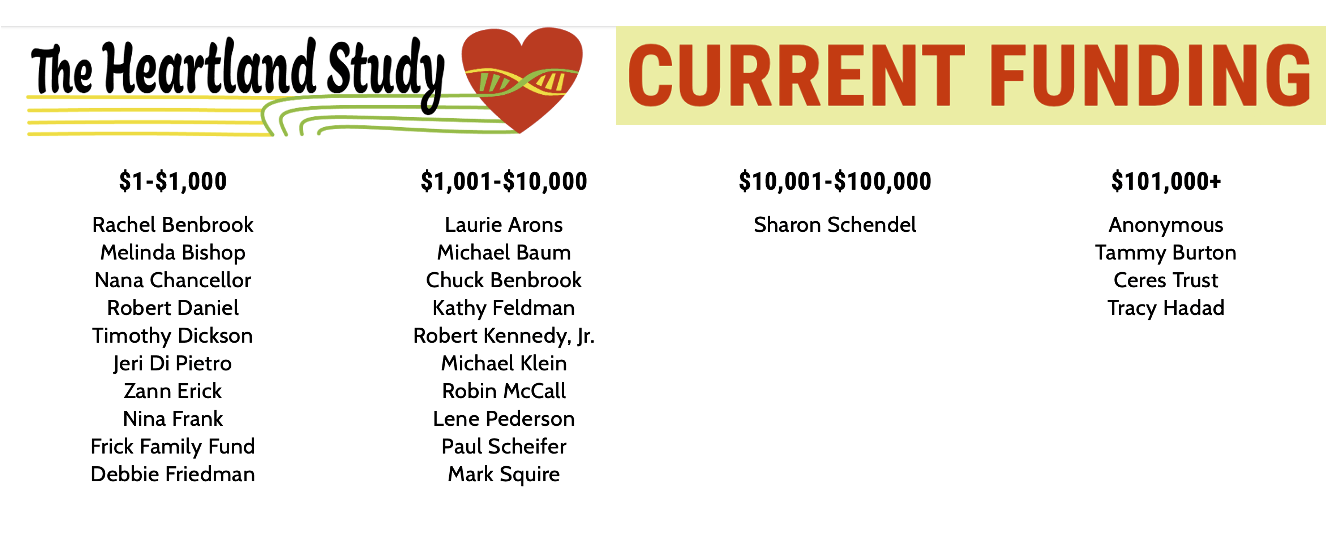
Benbrook resigned from Heartland in July because, in his words, “my service as the HHRA ED has proven to be incompatible with my work as a testifying expert in hotly contested pesticide litigation.”
Much of the money raised by Heartland and similar groups goes directly or indirectly to environmental advocacy groups known for taking activist positions on chemicals and risk. Environmental Working Group’s political lobbying “Action Fund” is supported by the American Association for Justice, formerly the Association of Trial Lawyers of America, to promote mesothelioma health risk claims linked to class actions being filed by the donors’ trial lawyer members.
Litigation finance and opaque investors
Where did these funds originate? The golden ring of litigation payouts goes to a somewhat new type of private-finance investor team, Mass Tort Litigation Finance (MTLF) firms that front millions of dollars that hire paid experts to testify in cases. It’s called litigation finance. These companies or investment consortiums provide firms with upfront money to organize and market class-action lawsuits in the hope of taking a large slice of the billion-dollar settlement pie. In a 2022 60 Minutes interview, Lesley Stahl called this funding “a relatively new multibillion-dollar industry, where investors fund lawsuits … betting on the lawsuit the way that traders bet on stocks.”
In 2019, according to reinsurance firm Swiss Re, private-equity funding of mass torts reached $17 billion annually; it’s likely closer to $25 billion today. How does it work? At the bigger firms, individual investors put in $5 million or more into a multi-billion-dollar fund set up by any number of firms. This money is used to subsidize advertising to generate plaintiffs and fund advocacy groups to create investor and regulatory pressures on target companies, all to drive big-dollar settlements.
Buford Capital is considered the kingpin in the industry, with more than $6 billion invested in the tort industry. Its investors reportedly average returns of 20–35 percent. Firms like Buford can average 100% return for investing in a winning case, which is most often through a negotiated settlement with the targeted company. Buford claims a success rate of 90%+.
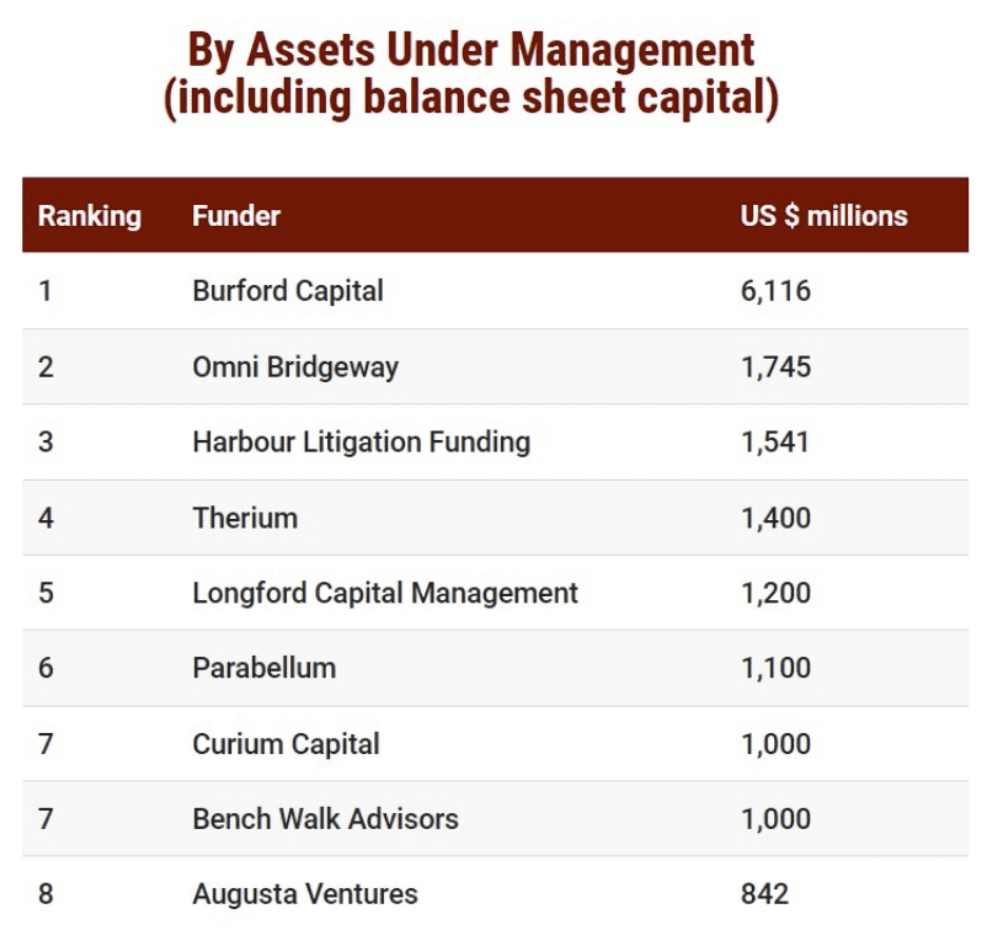
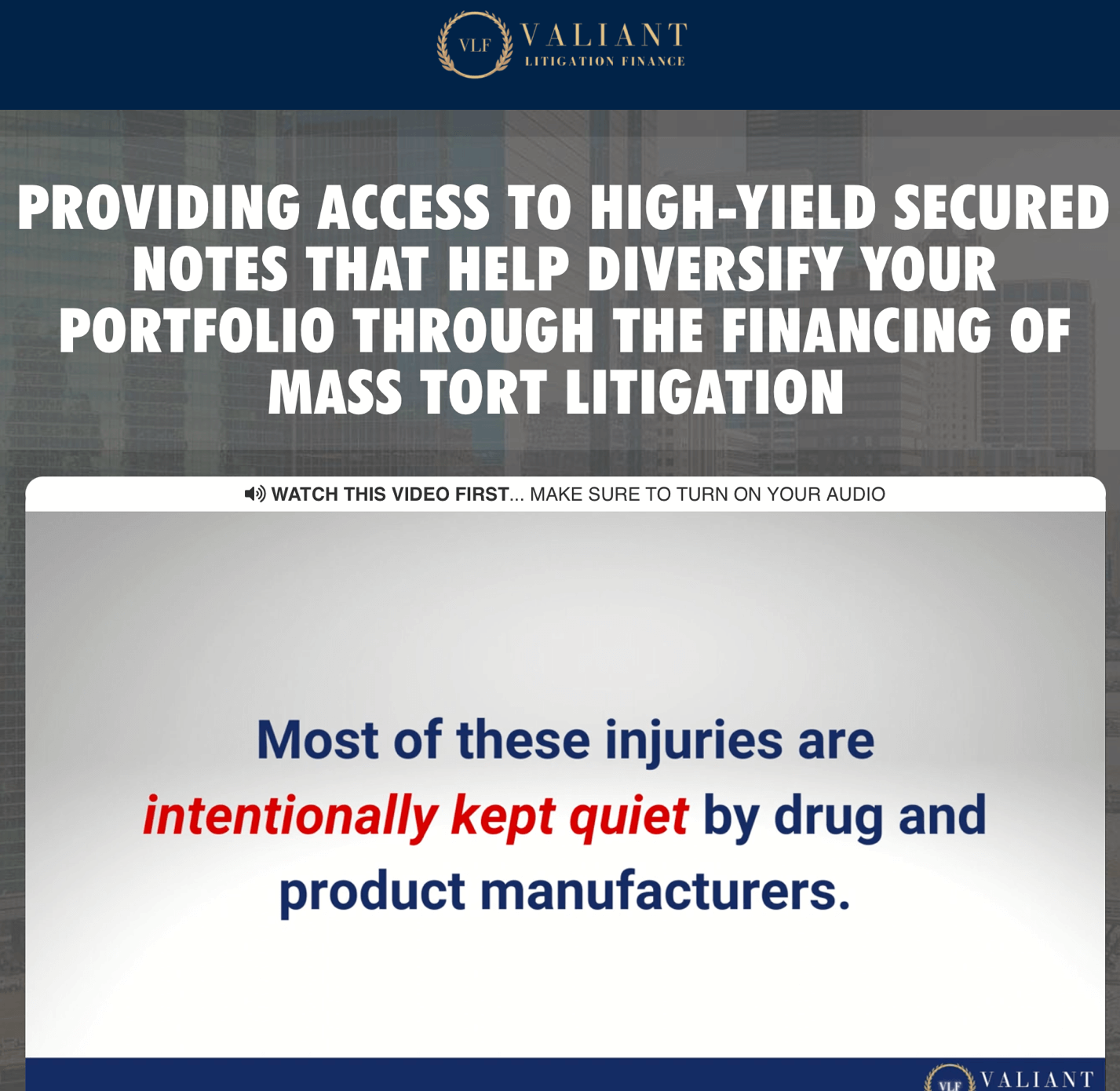
Who invests in these potential predatort windfalls? They are called “opaque investors”: Wealthy individuals, of course, but also hedge funds, private equity, university endowments, foundations and even NGOs. And firms are now targeting everyday investors with investments under $100,000. One of the upstarts, Valiant Finance, crows about, “Providing access to high-yield secured notes that help diversify your portfolio through the financing of mass tort litigation”.
With almost no oversight, transparency, or regulation, financing tort cases is almost a no-lose proposition. Big wins, like the glyphosate cases, are referred to in the industry as “nuclear verdicts”. Philip Goldberg, managing partner of Shook, Hardy and Bacon in Washington, calls MTLFs a “contrived mass tort generation machine”. Fake studies “manufactured for the litigation” and marketing tie-ins with partner organizations such as environmental groups fuel the litigation, he wrote recently in Bloomberg Law:
Courts have found the overwhelming number of these claims are meritless. They are manufactured to feed a business model that takes advantage of imbalance, inefficiencies, and transaction costs of the civil justice system. Claims are produced by lead generator(s) and filed by lawyers, often without vetting. … But there is no way for the courts to try all cases. For many companies, the only way out is to settle en masse—even when claims have no factual or legal basis.
SwissRe says this influx of capital fueling class actions is overwhelming the court system and generating so many plaintiffs that corroborating claims has become nearly impossible. A recent report by the Madison County Record identified one case with more than 600 examples of falsified statements, false advertising, claimants filing for damages without having a disease, and litigator-submitted affidavits from people who had died before the dated signatures.
Goldberg calls the predatort industry a form of mass terrorism. Right or wrong the corporations have no exit. The plaintiff lawyers bank that the claims will go unexamined and swept into a global settlement, said Judge Clay Land of the U.S. District Court in Georgia, one of the first jurists to recognize what’s been happening. That “allows them to obtain a recovery without the individual merit of their case being scrutinized.”
Why did the IARC aspartame monograph leak?
Which brings us to Friday’s anticipated announcements. Which agency — IARC, Ramazzini or JECFA — had an incentive to leak to maximize their influence with the media? WHO officials are furious.
There is no reasonable reason JEFCA would have broken the signed agreement to release both reports in tandem. It had already signaled its findings would be in line with other risk agencies, that aspartame was not cancer-causing as used.
Before the leak, there had been buzz among advocacy groups that if the assessments were released at the same time, they would diminish IARC’s and Ramazzini’s influence among the global media, many of whom do not grasp the difference between a hazard and risk assessment. And depending upon how the press might have reported the two assessments, it could have derailed a litigation gravy train. The leak has now hardened a narrative on the potential of aspartame to cause cancer, regardless of what WHO’s chemical risk agency, JECFA, concludes.
Besieged by media inquiries about whether they or one of their allies was responsible for the leak, IARC rushed out an “it wasn’t us” news release. Ramazzini, which had access to the draft version of the IARC report, has refused comment.
Jon Entine is the founding executive director of the Genetic Literacy Project and winner of 19 major journalism awards. He has written extensively in the popular and academic press on agricultural and population genetics. Follow Jon on X @JonEntine
This article previously ran in July 2023.