Getting over GMO food fears: Inside Japan’s slow but progressive march towards embracing genetic modification

capture
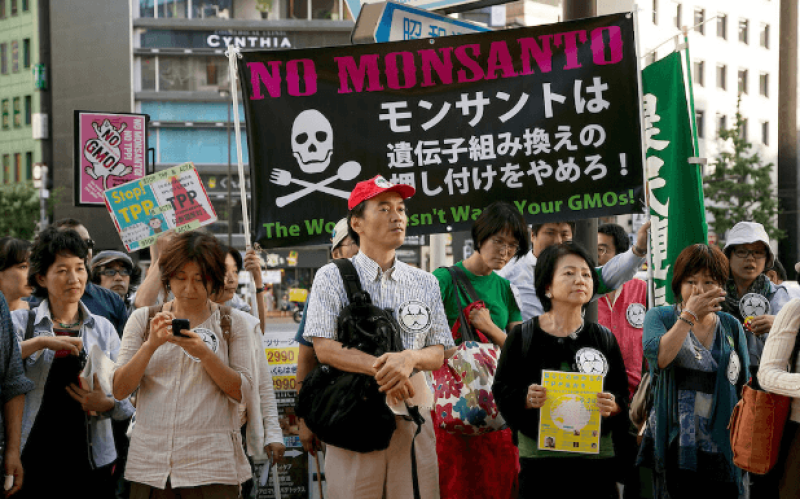
Protestors show placards with the message "No Monsanto" and "No more GMO" during the protest in front of Monsanto's office in Ginza, Tokyo, September 17, 2013. (Photo by Rodrigo Reyes Marin/AFLO)

Japan has been conducting studies on GM food crops including soybeans and rapeseed since 2006, and the latest 2020/2021 report has concluded that the cultivation of these GM crops poses no risk to local biodiversity.

Follow the latest news and policy debates on sustainable agriculture, biomedicine, and other ‘disruptive’ innovations. Subscribe to our newsletter.

Despite Japan’s best efforts though, local consumers do still appear hesitant to accept GM foods as a safe food source – according to a 2016 Nara Medical University study, the government’s efforts do appear to be paying off in terms of consumers understanding and accepting GM technology, but not so much when it applies to food.

“Although no health hazards are known, respondents in Japan strongly recognize GM food as a health risk,”​ said the study authors.

“The belief that GM foods poses health hazards is likely to be associated with their perception of these, which in turn appears to be related to cultural predispositions towards uncertainty avoidance.”​

“[It must also be kept] in mind that Japanese cultural traits place a high importance on social balance and harmony, which may demotivate consumers from express their true opinion, and this cultural predisposition should be carefully considered and measured [when devising strategies to increase consumer acceptance] of GM foods.”​

This is an excerpt. Read the original post here

{{ reviewsTotal }}{{ options.labels.singularReviewCountLabel }}
{{ reviewsTotal }}{{ options.labels.pluralReviewCountLabel }}
{{ options.labels.newReviewButton }}
{{ userData.canReview.message }}

Related Articles

Infographic: Global regulatory and health research agencies on whether glyphosate causes cancer

Infographic: Global regulatory and health research agencies on whether glyphosate causes cancer

Does glyphosate—the world's most heavily-used herbicide—pose serious harm to humans? Is it carcinogenic? Those issues are of both legal and ...

Most Popular

ChatGPT-Image-May-7-2026-12_16_37-PM-2
Viewpoint: Are cancer rates ‘skyrocketing’ as RFK, Jr. and MAHA claims? The evidence says mostly the opposite
Screenshot-2026-04-13-at-1.39.26-PM
Viewpoint: ‘Safer for children?’ Stonyfield yogurt under fire for deceptive organic marketing
Screenshot-2026-04-22-at-10.46.29-AM
Viewpoint: How to counter science disinformation? Science journalist offers 12 practical tips

Sorry. No data so far.

glp menu logo outlined

Get news on human & agricultural genetics and biotechnology delivered to your inbox.