‘A whole new class of drugs to fight malaria’: Single dose of antibody infusion protects for six months

Credit: Shutterstock

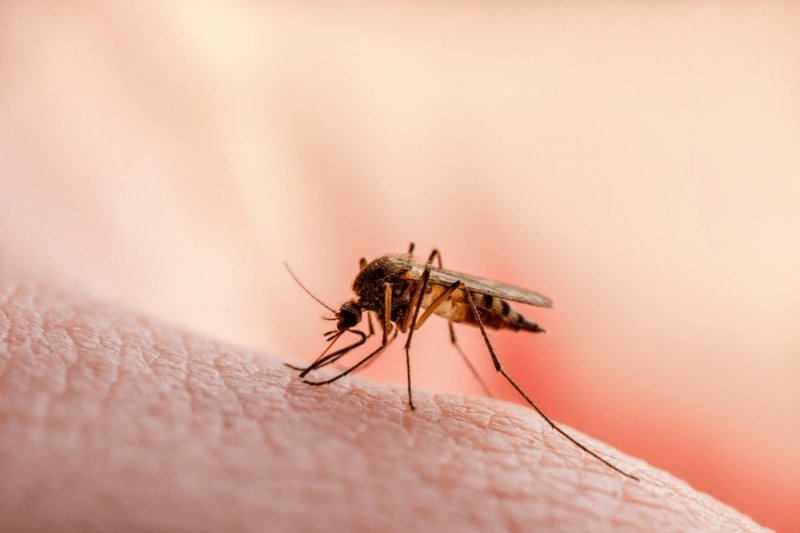
A single dose of an antibody drug provided strong protection against malaria infections during the six-month rainy season in Mali, an international team of researchers announced [October 31]. The promising result, published in the New England Journal of Medicine, lays the groundwork for a new tool to help defeat a parasitic disease that last year killed more than 600,000 people — mostly children.

The experimental drug, CIS43LS, proved 88 percent effective in preventing malaria infections in healthy adults — a tantalizing proof of principle that such an approach could have a powerful impact.

Follow the latest news and policy debates on sustainable agriculture, biomedicine, and other ‘disruptive’ innovations. Subscribe to our newsletter.

The study opens up a whole new class of drugs to tackle malaria, a disease that is caused by a parasite in the saliva of infected mosquitoes. A team at the National Institutes of Health isolated a parasite-blocking antibody from the blood of a volunteer who was given an experimental malaria vaccine, then tweaked the antibody so that it would stick around in the blood and offer protection for months at a time.

The NIH team — partnering with researchers at the Mali International Center for Excellence in Research, which is at the University of Sciences, Techniques and Technologies of Bamako, Mali — subjected the drug to an intense test for malaria prevention: the rainy season. That period begins in June, with transmission peaking in October.


This is an excerpt. Read the full article here

{{ reviewsTotal }}{{ options.labels.singularReviewCountLabel }}
{{ reviewsTotal }}{{ options.labels.pluralReviewCountLabel }}
{{ options.labels.newReviewButton }}
{{ userData.canReview.message }}

Related Articles

Infographic: Global regulatory and health research agencies on whether glyphosate causes cancer

Infographic: Global regulatory and health research agencies on whether glyphosate causes cancer

Does glyphosate—the world's most heavily-used herbicide—pose serious harm to humans? Is it carcinogenic? Those issues are of both legal and ...

Most Popular

ChatGPT-Image-Jun-25-2026-12_23_17-PM
No, Bill Gates did not secretly engineer ticks to promote veganism
ChatGPT-Image-Jun-23-2026-03_12_23-PM
Is cellular reprogramming junk science? Nearly 20 patients are getting eye injections in the first FDA-cleared cellular trial
Screenshot-2026-06-15-at-1.55.27-PM
America's trust in Trump-Kennedy's CDC health recommendations is plunging
ChatGPT-Image-Mar-10-2026-01_39_01-PM
Viewpoint—“Miracle molecule” debunked: Why acemannan supplements don’t work
ChatGPT-Image-Jun-24-2026-11_36_47-AM
Why the human genome is less a script than a puzzle
ChatGPT-Image-Jun-17-2026-10_52_43-AM
Anguished parents, doctors in tears: Utah’s long measles outbreak takes a toll
Screenshot 2026-06-25 at 10.55
Leading OB-GYN group challenges RFK, Jr. gutting of maternal vaccine schedule
Screenshot-2026-06-24-at-2.57.41-PM
Viewpoint: Trump’s Reflecting Pool algae fiasco points to a bigger culprit: Climate change
Screenshot-2026-06-24-at-2.40.46-PM
Hegseth reversal: As Air Force flu outbreak continues to surge, military reinstitutes mandatory vaccines for recruits

Sorry. No data so far.

glp menu logo outlined

Get news on human & agricultural genetics and biotechnology delivered to your inbox.